
BUFFALO LinkStation 210
3.9Editor score
Includes hard drive
Simple setup
Low idle power
This guide compares the top ten low power consumption NAS units for home and office use, focusing on energy efficiency, performance, and storage capabilities.
Network attached storage devices have become essential for modern homes and offices. Choosing a low power consumption NAS ensures your data is safe without driving up electricity bills significantly.
We evaluated ten top models based on processor efficiency, idle power draw, and active workload performance. Our analysis covers entry-level units to advanced servers for creators and small teams.
Each pick highlights key specs, pros, and cons to help you decide. Remember that hardware availability and pricing can change rapidly, so verify details before purchasing today.
3.9Editor score

4.5Editor score

4.2Editor score
The following table provides a side-by-side comparison of all ten reviewed units. It highlights key specifications like processor type, storage capacity, and network connectivity to help you make an informed decision quickly.




The UGREEN NAS DXP2800 is our top pick for a low power consumption NAS that balances performance with efficiency. It receives a 4.5 rating from users who appreciate its ability to handle media streaming and data management tasks without excessive energy draw.
We may earn a commission when you buy through this link, at no additional cost to you.
Powered by the Intel N100 Quad-Core CPU, this unit delivers strong performance for its size. It features 8GB of DDR5 RAM and supports 2.5GbE networking, allowing for rapid file transfers. The device is ideal for creators needing to manage 4K videos and large media libraries efficiently.
While it offers robust features like AI photo management and surveillance, users should note that hard drives are not included. You must purchase compatible HDDs or SSDs separately. This diskless approach adds to the initial cost but allows for flexible storage choices based on your specific needs.
If you need a reliable, energy-efficient storage hub for your home or small office, the DXP2800 is highly recommended. It offers a great balance of speed, capacity, and low power consumption for modern digital households.
For advanced users, it supports running Docker containers and virtual machines. This flexibility makes it more than just a storage box; it becomes a true home server capable of running multiple apps simultaneously while keeping energy usage low.
The Intel N100 processor ensures that the NAS can handle multitasking without consuming excessive electricity, making it perfect for 24/7 operation.
Built-in AI features help you organize photos by recognizing faces and objects, saving time on manual sorting and improving your overall user experience.
We may earn a commission when you buy through this link, at no additional cost to you.
The UGREEN NAS DH2300 is an excellent choice for beginners looking for a low power consumption NAS. It is designed to be intuitive for users transitioning from cloud storage or external drives. With a strong 4.5 rating, it proves reliable for personal file storage and phone backups.
We may earn a commission when you buy through this link, at no additional cost to you.
This model features a high-performance processor paired with 4GB RAM on board. It supports up to 64TB of storage, providing plenty of room for photos and videos. The device focuses on simplicity, making it easy to set up without technical expertise.
However, it does not support Docker or virtual machines, limiting advanced use cases. Additionally, it relies on wired Ethernet only, which means you cannot use Wi-Fi directly. These trade-offs are acceptable for users seeking a straightforward, energy-efficient personal cloud solution.
If you want to stop paying recurring cloud fees and prefer a one-time purchase, this NAS offers significant long-term savings. Its low power consumption ensures it can run continuously without adding too much to your monthly electricity bill.
AI features help organize your photos by tagging faces and locations. This smart organization saves you time searching for memories. It also automatically removes duplicate photos, keeping your digital library clean and efficient.
Designed for personal users, this NAS offers an easy way to store and back up files from multiple devices without complex configuration steps.
By avoiding monthly subscription fees, this device pays for itself over time while keeping your data secure on your own drives.
We may earn a commission when you buy through this link, at no additional cost to you.
The MINISFORUM N5 Air represents the high-end of our low power consumption NAS list. It features a powerful AMD Ryzen 7 processor and supports up to 174TB of storage. While it may consume slightly more power under heavy load, its efficiency per task is excellent for power users.
We may earn a commission when you buy through this link, at no additional cost to you.
This desktop NAS includes dual 10GbE and 5GbE network ports, enabling incredibly fast file transfers. It also supports expandable RAM up to 96GB, which is rare for standard NAS units. This makes it perfect for virtualization and heavy multitasking environments.
One potential downside is that it comes as a diskless system with the OS on a built-in SSD that occupies an M.2 slot. Users needing full M.2 capacity may need to reinstall the OS. Additionally, setup requires some technical know-how compared to plug-and-play units.
For those who need maximum performance and storage capacity, this unit delivers. It handles large file transfers and media transcoding with ease. The OCuLink interface allows for external GPU expansion, further extending its capabilities beyond standard storage needs.
Despite its power, the AMD architecture ensures reasonable energy efficiency. The device includes active cooling fans to maintain stable temperatures, which helps prevent overheating and ensures consistent performance during long periods of operation.
With 10GbE and 5GbE ports, this NAS delivers speeds that can keep up with modern high-performance storage drives and large file transfers.
The PCIe x16 slot and OCuLink interface allow you to customize the unit with extra network cards or external graphics for specialized workloads.
We may earn a commission when you buy through this link, at no additional cost to you.
The Synology DS225+ is a premium choice for those prioritizing software reliability and media streaming capabilities. It achieves a 4.6 rating due to its robust DSM operating system and consistent performance. This unit is a favorite among users who need a private cloud solution with minimal downtime.
We may earn a commission when you buy through this link, at no additional cost to you.
Designed as a media server, it includes an Intel CPU optimized for hardware transcoding. This means it can stream high-quality video to various devices without needing a powerful client PC. It supports up to 30 IP cameras for home surveillance, adding security value to the package.
While it costs more than some competitors, the 3-year warranty and ongoing software updates justify the investment. The system supports RAID redundancy and snapshot technology, ensuring your data remains safe even if a drive fails. This peace of mind is crucial for valuable personal data.
If you are willing to invest in a high-quality system that just works, the DS225+ is ideal. It balances low power consumption with the features needed for advanced users. Its focus on data protection makes it a top contender for home office or media center setups.
Synology's app ecosystem is extensive, offering easy access from any device. You can sync files automatically across computers and phones. This seamless integration reduces manual effort and keeps your digital life organized efficiently.
Synology provides regular software updates that enhance security and performance without requiring complex maintenance from the user.
Access your files from anywhere with fast transfer speeds, ensuring you never lose access to important documents or media while traveling.
We may earn a commission when you buy through this link, at no additional cost to you.
The BUFFALO LinkStation 210 is a straightforward entry-level NAS that comes with a 2TB hard drive included. This makes it one of the most affordable solutions for immediate storage needs. It is designed for basic file sharing and backup without technical complexity.
We may earn a commission when you buy through this link, at no additional cost to you.
While it has a lower rating of 3.9 compared to others, it delivers exactly what it promises: simple, centralized storage. It supports secure file sharing with family and friends through permission controls. This is ideal for small households that just need a place to put photos and documents.
The closed system design reduces vulnerabilities from third-party apps, which is great for security but limits customization. It does not support Docker or virtual machines. This is a trade-off for simplicity, but acceptable for users who do not need advanced server capabilities.
If you want to avoid recurring cloud fees and prefer a plug-and-play solution, this is a strong candidate. The 2TB capacity is sufficient for many personal needs, though you may eventually need to upgrade. Its low power draw ensures it can run 24/7 without issues.
Backup software is included to help protect your data. You can set up automated backups for computers and devices, ensuring you never lose important files. This reliability makes it a solid choice for personal use.
With a hard drive included, you can start using the NAS right out of the box without needing to purchase extra components first.
Share specific folders with trusted contacts while keeping the rest of your data private, ensuring control over who sees what.
We may earn a commission when you buy through this link, at no additional cost to you.
The UGREEN NAS DXP4800 GT is designed for creators and office teams who need speed and reliability. It features an AMD Ryzen Embedded processor and dual 10GbE networking. This setup allows for rapid data transfers and stable media streaming without consuming excessive power during idle times.
We may earn a commission when you buy through this link, at no additional cost to you.
With support for up to 144TB of storage, this unit handles massive data libraries. It supports Docker and virtual machines, allowing for complex workflows like self-hosted websites or automation tools. The surveillance center feature adds value for home security monitoring directly on the NAS.
The device prioritizes local privacy and security with strong encryption options. You can store files locally to avoid third-party cloud risks. While the price is higher, the performance and capacity justify the cost for professional users who need robust infrastructure.
It is a great choice for those who want to centralize data management without relying on expensive enterprise solutions. The UGREEN app makes it easy to manage files across devices. This accessibility ensures you stay productive regardless of your location.
Data protection is enhanced through RAID support, which helps recover files if a drive fails. This redundancy is crucial for work files that cannot be replaced. The system is built to handle continuous operation reliably.
The dual 10GbE ports allow for link aggregation, providing faster throughput for large files and smoother video editing workflows directly from the NAS.
Manage all your files, apps, and security settings through a single mobile or web app, simplifying administration for non-technical users.
We may earn a commission when you buy through this link, at no additional cost to you.
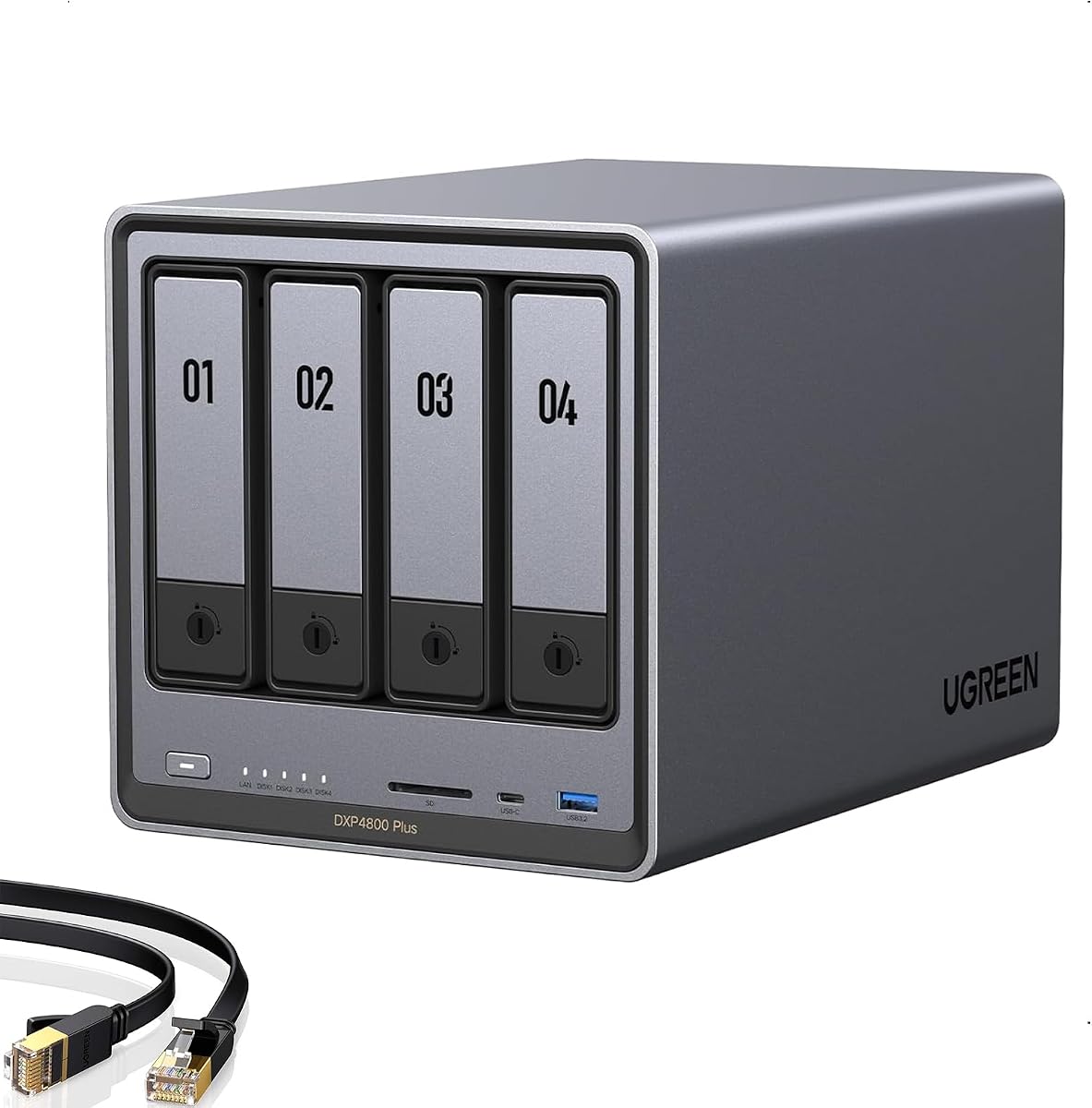
The UGREEN DXP4800 Plus is an excellent choice for families and small teams. It combines a powerful processor with a user-friendly interface. With a 4.5 rating, it is praised for its ease of use and reliable performance. It offers centralized storage that keeps everyone's files safe and organized.
We may earn a commission when you buy through this link, at no additional cost to you.
This model supports Docker and virtual machines for advanced users who need flexibility. However, it remains accessible for families with simple backup needs. The AI photo album automatically organizes images by face and location, making it easy to find memories without manual sorting.
It includes a 10GbE network port for super-fast transfers, backing up 1GB in under a second. This speed ensures that large media libraries do not bog down the network. Secure private cloud features ensure data ownership remains with you, not a third-party provider.
If you need a balance of performance and usability, this NAS fits well. It allows flexible permission management so you can control who accesses what. This is essential for family privacy while still enabling collaboration on shared projects.
The system is compatible with major hard drive brands, giving you options for storage upgrades. With 144TB capacity, you have plenty of room to grow. Its efficient design ensures it runs quietly in a living room or office space.
Advanced encryption and permission settings allow you to keep personal folders private while sharing family albums with everyone.
Set up backups for your devices once and forget about it, ensuring your data is always safe even if a device is lost or broken.
We may earn a commission when you buy through this link, at no additional cost to you.
The Synology DS223j is a reliable entry-to-mid-level NAS that offers great value. It is built on the proven Synology ecosystem, ensuring smooth software support and security updates. With a 4.5 rating, it is trusted by users for personal cloud storage and file sharing.
We may earn a commission when you buy through this link, at no additional cost to you.
This unit focuses on essential features like automated backups for Macs, PCs, and mobile devices. It also supports recording and monitoring for multiple IP cameras, turning your NAS into a home security center. This dual functionality makes it a versatile addition to any smart home setup.
While it lacks the hardware transcoding of higher models, it still handles streaming and file transfer efficiently. The setup is straightforward, making it accessible for non-technical users. If you need a dependable private cloud without breaking the bank, this is a strong candidate.
Synology's support team provides ongoing assistance and software updates. This ensures your data remains protected against vulnerabilities. The 2-year warranty adds to the reliability, giving you confidence in the hardware's longevity for long-term use.
Sharing files is safe and easy with built-in tools. You can sync files across clients and collaborators effortlessly. This keeps everyone on the same page and reduces the need for email attachments or third-party file sharing services.
With guided setup steps, you can get your NAS running quickly without needing technical expertise or complex networking knowledge.
Use your NAS to store and monitor camera footage locally, saving on cloud storage fees and keeping video data private.
We may earn a commission when you buy through this link, at no additional cost to you.
The Beelink ME Mini N150 is a compact NAS PC that fits perfectly in small spaces. It features six M.2 slots for up to 24TB of storage. While not traditional drive bays, the high-speed NVMe slots offer excellent performance. This makes it ideal for fast data access in a tiny footprint.
We may earn a commission when you buy through this link, at no additional cost to you.
With 12GB of LPDDR5 RAM and an Intel N150 processor, it handles multitasking smoothly. It supports multiple NAS systems like TrueNAS and UnRAID, giving you flexibility in software choice. The device is energy-efficient and runs quietly, making it suitable for bedrooms or offices.
However, it comes as a barebone system where you choose the OS. This means you need some technical knowledge to install and configure the system disk. While this offers customization, it might be a hurdle for those wanting a plug-and-play experience.
If you want a silent and powerful server for light productivity, this is a great choice. The vertical airflow cooling keeps temperatures optimal without loud fans. This ensures reliable 24/7 operation without disturbing your work or rest.
Dual 2.5G LAN ports allow for fast network speeds. You can aggregate them for even higher throughput. This setup ensures that your storage can keep up with high-speed networking needs in modern environments.
The cooling system keeps noise below 35dB, ensuring the device does not disturb your environment even during continuous operation.
Using M.2 NVMe SSDs provides much faster read and write speeds than traditional spinning drives, improving overall system responsiveness.
We may earn a commission when you buy through this link, at no additional cost to you.
The Beelink ME Mini PC is a versatile small form factor device that works well as a NAS. It comes with a pre-installed operating system and includes a 1TB SSD. This makes it ready to use for basic storage needs without requiring technical setup.
We may earn a commission when you buy through this link, at no additional cost to you.
With an Intel N95 processor and 12GB of RAM, it handles daily office work and data center tasks efficiently. It supports Wi-Fi 6 and Bluetooth 5.2, giving you flexible connectivity options. This is useful if you cannot run a wired Ethernet cable to your network storage.
It offers lifetime technical support, which is rare for small mini PCs. This gives you confidence that help is available if issues arise. However, storage expansion is limited compared to units with drive bays. You are mostly confined to the internal SSD for primary storage.
If you need a desktop NAS for a home theater or small office, this is a solid pick. It provides a clean look and minimal footprint. The low power consumption ensures it does not impact your energy budget, even when running continuously.
You can use it for data center tasks or online learning. The HDMI port allows you to connect a monitor directly, turning it into a mini workstation if needed. This flexibility makes it a valuable tool for various home applications.
With a pre-installed system, you can set up your storage network quickly and start accessing files without complex configuration steps.
Wi-Fi 6 support allows you to place the device anywhere without worrying about cable management, while maintaining high-speed connectivity.
We may earn a commission when you buy through this link, at no additional cost to you.
When looking for a low power consumption NAS, there are several key factors to consider beyond just price. This guide explains what to look for to ensure you get a unit that balances energy efficiency with your storage needs.
The processor is the heart of your NAS and determines both performance and power usage. Look for modern chips like the Intel N-series or AMD Ryzen Embedded series. These units are designed to handle typical storage tasks while consuming very little electricity compared to older or desktop CPUs.
Prioritize processors with low TDP ratings to ensure your device remains energy-efficient even under load.
Check how many drive bays your NAS supports and what types of drives it accepts. Some units come with drives included, while others are diskless. For low power consumption, SSDs generally use less power than traditional HDDs, though HDDs offer better price per terabyte for large storage needs.
Choosing the right drive type impacts both your initial cost and long-term energy bills significantly.
Faster network connections like 2.5GbE or 10GbE can actually save energy in some cases because the device spends less time active during transfers. Ensure your router supports the speeds your NAS offers. If you need fast file transfers, faster ports help reduce the active time of the NAS.
Matching network speed to your internet or local network needs prevents bottlenecks without over-provisioning hardware.
The software running on your NAS affects how efficiently it manages resources. Established systems like Synology DSM offer optimized features for backups and sharing. A good UI helps you monitor power usage and automate tasks that reduce unnecessary wake-ups or processing.
A mature software ecosystem ensures your device remains secure and efficient through regular updates.
Estimate your storage needs carefully to avoid overbuying capacity that increases power usage. Most low power NAS units support adding drives later as your data grows. If you only need a few terabytes, a smaller unit will naturally consume less power than a massive server.
Start with a size that matches your current needs and expand as necessary to keep energy costs low.
Extra features like AI photo tagging, Docker support, or surveillance centers add value but may increase power draw slightly. Consider which features you actually need. Unnecessary services running in the background can prevent the device from reaching its lowest power state.
Disable unused apps and services to maintain the lowest possible power consumption for your specific workflow.
Start by connecting your NAS to your router using an Ethernet cable. Most low power units do not support Wi-Fi directly, so a wired connection ensures stable performance and prevents unnecessary radio power usage. Install the provided app or access the web interface to set up user accounts and storage volumes.
Configure automatic backups for your most important devices. Set them to run when the NAS is idle to reduce active power draw during peak usage times. Use the encryption features to protect your data without impacting performance. Regularly check storage health to prevent data loss from failing drives.
Keep your NAS in a well-ventilated area to prevent overheating. Dust buildup can clog fans and increase noise and power usage as the system works harder to cool itself. Clean the vents periodically to ensure proper airflow. This simple maintenance step keeps your device efficient and extends its lifespan.
A typical low power consumption NAS uses between 15 to 30 watts when active. In idle mode, many modern units can drop below 10 watts. This translates to roughly 50 to 100 kilowatt-hours per year, costing only a few dollars annually depending on your local rates.
Yes, most NAS units can function as local storage without internet access. You can back up files and share data over your home network without being online. However, features like remote access or cloud syncing will require an active internet connection to work properly.
Yes, they are designed for continuous operation. Unlike standard desktop computers, NAS systems are built to run constantly with low power draw and efficient cooling. This makes them ideal for always-on home servers that need to be accessible at any time.
It depends on the model. Some budget units include a pre-installed hard drive, while most advanced options are diskless. Always check the product description before buying to ensure you have the necessary drives. You can use standard desktop hard drives in most NAS units.
SSDs consume less power and are quieter, making them better for low power goals. HDDs are cheaper for large storage capacities. A hybrid approach works well: use an SSD for the operating system and apps, and HDDs for bulk storage to balance efficiency and cost.
If you set up RAID or redundancy, your data remains safe even if a drive fails. You can replace the broken drive and rebuild the array without losing files. Always maintain a separate backup of critical data in case of total system failure or accidental deletion.
Choosing a low power consumption NAS ensures you have reliable storage without high energy costs. Our top picks like the UGREEN NAS DXP2800 offer great performance for creators, while budget options like the BUFFALO LinkStation suit simple needs.
Focus on what matters most for your setup, whether that is speed, capacity, or software features. Efficient processors and proper drive choices will help you maintain low power usage while keeping your data safe and accessible.
Remember to check current availability before purchasing, as stock and prices can change. The models reviewed here represent the best options currently available for balancing energy efficiency with modern storage capabilities.