
ASUS TUF Gaming GT502
4.6Editor score
Tool-free side panels
Panoramic view
High-speed connectivity
This guide compares the top 10 dual system PC cases for 2026, evaluating airflow, build quality, and multi-GPU support for enthusiasts.
Dual system PC cases are engineered for users who need maximum versatility and performance in a single chassis. These specialized enclosures allow for unique configurations like back-to-back setups or dedicated chambers for specific components, ensuring optimal thermal management and cable organization for demanding workloads.
We evaluated ten leading models based on airflow efficiency, structural integrity, and compatibility with modern hardware standards. Our analysis focuses on how each case handles heat dissipation, supports large graphics cards, and simplifies the build process for both novice and experienced PC enthusiasts seeking high-end solutions.
Each selection highlights distinct advantages such as modular designs, enhanced cooling options, and aesthetic features like tempered glass panels. Please note that product availability and pricing fluctuate frequently, so verify current details before purchasing to ensure you get the best value for your specific configuration needs.
4.6Editor score

4.7Editor score

4.8Editor score
This side-by-side comparison highlights the key specifications and unique features of each dual system PC case to help you identify the best fit for your hardware requirements and aesthetic preferences.


The NZXT H9 Flow RGB+ stands out as a top choice for builders seeking a dual-chamber layout with modern aesthetics. Its design separates power components from the main build, improving airflow and cable management significantly while maintaining a sleek look.
We may earn a commission when you buy through this link, at no additional cost to you.
Key strengths include its ten-fan capacity and compatibility with rear-connecting motherboards like ASUS BTF. This allows for an incredibly clean build with minimal visible cabling, enhancing the visual appeal of high-end graphics cards and custom cooling loops.
While the included RGB fans offer great lighting, some users might prefer non-RGB options for silent operations. Additionally, the price reflects its premium features, which could be a consideration for budget-focused builders looking for basic functionality only.
This case is ideal for enthusiasts who prioritize aesthetics and airflow in equal measure. If you want a chassis that supports modern motherboard trends and offers a panoramic view of your components, the H9 Flow RGB+ is a strong recommendation.
The dual-chamber layout isolates heat sources, ensuring that components stay cooler under load compared to traditional tower designs.
Wraparound tempered glass panels provide an unobstructed view of the internals without seams or visual distractions.
We may earn a commission when you buy through this link, at no additional cost to you.
The ASUS TUF Gaming GT502 offers exceptional value for those seeking a dual-chamber design without breaking the bank. It features a durable build with convenient tool-free side panels and includes accessories like a vertical GPU mount.
We may earn a commission when you buy through this link, at no additional cost to you.
Its interior allows for independent cooling zones for the CPU and GPU, which helps maintain optimal temperatures during intensive gaming or rendering tasks. The tinted glass panels provide a stylish look while protecting internal components from dust.
While the front I/O panel lacks some connectivity options found in premium models, it still covers essentials like USB 3.2 Gen 2 Type-C. The limited RGB control might appeal to users who prefer software-controlled lighting over physical buttons.
This case is perfect for gamers on a budget who want a premium look and robust cooling capabilities. It delivers reliable performance and flexibility for various hardware configurations at a competitive price point.
Dividing the interior into two chambers allows for targeted airflow strategies that prevent heat soak between components.
The included vertical mount lets you showcase your graphics card design while eliminating unnecessary cable clutter.
We may earn a commission when you buy through this link, at no additional cost to you.
The Cooler Master HAF II 500 is a powerhouse designed for builders who prioritize raw cooling performance. Its unique oversized fans and low airflow resistance design ensure that high-end systems remain cool even under extreme loads.
We may earn a commission when you buy through this link, at no additional cost to you.
Features like split-level cable management and the Dual-Mode GPU holder provide flexibility for both single and dual GPU setups. The large ventilation openings are engineered to maximize throughput, making it ideal for liquid cooling builds.
While its massive size may not fit every desk space, the benefits of such extensive airflow are undeniable. The weight of the case also requires a sturdy surface, but this adds to the overall stability and premium feel.
Enthusiasts looking for the best thermal performance should strongly consider this model. It balances industrial design with functional excellence, making it a top-tier choice for demanding workstation or gaming configurations.
Large front and rear openings reduce resistance, allowing air to move freely through the chassis for better cooling.
The flexible storage cage adapts to different PSU lengths, optimizing drive placement based on specific system needs.
We may earn a commission when you buy through this link, at no additional cost to you.
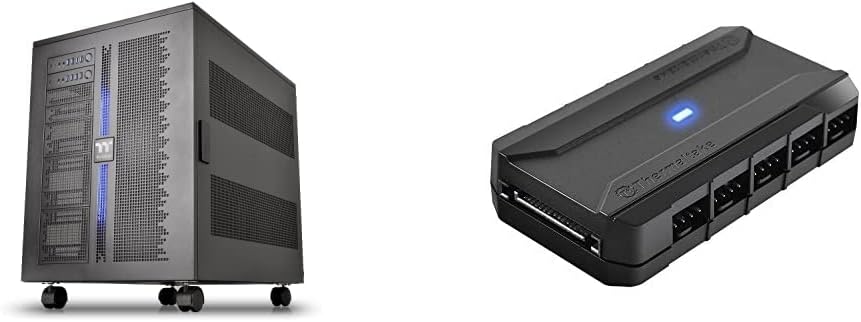
The Thermaltake Core W200 is distinct for its ability to house two separate systems in a back-to-back configuration. This unique design is perfect for users needing dedicated rigs for different tasks within a single chassis footprint.
We may earn a commission when you buy through this link, at no additional cost to you.
Its fully modular construction allows for easy dismantling and reconfiguration, offering immense flexibility for custom builds. The bundle includes a Commander FP hub, which simplifies fan control for up to ten PWM fans simultaneously.
Building in this case requires careful planning due to its dual-system nature, which may be challenging for beginners. The high cost reflects the specialized engineering and included accessories, which might be overkill for standard single-system setups.
This case is best suited for professionals or enthusiasts with specific dual-system requirements. If you need two independent PCs in one frame, the Core W200 offers a solution unmatched by standard enclosures on the market.
Supports installation of two motherboards, power supplies, and VGA cards for independent system operation in one chassis.
Supports up to two 600mm radiators, enabling massive cooling loops for extreme thermal performance needs.
We may earn a commission when you buy through this link, at no additional cost to you.
The Antec Flux Pro stands out with its combination of metal, glass, and wood for a high-quality textured look. It supports up to twelve fans simultaneously, ensuring powerful cooling for E-ATX builds in a full-tower format.
We may earn a commission when you buy through this link, at no additional cost to you.
Innovative features like the iShift PSU mount and CPU/GPU dual temperature display add functionality that helps monitor system health easily. The multi-directional vent design supports efficient airflow throughout the chassis.
The wood elements might attract dust more easily than metal or glass, requiring regular cleaning. The specific PSU mount angle can also complicate cable routing for those unfamiliar with the design.
This case is great for users who want a blend of style and performance in a full-tower size. If you appreciate unique materials and extensive fan support, the Flux Pro offers a compelling option for high-end builds.
The mix of metal, glass, and wood creates a unique aesthetic texture that sets it apart from standard cases.
With support for up to 12 fans, airflow is maximized to keep powerful hardware running at optimal temperatures.
We may earn a commission when you buy through this link, at no additional cost to you.
The ASUS ROG Strix Helios II is designed for showcase builds with premium aluminum front panels and dual tempered glass sides. It supports extremely long graphics cards up to 450mm, making it future-proof for new hardware releases.
We may earn a commission when you buy through this link, at no additional cost to you.
Its thermal performance is supported by pre-installed high-performance fans and a 3D-structured filter that balances cooling with dust protection. The advanced I/O panel includes multiple Type-C ports for versatile connectivity options.
While the construction is robust, it adds significant weight to the package. Some users may find the price high relative to other premium cases with similar features.
This case is ideal for those prioritizing build quality and GPU support. If you have a high-end rig and want a chassis that matches its prestige, the Helios II delivers on performance and style.
Accommodates graphics cards up to 450mm in length, ensuring space for the largest upcoming GPU models.
Features two USB 20Gbps Type-C ports and multiple USB-A ports for fast and versatile peripheral connections.
We may earn a commission when you buy through this link, at no additional cost to you.
The HAVN HS 420 uses a hybrid structure to direct cool air to the GPU while maintaining a traditional mid-tower size. Its heat-formed UniSheet glass panel offers a seamless view without visual distortion or seams.
We may earn a commission when you buy through this link, at no additional cost to you.
SimpliCable routing system and fan hub simplify cable management, ensuring a tidy look. With support for eleven 140mm fans and multiple radiators, cooling potential is high for a mid-tower chassis.
The glass panel is a unique feature but adds complexity to the build process. Some users may find the mid-tower size limits larger radiator configurations compared to full towers.
This case is perfect for users wanting a clean aesthetic with excellent airflow. If you value cable management and a unique glass design, the HS 420 is a strong contender in the dual-chamber category.
Dual-chamber design directs airflow directly to the centrally positioned GPU, optimizing thermal performance.
Top-to-bottom grooved guides cleanly route cables, ensuring a pristine overall appearance inside the case.
We may earn a commission when you buy through this link, at no additional cost to you.
The Thermaltake Capo X delivers parallel operation for two independent mATX systems from a single chassis. This design maximizes desk space and minimizes footprint while allowing separate I/O for each system.
We may earn a commission when you buy through this link, at no additional cost to you.
Configurable cooling supports up to thirteen 120mm fans, ensuring both systems remain cool. Hidden connector support allows for cleaner builds when using motherboards like ASUS BTF or MSI Project Zero.
Limited to mATX motherboards, this case restricts the size of components you can install. It may not be suitable for users requiring larger full-size ATX hardware.
This case is ideal for users needing two compact PCs in one unit. If you work in a tight space but require separate systems, the Capo X offers a unique and effective solution.
Houses two independent mATX systems simultaneously while minimizing the overall footprint on your desk.
Each system has its own power and reset, USB ports for independent control without cross-interference.
We may earn a commission when you buy through this link, at no additional cost to you.
The NZXT H6 RGB+ brings the dual-chamber design to a compact ATX form factor. It features a dedicated secondary chamber to isolate power and cables, improving airflow to critical components.
We may earn a commission when you buy through this link, at no additional cost to you.
Its seamless curved glass panel creates a stunning display without seams, and high-airflow mesh ensures efficient cooling. An integrated anti-sag bracket keeps heavy GPUs aligned properly.
This case ships without fans, allowing full customization but adding to the total cost. It also offers less expansion room than larger towers.
Best for users wanting a sleek compact build with dual-chamber benefits. If you value design and targeted airflow in a smaller footprint, the H6 RGB+ is a great choice.
A dedicated secondary chamber isolates power and cables from your main build for better thermal performance.
Single-piece tempered glass bent to a tight radius provides a clear view with minimal visual distortion.
We may earn a commission when you buy through this link, at no additional cost to you.
The Thermaltake View 380 TG features pillarless front and side tempered glass panels for a clean view. It supports hidden-connector motherboards to further reduce visible cables for a tidy aesthetic.
We may earn a commission when you buy through this link, at no additional cost to you.
Four hydraulic bearing ARGB fans are pre-installed, providing immediate cooling and lighting options. The 3-year warranty adds peace of mind for long-term ownership.
Glass surfaces may show fingerprints easily, requiring frequent cleaning. Fan expansion options are somewhat limited compared to models with mesh panels.
This case is ideal for users prioritizing a clean, modern look. If you want a hassle-free start with included fans and a great view, the View 380 TG is a solid choice.
Front and side tempered glass panels lack pillars, offering an uninterrupted view of the PC internals.
Compatible with motherboards that hide cables at the back for a seamless and clean build appearance.
We may earn a commission when you buy through this link, at no additional cost to you.
Choosing a dual system PC case requires careful consideration of airflow, size, and component support. This section outlines the key factors to evaluate before making your purchase.
A dual chamber layout separates the power supply and drives from the main components to improve airflow and reduce heat transfer. This design helps keep your CPU and GPU cooler by directing fresh air straight to the hottest parts of your system. Look for cases where the PSU is isolated to ensure maximum cooling efficiency and cleaner cable management.
High-performance builds need ample cooling options, so check how many fans and large radiators the case can hold. Cases supporting 120mm or 140mm fans in multiple positions allow you to customize airflow to suit your specific needs. Ensure the top and front panels accommodate 360mm or 420mm radiators if you plan to use liquid cooling.
Modern graphics cards are often large and heavy, requiring significant clearance and stability features. Check the maximum GPU length supported and look for anti-sag brackets or vertical mounts to prevent damage over time. Some cases also offer dual GPU holders if you plan to use multiple graphics cards for specialized tasks.
Proper cable management ensures airflow and aesthetics are maintained throughout your build. Look for cases with tie-down points, Velcro straps, and dedicated routing channels behind the motherboard tray. Features like SimpliCable guides or rear cable covers make the installation process much easier and cleaner.
The materials used in the case impact durability and acoustic performance significantly. Steel and aluminum panels offer strength and vibration damping, while tempered glass adds visual appeal but requires careful handling. Avoid thin plastics that may flex or rattle when the system is under load.
New motherboards often feature hidden connectors at the rear to reduce visible cable clutter. Ensure your chosen case supports these layouts to take full advantage of cleaner internal styling. This feature is becoming more common and adds significant value to the build process.
Front I/O ports determine how easily you connect external devices like drives or controllers. Look for USB 3.2 Gen 2 Type-C ports for fast data transfer speeds. Audio jacks and reset buttons should also be easily accessible from the top or front for convenience.
A solid warranty indicates the manufacturer's confidence in their product quality and longevity. Check if the case comes with a multi-year warranty covering defects in materials or workmanship. Good customer support can help resolve issues quickly if you encounter problems during installation or use.
Regularly clean dust filters and intake vents using a soft brush or compressed air to prevent airflow restriction. Accumulated dust can significantly reduce cooling performance and increase internal temperatures over time.
Ensure all screws and mounting points are securely tightened after assembly to minimize vibration and rattling noises. Loose components can lead to long-term damage or instability for heavy internal parts like GPUs.
Update the BIOS and fan control software occasionally to optimize fan curves and power management. Proper configuration helps maintain balanced temperatures while keeping noise levels low during normal use.
A dual system PC case allows users to install two independent systems or separate chambers for distinct components. This design improves airflow and cable management by isolating heat sources like the power supply. It is ideal for enthusiasts needing custom cooling zones or parallel operation for specialized tasks.
Yes, dual chamber cases typically offer better airflow because they separate the PSU and drives from main components. This prevents heat from the power supply from affecting the CPU and GPU. Direct intake paths also allow cooler air to reach critical parts more effectively.
It depends on the specific model as some include pre-installed fans while others do not. Check the product details to see if fans are included before buying. Adding high-quality fans can significantly improve cooling performance for demanding builds.
Most dual system cases support custom liquid cooling with varying radiator size limits. Verify that the case accommodates the specific radiator size you plan to use. Many models support 360mm or 420mm radiators for effective cooling of high-end hardware.
Case support varies widely from standard lengths to massive 450mm cards. Check the maximum GPU length spec in the product data to ensure compatibility with your chosen graphics card. Some cases also offer vertical mounts to showcase longer GPUs.
Most dual system cases support standard ATX and often E-ATX motherboards. Always verify the specific motherboard size compatibility listed for your chosen case to avoid fitment issues during installation.
Our top picks highlight the versatility of dual chamber designs with options like the NZXT H9 Flow RGB+ for balance and the Cooler Master HAF II 500 for raw cooling power. Whether you need a budget option like the ASUS TUF Gaming GT502 or a specialized model like the Thermaltake Core W200, there is a solution for every need.
When selecting a case, prioritize airflow efficiency and cable management features to ensure long-term system stability. A well-designed dual chamber layout not only improves thermals but also simplifies the building process for a cleaner look.
Remember to check current prices and availability before finalizing your purchase as these details often change. Verifying compatibility with your specific components will help you avoid unexpected issues during installation.