
AGFRC 20A BLHeli_S DSHOT600 ESC
4.3Editor score
Damped light enabled
Multiple digital protocols
Compact lightweight design
This guide compares the top ten ESCs for racing quadcopter builds, analyzing performance specs firmware features and reliability to help you choose the right
Choosing the right electronic speed controller is crucial for any racing quadcopter build. These components translate flight signals into motor power, directly affecting responsiveness and durability during intense maneuvers.
We evaluated ten leading models based on firmware support current ratings and physical design. Each product offers unique strengths for different racing styles ranging from lightweight freestyle to high-power endurance setups.
Every pick highlights key specifications and real-world performance traits to guide your decision. Please note that pricing and availability can change frequently so verify details before purchasing your next component.
4.3Editor score
4.4Editor score

This side-by-side comparison details the core specifications of each ranked ESC. Use this table to quickly identify voltage ranges current limits and protocol support before diving into the full reviews.




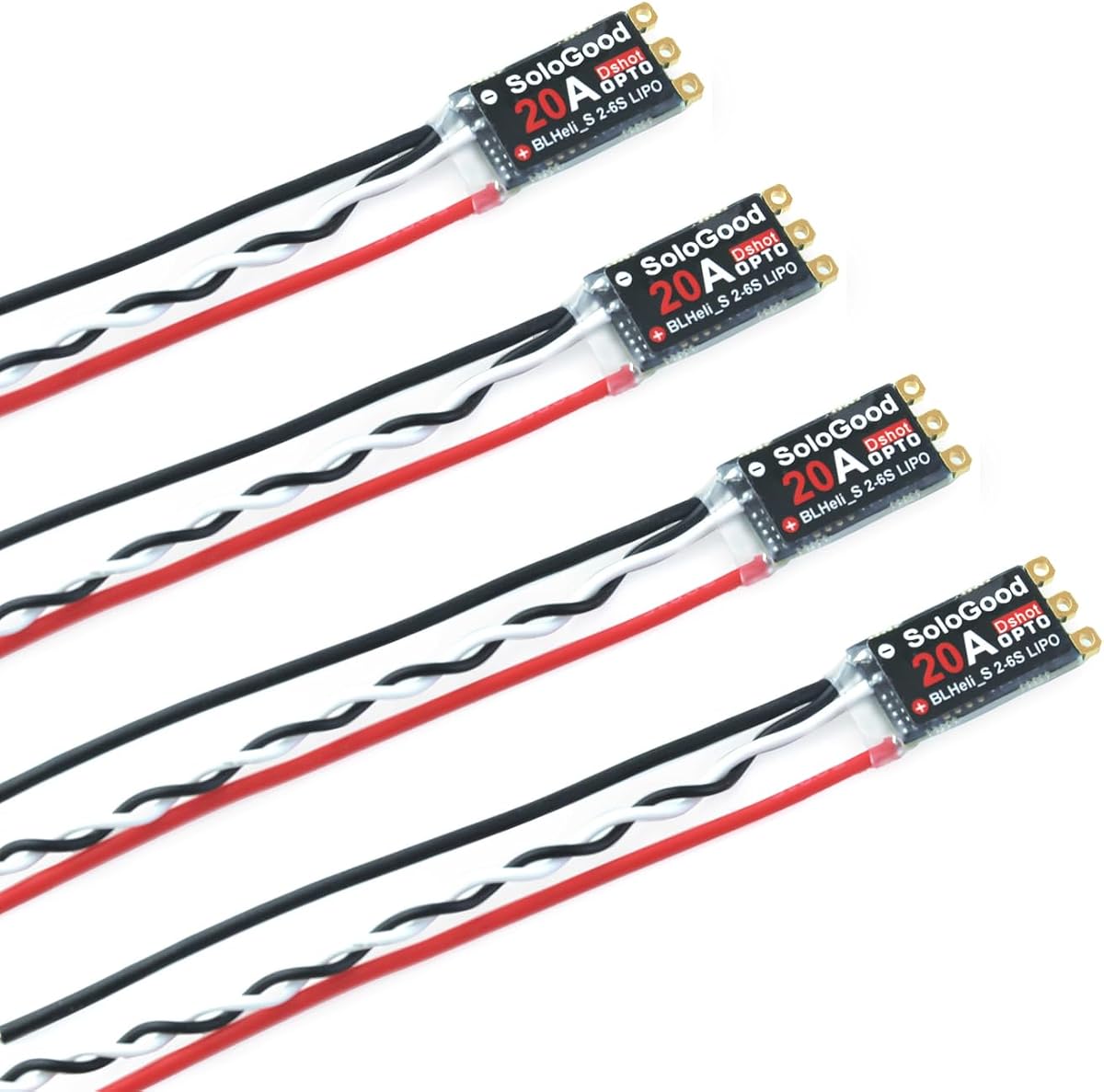
This ESC set delivers reliable performance for most racing quadcopter builds. With a 4.4 star rating it stands out for its balanced features and ease of use across various frame sizes.
We may earn a commission when you buy through this link, at no additional cost to you.
The BLHeli_S firmware allows straightforward upgrades via the signal cable which simplifies maintenance. Twisted pair throttle wiring effectively minimizes crosstalk ensuring clean motor signals even under high load conditions.
While limited to 2-4S battery configurations it offers smooth speed control suitable for competitive flying. The components are selected for high current capability though advanced thermal management is not explicitly highlighted.
Builders seeking a dependable plug-and-play solution for mid-power quads will find this ESC ideal. Its compatibility with fixed-wing modes adds versatility beyond pure racing applications.
BLHeli_S firmware enables easy customization and bug fixes through standard signal cable flashing procedures.
Twisted pair throttle cables reduce electromagnetic interference ensuring precise motor response during aggressive maneuvers.
We may earn a commission when you buy through this link, at no additional cost to you.
Designed for FPV racing and freestyle quadcopters this ESC set emphasizes precision control and compact dimensions. Its muted mode feature reduces operational noise while maintaining efficiency during flight sessions.
We may earn a commission when you buy through this link, at no additional cost to you.
The preloaded BLHeli_S firmware with bootloader ensures reliability out of the box. A small footprint integrates seamlessly into tight racing builds where space optimization is critical for weight distribution and aerodynamics.
Rated for 20A continuous with 25A bursts it handles standard racing loads well. The design prioritizes stable power delivery though user reviews are currently unavailable to confirm long-term durability claims.
Pilot seeking a lightweight solution for 2-4S setups will appreciate the balanced performance. The DShot support ensures fast digital signal processing for immediate throttle response during races.
Muted mode allows for quieter flight operation which is beneficial for noise-sensitive environments or indoor flying.
Small physical dimensions enable cleaner builds without compromising electrical performance or current capacity.
We may earn a commission when you buy through this link, at no additional cost to you.
This 4-in-1 ESC provides substantial power for larger racing quadcopter builds using 6S batteries. Its immersion gold design resists heat and current spikes ensuring consistent output during extended flights.
We may earn a commission when you buy through this link, at no additional cost to you.
Large ESC pads allow direct plug-in connections to flight controllers simplifying assembly. Support for multiple DShot protocols ensures compatibility with modern flight stacks and high-speed signal requirements.
While robust for high-voltage setups it may be excessive for lightweight freestyle quads. The stable output delivers powerful flight characteristics though detailed firmware options are not explicitly outlined in product specs.
Builders targeting high-speed racing or heavy payloads will benefit from the 60A rating. The design reduces soldering complexity while maintaining durability against thermal stress.
Immersion gold coating enhances resistance to high temperatures protecting internal components during intense current draws.
Direct plug-in pads eliminate soldering hassles reducing build time and potential connection errors.
We may earn a commission when you buy through this link, at no additional cost to you.
Achieving a perfect 5-star rating this ESC impresses with intelligent adaptive features and responsive control. Its new core software optimizes throttle performance for diverse quadcopter configurations without manual tuning.
We may earn a commission when you buy through this link, at no additional cost to you.
Auto-adjusting timing meets most applications out of the box reducing setup complexity. Signal frequencies above 600Hz ensure compatibility with modern flight controllers while crosstalk reduction maintains signal integrity.
The wide compatibility range supports 2-6S batteries making it versatile for various build types. While physical dimensions are detailed the focus remains on electronic adaptability for smooth flight characteristics.
Pilots prioritizing ease of use and reliable performance will find this ESC compelling. The high rating suggests consistent quality and customer satisfaction across multiple use cases.
Auto-adjusting timing simplifies setup by automatically optimizing motor performance based on connected hardware.
Reduced crosstalk ensures precise throttle commands reach motors without interference during high-speed operations.
We may earn a commission when you buy through this link, at no additional cost to you.
This ESC offers excellent value for builders seeking reliable performance without breaking the budget. Its 4.3 star rating reflects consistent user satisfaction with throttle responsiveness and firmware flexibility.
We may earn a commission when you buy through this link, at no additional cost to you.
Damped light technology enhances sensitivity while reducing motor speed noise making flights smoother and quieter. Support for DShot PWM and Oneshot protocols ensures compatibility with most flight stacks and receivers.
Hardware PWM drive contributes to low voice operation which is appreciated in competitive environments. The compact size fits easily into racing frames though high-current endurance may be limited to standard builds.
New pilots or those upgrading older quads will find this ESC a practical choice. It balances cost-effectiveness with essential features needed for smooth and precise quadcopter control.
Enabling damped light improves motor control sensitivity and reduces noise during throttle transitions.
Support for multiple signal protocols ensures compatibility with a wide range of existing flight controllers.
We may earn a commission when you buy through this link, at no additional cost to you.
Designed for extreme power requirements this ESC delivers massive current capacity and advanced telemetry features. Its 160A continuous rating supports high-performance racing quadcopters needing sustained thrust during competitions.
We may earn a commission when you buy through this link, at no additional cost to you.
A large metal heat sink ensures stable output by managing thermal loads effectively. The built-in ammeter provides real-time updates on motor speed and current allowing pilots to monitor performance dynamically.
Dual-pad power design simplifies welding and enhances current carrying capacity for demanding applications. Though physically larger it maintains performance during high-load scenarios without voltage sag or overheating issues.
Advanced pilots building heavy-duty racing quads will appreciate the telemetry integration. This ESC sets a premium standard for reliability and data-driven flight optimization.
Built-in ammeter enables real-time monitoring of current and temperature for proactive performance management.
Large metal heat sink dissipates heat efficiently allowing consistent power delivery during long sessions.
We may earn a commission when you buy through this link, at no additional cost to you.
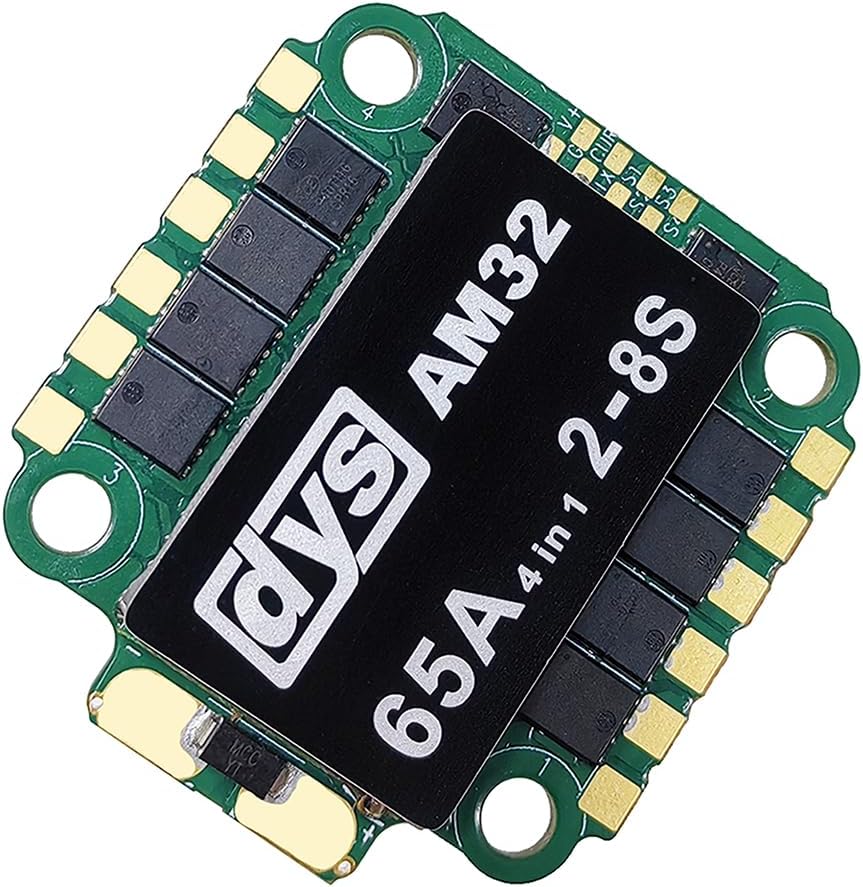
This ESC leverages modern AM32 firmware to deliver precise control across a wide voltage range. Its 32-bit processor enables refined motor timing and responsiveness ideal for both racing and freestyle quadcopters.
We may earn a commission when you buy through this link, at no additional cost to you.
Upgraded MOSFETs improve performance by 15% over previous versions supporting heavier loads efficiently. The 30x30mm mounting holes ensure compatibility with standard frames and flight controllers used in the community.
Despite promising specs the lower user rating suggests potential variability in quality control. Builders should consider firmware updates and testing before committing to high-stakes racing scenarios.
Pilots interested in AM32 features and broad voltage support may find this ESC useful. Proper configuration and careful handling are recommended to maximize its potential capabilities.
32-bit processing enables refined motor control and access to advanced configuration options in Betaflight.
Firmware support allows users to access the latest features and performance improvements regularly.
We may earn a commission when you buy through this link, at no additional cost to you.
Combining flight controller and ESC in one stack simplifies wiring for racing quadcopter builds. This unit supports up to eight motors providing flexibility for unique configurations like X8 setups.
We may earn a commission when you buy through this link, at no additional cost to you.
Integrated STM32 processors ensure robust data recording and control precision. Multiple BEC outputs power analog and digital video systems independently reducing complexity and potential interference.
The 70A rating supports a wide range of battery configurations from 2S to 8S. LED support allows custom lighting for night flights enhancing visibility and aesthetic appeal during operations.
Pilot seeking streamlined builds with reliable telemetry and video power will appreciate this stack. While reviews vary the integrated approach saves space and reduces soldering requirements significantly.
All-in-one design reduces wiring clutter and simplifies assembly for complex multirotor configurations.
WS2812 LED support enables dynamic lighting controlled directly through flight stack firmware settings.
We may earn a commission when you buy through this link, at no additional cost to you.
This ESC combines high-quality hardware with optimized firmware for superior throttle response and noise reduction. Its 4.4 star rating indicates strong user satisfaction with overall performance and reliability.
We may earn a commission when you buy through this link, at no additional cost to you.
Hardware-generated PWM improves motor starting and reduces noise during operation. The 50 MHz operating frequency ensures responsive signal processing essential for competitive quadcopter racing scenarios.
Support for Bluejay firmware adds versatility for users preferring alternative firmware options over standard BLHeli. The lightweight design helps minimize overall drone weight for faster acceleration and agility.
Pilots seeking balanced performance with low noise output will find this ESC appealing. It delivers consistent power suitable for mid-range racing builds with efficient current handling.
Hardware-generated PWM minimizes acoustic noise while maintaining smooth and efficient throttle transitions.
Fast MCU operation ensures timely signal processing for precise motor control during rapid maneuvers.
We may earn a commission when you buy through this link, at no additional cost to you.
This ESC prioritizes efficiency and thermal management through advanced PCB design and processing capabilities. Its AM32 firmware provides modern control features suitable for both racing and freestyle quadcopters.
We may earn a commission when you buy through this link, at no additional cost to you.
Multi-layer PCB construction increases over-current capability while aiding heat dissipation during high loads. Angled solder pads reduce welding difficulty simplifying assembly for builders new to complex electronics setups.
PWM frequencies up to 96 kHz offer flexibility in motor tuning and response characteristics. While efficiency is improved the moderate rating suggests varying experiences with long-term stability or setup.
Pilots looking for efficient power conversion and easy installation may favor this ESC. It balances modern firmware support with practical build considerations for racing applications.
Multi-layer PCB design enhances heat dissipation ensuring stable performance under high current loads.
Angled solder pads simplify the welding process and reduce the risk of connection errors.
We may earn a commission when you buy through this link, at no additional cost to you.
Selecting the right ESC involves balancing voltage support current limits and firmware features to match your specific racing style and hardware.
Ensure the ESC supports your battery's cell count to avoid damage. Most racing models handle 2S to 6S configurations but high-power setups may require 8S compatibility.
Verify maximum input voltage ratings before connecting LiPo batteries to prevent component failure during flights.
Continuous ratings determine sustained power delivery while burst ratings handle peak thrust moments like takeoff. Match these values to motor requirements for optimal performance.
Selecting an ESC with higher current capacity provides headroom for aggressive racing without thermal throttling or voltage sag.
Modern ESCs often support BLHeli_S or AM32 firmware enabling customization and advanced features. Check if flashing is accessible via signal cables for convenience.
Upgradable firmware ensures long-term compatibility with new flight stacks and performance enhancements released by developers.
Digital protocols like DShot600 provide faster and more reliable communication between flight controllers and motors. Ensure compatibility with your receiver and flight stack.
Support for multiple protocols like PWM and OneShot offers flexibility for older systems or mixed setups during development.
Effective heat dissipation prevents overheating during prolonged high-load flights. Look for metal heat sinks or high-quality PCB designs.
Good thermal management extends ESC lifespan and maintains consistent performance even in hot racing environments.
Compact ESCs fit better in lightweight racing frames reducing overall weight. Verify mounting hole spacing like 30x30mm to match standard drone chassis.
Proper fit ensures secure installation and protects electronics from vibrations or impacts during landings and crashes.
Premium ESCs include built-in ammeters providing real-time data on current and temperature. This helps pilots monitor battery health and motor load.
Telemetry support enables informed decisions during flight preventing crashes caused by power shortages or overheating components.
Quality wiring like twisted pairs minimizes electromagnetic interference that can cause motor glitches. This is critical for responsive control.
Reducing crosstalk ensures throttle signals reach motors accurately without noise from high-current motor lines interfering with control lines.
Always check voltage compatibility before connecting LiPo batteries to prevent irreversible damage to the ESC components.
Use proper soldering techniques on motor and battery leads to ensure secure electrical connections and avoid signal loss.
Monitor flight temperatures during initial test runs and ensure adequate airflow around the ESC to prevent overheating.
BLHeli_S is a stable widely supported firmware ideal for general racing. AM32 offers 32-bit processing for more advanced tuning and performance optimization on compatible hardware.
Yes generally 4S ESCs work on 2S batteries as they operate within the voltage range. Ensure your receiver and motors are compatible with 2S for proper operation.
Many modern ESCs allow updates via the signal cable using tools like Betaflight configurator. Check product specs to confirm signal-based flashing capabilities before purchasing.
DShot provides faster digital communication with better noise immunity reducing crosstalk issues. This leads to more precise motor control and smoother throttle response during races.
Telemetry is optional but beneficial for monitoring current draw and temperature during aggressive flights. It helps prevent unexpected crashes caused by power issues or overheating.
Use silicone sealant on solder joints and avoid flying in rain to keep electronics dry. Proper encapsulation protects circuits from moisture and corrosion during outdoor flights.
Overheating often results from undersized ESCs for the motor load poor ventilation or damaged motor windings. Ensure proper sizing and airflow to maintain safe operating temperatures.
Mixing is possible if voltage and current ratings match across all motors. Consistency in firmware reduces tuning complications ensuring balanced flight performance across the frame.
This guide highlights ten top ESCs ranging from budget-friendly options to high-performance premium models suitable for diverse racing needs.
Prioritize current ratings and firmware support to match your motor and battery configuration for reliable speed and responsiveness during flights.
Verify current pricing and availability on Amazon before purchasing to ensure you get the best value for your quadcopter build.