
Construction Adhesive Anchoring Adhesive
4.2Editor score
Extra nozzle included
Fast-curing polyester resin
Works with hollow materials
Discover the top chemical anchors for concrete reviewed for 2026. We compare epoxy systems, curing times, and bond strength to help you choose the right
Chemical anchors for concrete provide a reliable method for securing heavy loads into solid substrates without relying on mechanical expansion. These systems use high-strength resins to bond threaded rods or rebar directly into drilled holes, ensuring stability in various environments.
We evaluated ten leading products based on their curing speed, bond strength, versatility in wet or dry conditions, and ease of application. Each option offers unique benefits for professionals and DIYers looking to anchor fixtures securely in masonry or concrete structures.
Every pick highlights key specifications, real-world performance data, and ideal use cases to guide your decision. Keep in mind that availability and pricing fluctuate regularly, so verify current details before making your final purchase decision online.
4.2Editor score
4.5Editor score

5.0Editor score
This side-by-side comparison outlines the key specifications and capabilities of each ranked chemical anchor product to help you identify the best fit for your specific structural requirements.





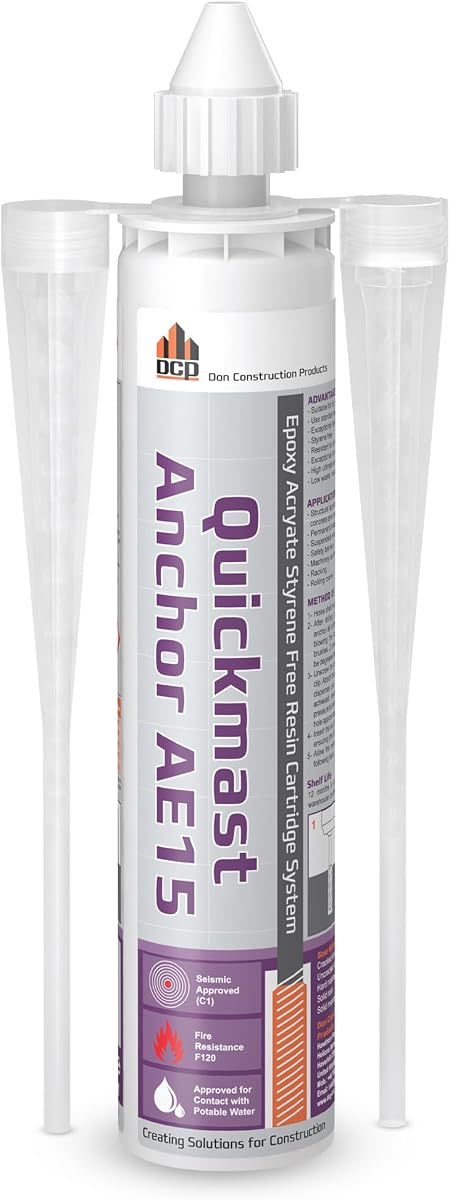
The DCP Quickmast AE15 stands out as a high-performance two-part epoxy designed for securing rebar and threaded rods in concrete. It earned a 4.5 rating from users who appreciate its balance between working time and curing speed.
We may earn a commission when you buy through this link, at no additional cost to you.
This system offers a four to ten minute working window, allowing installers to position anchors before the resin sets. It reaches full load-bearing capacity in forty to one hundred forty-five minutes depending on temperature.
A key trade-off is the single 10.1 fl oz volume, which may be small for large projects. However, the quick cure time means you can process multiple holes in sequence without long delays.
Professionals needing a reliable solution for diverse environments should choose this anchor. It performs well in both dry and flooded holes, making it ideal for complex structural tasks.
This epoxy cures quickly so you can resume work sooner without waiting for days.
It bonds strongly even in wet or flooded concrete conditions where other anchors fail.
We may earn a commission when you buy through this link, at no additional cost to you.
This construction adhesive offers a cost-effective entry point for anchoring needs with a durable hold on solid base materials like concrete and brick. It holds a 4.2 rating from users looking for quick fixes.
We may earn a commission when you buy through this link, at no additional cost to you.
The inclusion of an extra nozzle is a thoughtful addition that saves downtime when multiple applications are required. Its fast-curing polyester resin ensures time-saving installation for efficient projects.
While it works well for standard solid bases, care must be taken with hollow blocks to ensure the sleeve method is used correctly. The quick set time can also be limiting for large anchors.
Budget-conscious DIYers needing a simple bonding solution should consider this adhesive. It provides reliable strength without demanding expensive equipment or complex application procedures.
This option delivers strong bonds at a lower price point than premium epoxy systems.
The extra nozzle ensures you can continue working even if the first one clogs.
We may earn a commission when you buy through this link, at no additional cost to you.
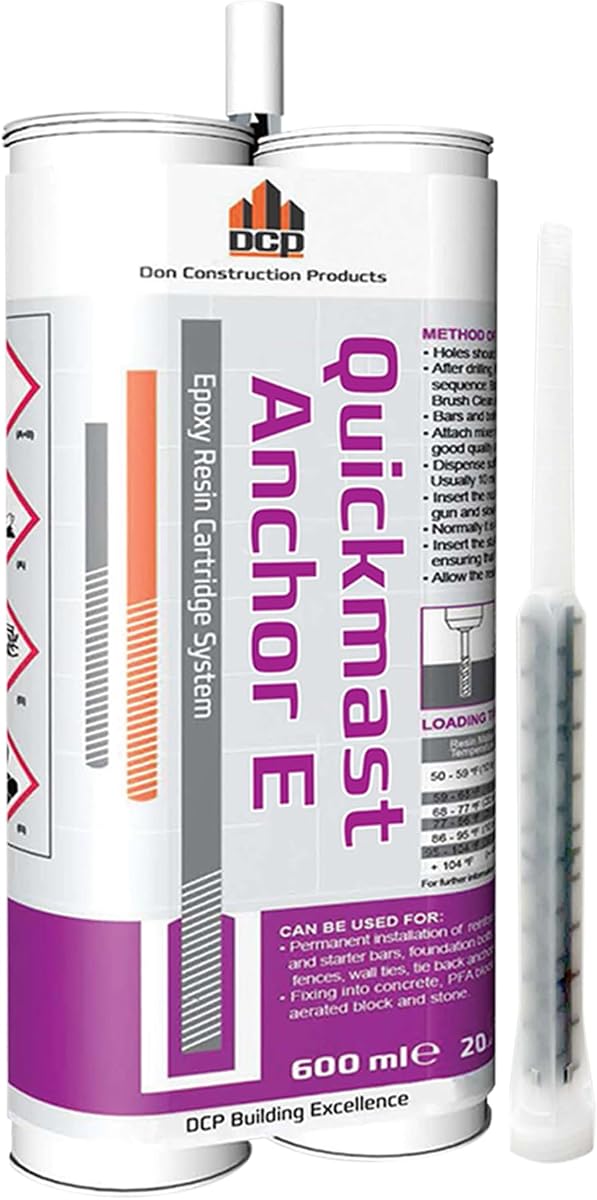
This premium 2-pack delivers a high-strength anchoring system with a perfect 5.0 rating, making it a top choice for demanding construction projects. It includes a specialized epoxy gun for seamless operation.
We may earn a commission when you buy through this link, at no additional cost to you.
The 25:1 thrust ratio of the included gun ensures flawless dispensing with less mess and more accuracy during application. The large volume ensures you can finish extensive jobs without running out of adhesive.
The main drawback is the higher cost compared to standard cartridges, which might not suit casual DIYers. However, the efficiency gained from the gun and the large capacity offsets this for pros.
Contractors seeking a professional-grade solution with minimal equipment friction should choose this pack. The precision and volume make it ideal for large-scale installations where consistency matters.
The dedicated gun ensures even mixing and precise placement of the epoxy resin.
Two large cartridges allow you to complete many anchor points without frequent refills.
We may earn a commission when you buy through this link, at no additional cost to you.
This high-strength epoxy is designed for quick applications where time is critical, with a 4.4 rating for its reliable performance in various settings. It sets in just twelve minutes for fast project turnover.
We may earn a commission when you buy through this link, at no additional cost to you.
The resin is moisture tolerant and resists chemicals, making it suitable for floors or walls exposed to harsh conditions. Its gray color helps it blend in seamlessly with existing concrete surfaces.
However, the short set time requires precise mixing and installation, which can be difficult for beginners. The smaller volume also means multiple units are needed for large installations.
Users needing a discreet and quick-set anchor for minor repairs should consider this option. It offers strong performance for specific tasks where speed and aesthetics are prioritized.
The gray color helps the anchor blend into the concrete surface for a cleaner look.
It withstands exposure to solvents and chemicals better than standard adhesives.
We may earn a commission when you buy through this link, at no additional cost to you.
This pack of rods provides a perfect companion for chemical anchors, ensuring you have the exact hardware needed for installation. It holds a 5.0 rating for its precise manufacturing and reliability.
We may earn a commission when you buy through this link, at no additional cost to you.
The M8 x 130 dimensions are ideal for standard anchoring tasks in concrete or masonry. The rods are designed to work seamlessly with high-strength epoxies to create secure connections.
Keep in mind that the epoxy adhesive is sold separately, so you must purchase a compatible resin. This adds a step to planning but allows you to choose the adhesive that suits your needs.
Professionals needing a guaranteed fit for threaded rods should stock this reliable hardware. It ensures the mechanical component matches your epoxy anchor system for a strong hold.
The rods are made to exact dimensions ensuring a perfect fit within drilled holes.
High-quality steel materials resist corrosion and maintain strength over time.
We may earn a commission when you buy through this link, at no additional cost to you.
This high-performance epoxy is notable for being certified safe for use in drinking water systems, making it a top choice for plumbing or sensitive environments. It holds a 4.1 rating for safety and performance.
We may earn a commission when you buy through this link, at no additional cost to you.
The adhesive is free of styrene and solvents, which improves safety for the user and the environment. It creates a strong secure hold for threaded bars in uncracked concrete and masonry.
Achieving its full strength requires a very clean hole free of dust, which can be time-consuming. The lower rating suggests some users find the preparation demanding compared to other brands.
Projects involving potable water or strict environmental safety should prioritize this adhesive. It offers peace of mind regarding chemical safety while providing a secure structural bond.
It is certified safe for use where drinking water pipes may pass through anchors.
The absence of styrene and solvents reduces health risks during application.
We may earn a commission when you buy through this link, at no additional cost to you.
This versatile system is highly rated at 4.7 for its ability to handle heavy-duty fastenings and crack repair simultaneously. It provides a substantial volume of resin for demanding structural applications.
We may earn a commission when you buy through this link, at no additional cost to you.
The generous working time of three to twenty minutes allows for precise installation without rushing. It adheres well to both concrete and steel surfaces, ensuring a durable bond in various scenarios.
The dual cartridge format requires a standard dual applicator gun which may be an extra cost. However, the flexibility in loading capacity makes it worth the investment for larger tasks.
Anyone needing a robust epoxy for complex jobs should choose this system. It balances performance and volume effectively for heavy-duty installations and structural repairs.
The longer cure window allows you to insert rods without worrying about setting too fast.
It is designed to handle heavy loads like railway tracks and ground anchors.
We may earn a commission when you buy through this link, at no additional cost to you.
This specific anchor is engineered for environments with significant vibration such as stadiums or conveyor belts. It is made of zinc-plated steel for durability and corrosion resistance.
We may earn a commission when you buy through this link, at no additional cost to you.
The internal threaded design allows for a secure connection that resists loosening under mechanical stress. It is rated to perform well in high-vibration conditions where standard anchors might fail.
Because it is a niche product, user ratings are not available, but its specifications indicate high reliability. It may be overkill for simple home projects but essential for industrial machinery.
Facilities needing secure mounts for vibrating equipment should look for this anchor. It provides a specialized solution for challenging mechanical environments.
This anchor is designed to withstand continuous shaking without loosening.
The zinc plating helps prevent rust in outdoor or humid environments.
We may earn a commission when you buy through this link, at no additional cost to you.
These filters are used to improve the load capacity of chemical anchors in filled or irregular holes. They are a premium accessory that enhances the performance of standard resin systems.
We may earn a commission when you buy through this link, at no additional cost to you.
By using these filters, attachment points can be saved due to the higher load level achieved. They are particularly useful for overhead mounting and filled holes where resin retention is key.
The filters are an additional component rather than a standalone anchor system. This requires planning and budgeting for extra parts but ensures maximum stability for critical loads.
Engineers needing to maximize load capacity in difficult holes should use these filters. They provide an economical way to improve performance without changing the entire anchor system.
Using filters can increase the overall load capacity of your anchor system.
These are perfect for overhead installation where resin flow control is vital.
We may earn a commission when you buy through this link, at no additional cost to you.
This professional-grade system is code compliant for bulk applications and meets various engineering standards. It is designed for use in both cracked and uncracked concrete for structural integrity.
We may earn a commission when you buy through this link, at no additional cost to you.
A key feature is its ability to work in smooth bore holes without needing roughing, which saves time. It also performs well in water-saturated conditions, expanding its range of applications.
The 254 ml volume is relatively small, making it costlier per ounce compared to larger systems. However, for small professional jobs requiring code compliance, it offers unmatched reliability.
Users needing a certified product for regulated construction should choose this epoxy. It ensures safety and compliance with minimal surface preparation.
It meets international building codes ensuring safety and legality in construction.
This epoxy works well in smooth holes eliminating the need for roughing the surface.
We may earn a commission when you buy through this link, at no additional cost to you.
Choosing the right chemical anchor requires understanding the substrate, load requirements, and environmental conditions to ensure a secure and lasting installation.
Ensure the anchor resin is compatible with your base material such as concrete masonry or stone. Some products are rated for cracked concrete while others are for solid only.
Check the product specifications to confirm it matches your specific construction material.
Determine the weight and tension the anchor must support before selecting a product. Heavy machinery requires higher load ratings than light fixtures.
Always choose a system with a capacity exceeding your project needs for safety.
Consider how quickly the resin sets relative to your schedule. Fast curing is useful for small jobs while longer working times help with complex setups.
Balance speed with the time you need to position the hardware accurately.
Check if the anchor can be used in wet or flooded holes if your site is damp. Some epoxies are designed for dry environments only and will fail if moisture is present.
Select a product rated for the moisture levels you expect at the installation site.
Estimate the total volume needed for your project to avoid running out mid-job. Larger cartridges are more efficient for multiple anchors while small tubes are for repairs.
Buy in bulk packs if you have many holes to drill to save on shipping.
Verify that the cartridge fits your existing caulking gun or if you need a specific dual mixer gun. Specialized tools can add cost but improve mixing accuracy.
Choose a system that matches your available equipment to simplify setup.
Look for certifications like code compliance or drinking water safety if relevant to your project. Regulatory requirements may dictate specific chemical properties.
Prioritize products that meet safety standards for public or regulated structures.
Consider established brands known for quality control and reliable performance. User reviews and industry ratings can help identify trustworthy manufacturers.
Choose a brand with a proven track record for consistent results.
First drill a hole of the specified diameter and depth for your anchor using a hammer drill. Ensure the hole is clean and dust-free by blowing it out and using a brush.
Next inject the epoxy resin into the hole from the bottom up to avoid air pockets. Insert the threaded rod or rebar into the resin and hold it steady while it begins to set.
Finally allow the resin to cure fully before applying any load to the anchor. Check the manufacturer’s recommended times and do not rush the process.
A chemical anchor is a system that uses a resin to bond a threaded rod or rebar into a drilled hole. It creates a strong secure hold without mechanical expansion.
You must drill the hole to the correct size and clean it thoroughly of dust and debris. Use a brush and blow pump to ensure the surface is clean before applying resin.
Yes many high-quality chemical anchors are designed to work in damp or even flooded holes. Check the product details to confirm it is rated for wet conditions.
Curing times vary by product and temperature ranging from minutes to hours. Always refer to the manufacturer’s guidelines for full load-bearing capacity times.
Most two-part epoxies require a standard dual cartridge caulking gun with a static mixer nozzle. Some premium kits include a dedicated gun for easier application.
Yes for hollow blocks it is recommended to use a mesh sleeve to contain the resin. This ensures the epoxy bonds properly to the solid parts of the block.
Chemical anchors often provide higher load capacity and are better for cracked concrete. They do not expand the material like mechanical anchors which can cause stress.
Store unused cartridges in a cool dry place away from direct sunlight. Proper storage ensures the resin remains effective for future use.
The top picks include the DCP Quickmast AE15 for overall value the Construction Adhesive for budget and the Quickmast E 2-Pack for premium quality.
Prioritize safety and code compliance when selecting an anchor for critical structural projects to ensure lasting stability.
Always verify the current prices and availability online as these factors may change after publication.