
Snapmaker U1 3D Printer,4-Toolhead with 5s Toolchanger,Multi-Color Printing
4.5Editor score
4-toolhead system with 5s changer
True multi-material printing
500 mm/s high-speed CoreXY
This guide compares the top 3D printer for engineering prototypes including speed, accuracy, and material compatibility to help engineers choose the right
Choosing the right 3D printer for engineering prototypes requires balancing speed, precision, and material versatility. Engineers need machines that handle complex geometries and functional materials reliably. The market offers many options ranging from desktop units to industrial systems designed for rigorous testing environments.
We evaluated ten top-rated printers based on build volume, print speed, material support, and ease of use. Each model was analyzed for its ability to produce accurate prototypes quickly. Our comparison highlights key features that matter most to professionals developing functional parts and testing designs efficiently.
Each pick below shows specific strengths for different engineering workflows. Whether you need multi-material capability or large-scale printing, these models cover diverse needs. Note that product availability and pricing may change over time so check current listings before making your final decision for your lab or office.
4.5Editor score

3.5Editor score

4.5Editor score
This side-by-side comparison highlights key specifications across all ten selected printers to help you identify which model best fits your engineering prototype requirements based on build volume speed and material support.


The Original Prusa XL stands out as a top contender for engineering teams needing large-format multi-material capabilities. It holds a solid reputation for reliable industrial-grade performance with its dual toolhead system enabling seamless switching between materials for complex prints and functional prototypes.
We may earn a commission when you buy through this link, at no additional cost to you.
Its segmented heated bed system improves energy efficiency while reducing warping on large prints. The CoreXY precision and speed ensure accurate fast printing even during complex multi-material operations. Full integration with PrusaSlicer and Printables.com streamlines multi-material production workflows effectively.
While the assembly process requires careful handling of fragile parts like the LCD and extruder assembly, these components are designed for quick installation. This ensures you have your Prusa XL up and running in no time with support from 24-hour professional customer service.
This machine is ideal for studios and advanced makers requiring large output without compromising on quality. If you need reliable engineering-grade performance at scale with lifetime technical assistance, the Prusa XL delivers value for complex prototyping tasks.
Enables seamless switching between materials for complex prints and soluble support structures without manual intervention.
Intelligent heating zones improve energy efficiency and reduce warping on large prints for reliable first-layer adhesion.
We may earn a commission when you buy through this link, at no additional cost to you.
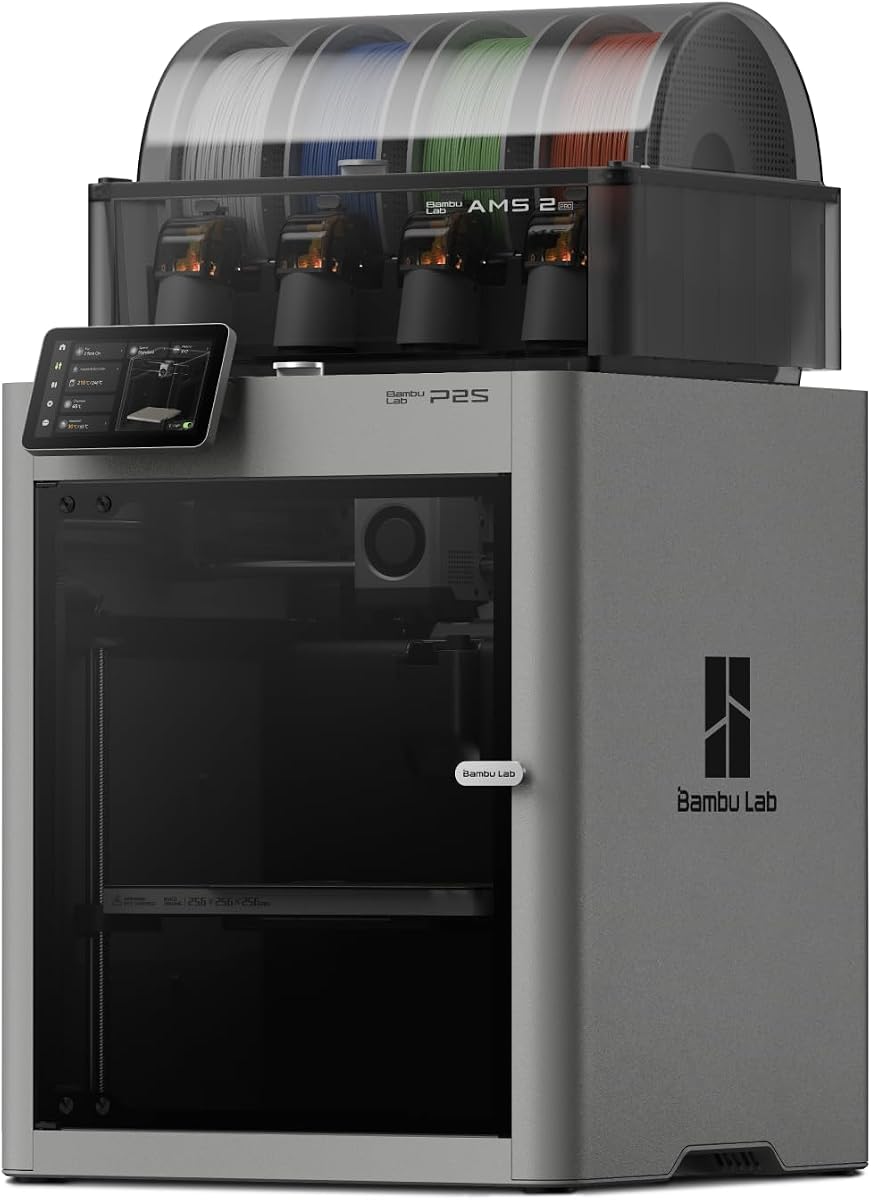
The Bambu Lab P2S Combo delivers high-speed precision for engineering prototypes with print speeds up to 600 mm/s while maintaining exceptional accuracy. It features the PMSM Servo Extruder and Active Flowrate Compensation ensuring every layer stays sharp and smooth with flawless corners.
We may earn a commission when you buy through this link, at no additional cost to you.
Setup is incredibly fast allowing you to start printing in just 15 minutes. With AI failure detection and automatic calibration, this printer makes professional-grade 3D printing effortless even for beginners. The adaptive airflow system balances cooling and heat retention for overhangs.
The AMS 2 Pro enables seamless multi-color and multi-material printing with built-in filament drying keeping every spool ready. While the P2S printer alone does not support multi-color printing, the combo version required ensures you have full workflow capabilities without extra purchases.
This model is perfect for teams needing speed and reliability without complex setup. Explore over one million 3D models on MakerWorld and bring them to life with a smooth unified workflow from design to finished print efficiently.
Prints up to 600 mm/s while maintaining exceptional accuracy with PMSM Servo Extruder and active flowrate compensation.
Adaptive Airflow System balances cooling and heat retention keeping overhangs crisp and chamber warm for engineering materials.
We may earn a commission when you buy through this link, at no additional cost to you.
The QIDI Max4 Combo offers an ultra-large build volume of 390x390x340mm enabling you to print large industrial parts and complex molds in one go. It features closed-loop motors on X and Y axes achieving high precision and stability for smooth precise printing with excellent surface quality.
We may earn a commission when you buy through this link, at no additional cost to you.
Its 65C active heated chamber and self-developed Polar Cooler system create ideal conditions for high-temperature materials like ABS-CF PC and PPS-CF. The 40mm3/s high-flow hotend supports standard materials and industrial-grade abrasive materials like carbon fiber-reinforced nylon effectively.
Smart monitoring and user-friendly design include a built-in AI camera that detects printing abnormalities and pauses printing instantly. A large touch screen with optimized interface offers smooth operation suitable for both professionals and enthusiasts needing advanced control.
Expandable multi-color printing is possible by connecting with QIDI BOX to achieve 16-color and multi-material printing. This provides you with a worry-free 3D printing experience with intelligent filament management real-time level monitoring and automatic pause when filament runs out.
Print large industrial parts complex molds and custom prototypes in one go without splitting using extra large area.
65C heated chamber and hardened steel nozzle support high-temperature materials like ABS-CF PC and PPS-CF reliably.
We may earn a commission when you buy through this link, at no additional cost to you.
The Snapmaker U1 stands out with its 4-toolhead system and 5-second tool changer enabling true multi-color printing without manual filament swaps. Powered by the SnapSwap system it features four independent toolheads with filaments preloaded and preheated for seamless switching between materials.
We may earn a commission when you buy through this link, at no additional cost to you.
It minimizes wasted material during filament changes reducing filament waste by up to 5X and enabling up to 5X faster multi-color printing. Its robust locking mechanism has been validated through over 1000000 swaps with zero failures making it easier to create functional parts.
Smart calibration including automatic toolhead offset calibration and vibration compensation ensures smooth dimensionally accurate and reliable print quality. The rigid CoreXY motion system with lightweight carbon fiber X-axis rails enables speeds up to 500 mm/s maintaining accuracy and stability.
With a built-in model library and custom open-source slicing software Snapmaker Orca it is easy to get started. This machine simplifies every step from setup to finished print making it suitable for beginners hobbyists or professionals with a one-year warranty.
Automatic tool changer reduces tool change time from around 2 minutes to just 5 seconds with validated robust locking.
Combines rigid and flexible materials water-soluble supports and engineering materials in a single print without manual intervention.
We may earn a commission when you buy through this link, at no additional cost to you.
The Bambu Lab A1 offers unparalleled speed and precision for beginners with an impressive acceleration of 10000 mm/s². It delivers blazing-fast printing while maintaining exceptional accuracy and detail in your prints making it an accessible choice for those new to 3D printing.
We may earn a commission when you buy through this link, at no additional cost to you.
Full-auto calibration ensures optimal performance for every print taking care of all processes automatically without manual hassles. Active flow rate compensation algorithmically compensates flow rates to extrude with accuracy ensuring flawless prints consistently across different projects and setups.
Its user-friendly interface and simplified touchscreen make it easy to use with a 1-Clip quick swap nozzle for convenient maintenance. The quiet printing environment with active motor noise canceling allows you to focus on your work while the A1 brings your ideas to life.
While AMS lite is required for multi-color printing this model makes such capability accessible and reliable for everyone. It is ideal for students or hobbyists needing a ready-to-use solution that handles complex calibration automatically.
Say goodbye to manual calibration hassles with automatic Z-offset bed-leveling and other processes ensuring optimal performance.
Enjoy a quiet printing environment with active motor noise canceling allowing focus on work while prints are made.
We may earn a commission when you buy through this link, at no additional cost to you.
The FLASHFORGE Creator 5 Pro features 4 independent toolheads and a 7-second FlashSwap changer that switches nozzles without flushing filament. This eliminates massive purge waste slashing operational overhead and material costs while achieving up to 5X faster multi-color printing speeds effectively.
We may earn a commission when you buy through this link, at no additional cost to you.
Designed for industrial engineering the fully enclosed frame features an active heated chamber up to 65C to prevent warping in advanced filaments. Print confidently with ABS PC and PA to unlock ultimate design versatility and produce robust industrial parts reliably.
Built on an ultra-rigid integrated architecture combining CoreXY motion structure precision linear rails and 1.5GT high-torque timing belts it delivers rapid speeds up to 600mm/s without sacrificing accuracy. This effectively eliminates high-speed ghosting and mechanical vibrations ensuring high quality results.
Prioritizing workspace safety the dual HEPA 13 and activated carbon system traps ultrafine particles and fumes. Paired with continuous airflow it maintains a safe odorless environment allowing you to monitor progress via the built-in HD chamber camera and auto-generate time-lapse videos.
FlashSwap changer switches nozzles without flushing filament eliminating massive purge waste and slashing operational overhead costs.
Dual HEPA 13 and activated carbon system traps ultrafine particles and fumes ensuring safe safeless workspace for all.
We may earn a commission when you buy through this link, at no additional cost to you.
The Bambu Lab P1S brings your designs to life with vibrant multi-color capabilities requiring a connected Bambu Lab AMS. With true high speed printing of 500mm/s and 20000 mm/s² acceleration it lets you focus on creating rather than waiting for masterpieces.
We may earn a commission when you buy through this link, at no additional cost to you.
The fully enclosed body improves print performance for advanced filaments ensuring thermal stability during operation. Automatic bed leveling makes 3D printing easy by ensuring high-quality successful prints without manual calibration hassles or repeated adjustments during setup.
You can spend more time printing and less time setting up with a user-friendly design that ensures a hassle-free assembly experience for all skill levels. Supported filaments include PLA PETG TPU PVA PET ABS ASA as well as capable PA and PC for versatility.
This machine is ideal for those seeking a ready-to-use solution that balances speed and enclosure benefits. It offers a seamless entry point for creating functional prototypes with reliable performance and minimal intervention.
Lightning-fast printing speed of 500mm/s and 20000 mm/s² acceleration lets you focus on creating instead of waiting.
Fully enclosed body improves print performance for advanced filaments ensuring thermal stability and better print quality.
We may earn a commission when you buy through this link, at no additional cost to you.
Powered by an all-metal CoreXY frame the FLASHFORGE Adventurer 5M Pro reaches speeds up to 600mm/s with 20000mm/s² acceleration. Integrated vibration compensation algorithms eliminate ghosting and ringing ensuring smooth high-precision surface finishes ideal for detailed prototypes.
We may earn a commission when you buy through this link, at no additional cost to you.
It features a tool-free quick-release nozzle mechanism for effortless 3-second replacements across multiple sizes including 0.25 0.4 0.6 and 0.8mm. One-click full auto-leveling ensures precise bed calibration and a perfect first layer every time without manual adjustment.
Built with a dual filtration system and fully enclosed chamber it ensures a clean printing environment and thermal stability. Operating quietly under 50dB it allows seamless home office or classroom use while providing a 280C high-temp extruder for engineering materials.
Features a built-in camera for real-time monitoring and time-lapse video creation with status alerts via Flash Studio. Integrated with filament detection power loss recovery and a 4.3-inch touchscreen it offers effortless operation for diverse applications efficiently.
Tool-free quick-release nozzle mechanism for effortless 3-second replacements across multiple sizes for versatile printing options.
280C max nozzle temperature reliably prints engineering materials like ABS ASA and PETG-CF as well as standard filaments.
We may earn a commission when you buy through this link, at no additional cost to you.
Achieve professional-grade precision even at blazing 600mm/s speeds with G-sensor vibration compensation to eliminate layer shifts on complex models. The Anycubic Kobra 3 Max Combo offers an industry-leading build volume of 420x420x500mm ideal for engineers makers and small businesses.
We may earn a commission when you buy through this link, at no additional cost to you.
This printer allows you to print life-size prototypes furniture components or multiple parts simultaneously. It features a filament runout sensor that pauses automatically when filament ends saving materials and time. The built-in resume function handles power outages for 24/7 reliability.
The dual-sided PEI spring steel plate provides effortless print removal and 100% adhesion reliability for various materials. With an all-metal hotend rated up to 300°C you can swap nozzles instantly for PLA PETG and TPU filaments at high temperatures reliably.
Designed for those needing large scale prints without sacrificing speed this model delivers consistent results. Smart vibration compensation ensures smooth prints even at high speeds making it a strong choice for rapid prototyping workflows.
Industry-leading 420x420x500mm build volume allows printing life-size prototypes furniture components or multiple parts simultaneously.
Built-in resume function handles power outages automatically saving materials and time for 24/7 printing reliability.
We may earn a commission when you buy through this link, at no additional cost to you.
Break free from environmental limitations with the Creator 5 Pro Industrial which maintains a stable temperature up to 65°C. This ensures consistent interlayer adhesion and minimizes warping when printing high-performance materials like ABS ASA PC and Nylon regardless of the season.
We may earn a commission when you buy through this link, at no additional cost to you.
The adaptive air circulation system combined with HEPA13 filtration creates a cleaner safer and more reliable environment. The advanced air system features an outside-in cooling mode that protects prints from drafts while preventing nozzle clogging for smoother operation.
With four completely independent toolheads it achieves true multicolor and multi-material printing without color mixing or cross-contamination. This dedicated nozzle design eliminates color transition delays significantly improving printing efficiency while ensuring pristine color separation and material purity.
The rigid all-metal frame and CoreXY architecture ensure vibration-free precision for high-throughput projects effortlessly. A comprehensive sensor suite monitors for filament run-out and tangles to prevent failed prints providing total peace of mind with a flexible PEI build plate.
Four independent toolheads switch colors instantly without purging eliminating transition delays ensuring pristine color separation.
Outside-in cooling mode protects prints from drafts and prevents nozzle clogging ensuring a stable reliable environment.
We may earn a commission when you buy through this link, at no additional cost to you.
Selecting the right machine depends on specific engineering requirements such as build volume material compatibility and speed. Consider these critical factors to ensure your choice supports your prototyping workflow.
Build volume determines the maximum size of parts you can print in one piece. Larger volumes are essential for creating full-scale prototypes without splitting parts which can affect structural integrity.
Choose a build size that matches the dimensions of your typical engineering components.
Faster printing speeds reduce iteration times allowing you to test more designs quickly. However speed should not compromise precision or surface quality for functional prototypes.
Look for models with acceleration and speed specs that fit your timeline.
Engineering prototypes often require specialized materials like ABS PC or carbon fiber-reinforced nylon. Ensure the printer supports these materials including a heated chamber for warping control.
Check if the hotend and nozzle can handle abrasive or high-temperature filaments.
Multi-material printing enables complex parts with different properties or colors. Dual toolhead or extruder systems allow switching without manual intervention which is crucial for prototypes.
Prioritize models with independent extruder systems for better results.
An enclosed chamber maintains stable temperatures which is critical for engineering-grade materials. Safety features like HEPA filtration are important for office environments.
Ensure the printer has proper filtration for toxic fumes.
Automatic calibration features like bed leveling and flow compensation reduce setup time. These minimize human error ensuring consistent results across multiple print runs.
Look for AI monitoring and auto-leveling tools.
Slicing software compatibility affects workflow efficiency. Seamless integration with platforms like PrusaSlicer or Bambu Studio simplifies design processing.
Verify that your design tools work with the printer ecosystem.
Consider total cost including accessories and maintenance. Lifetime technical assistance and reliable customer service add value for professional settings.
Check warranty terms and community support for troubleshooting.
Start by calibrating the bed and flow settings to ensure first-layer adhesion. Use the auto-leveling tools provided to minimize manual adjustments and save time before printing.
Regularly clean the nozzle and check filament paths for clogs. Maintain the heated bed and chamber temperature consistently to avoid warping during long print runs.
Store filaments in dry environments to prevent moisture absorption. Update firmware periodically to access new features and ensure your system remains stable.
Engineering prototypes require materials that are durable and heat resistant. A printer with an enclosed chamber and support for ABS PC and nylon ensures functional parts can be tested effectively.
Build volume is crucial if you need to print large components without splitting them. Splitting parts can weaken structural integrity and make assembly difficult for testing purposes.
Multi-material capability allows creating parts with flexible and rigid sections. This is useful for testing hinges or ergonomic shapes in one print run.
A heated chamber maintains consistent temperature to prevent warping. This is essential for engineering materials like ABS and PC that contract quickly when exposed to cool air.
Modern printers use compensation algorithms to adjust flow rates at high speeds. Calibrating these settings ensures smooth surfaces even when printing rapidly.
Yes enclosed printers often come with HEPA filters that capture fumes. This improves air quality making it safer for shared workspaces.
Periodic calibration of the bed and flow rate helps maintain accuracy. Most users calibrate after every few dozen prints or when changing materials.
Slicing software like PrusaSlicer and Cura is widely compatible. It offers detailed settings for temperature and speed crucial for engineering prototypes.
The top three picks offer distinct advantages for speed versatility and budget. The Original Prusa XL supports large format prints while the Snapmaker U1 excels in multi-material flexibility.
Prioritize features that match your material needs and workflow speed. An enclosed design is often necessary for professional results with advanced filaments.
Always check current availability and pricing before making a purchase decision. These models represent reliable options for diverse engineering needs in 2026.