
Acxico 3Pcs Mini Micro N20 Gear Motor
4.6Editor score
3V to 6V operation range
Full metal gearbox construction
Three motors included per pack
This guide compares the top ten DC motors for robots based on torque, speed, voltage, and reliability to help you choose the best motor for your DIY robotic
Selecting the right power source is critical for any robotic build. DC motors provide the torque and speed needed for wheels, arms, and moving parts. Understanding their specifications ensures your robot performs reliably under load and during operation.
We evaluated ten popular options available today. Our analysis focuses on gear ratios, voltage ranges, shaft types, and build quality. This list covers everything from small educational kits to heavy-duty industrial applications requiring precise control.
Each pick highlights unique strengths for specific use cases. You will find budget-friendly sets, high-torque planetary models, and encoder-enabled units for advanced feedback. Prices fluctuate frequently so verify current listings before purchasing your components.
4.6Editor score

4.7Editor score

4.6Editor score
The following table provides a side-by-side comparison of all ten selected DC motors. It highlights key specifications such as voltage, gear ratio, shaft type, and included accessories to help you quickly identify the best fit for your specific robotic application needs.
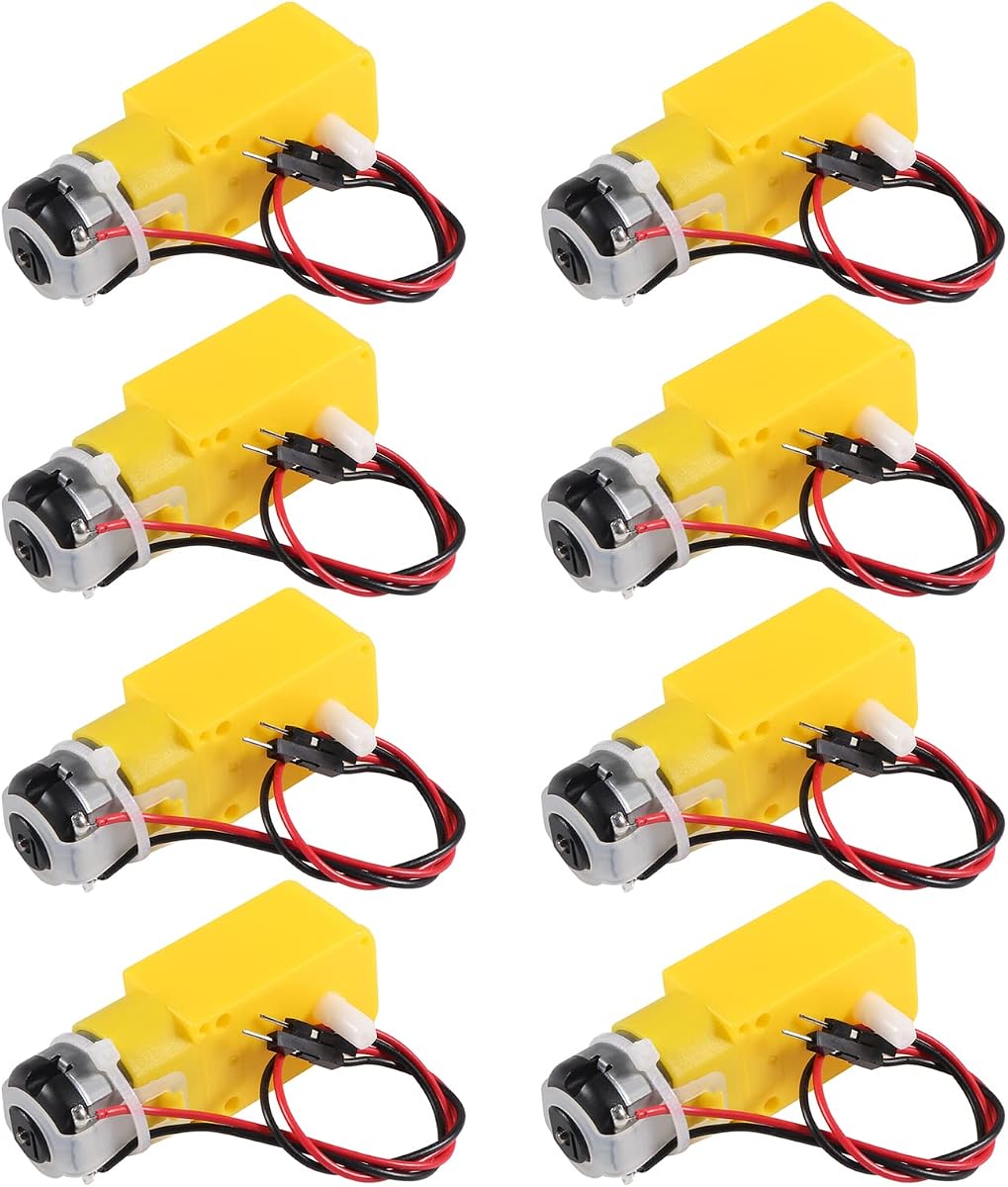



This motor stands out as the top choice for serious roboticists needing control. With a strong 4.7 rating it delivers consistent performance across many projects. The integration of an encoder sets it apart from standard gear motors available today.
We may earn a commission when you buy through this link, at no additional cost to you.
The 1:90 gear ratio provides substantial torque for lifting or pushing loads. Its all-metal gearbox ensures longevity even under heavy strain. The encoder outputs two quadrature sine waves allowing precise real-time measurement of speed and position for advanced motion control systems.
While more expensive than non-encoder options the precision justifies the cost. Users must ensure proper encoder voltage connections which adds complexity. However the stability and reliability gained make it worth the extra effort for high-performance builds.
Ideal for smart cars needing autonomous navigation or precision arm movements. If you require feedback loops for PID control this is the ideal match. We recommend it for builders ready to move beyond simple open-loop motor driving.
The built-in encoder enables closed-loop systems for accurate positioning and speed regulation without external sensors.
All-metal gears and shafts provide superior strength and heat dissipation compared to plastic alternatives found in cheaper sets.
We may earn a commission when you buy through this link, at no additional cost to you.
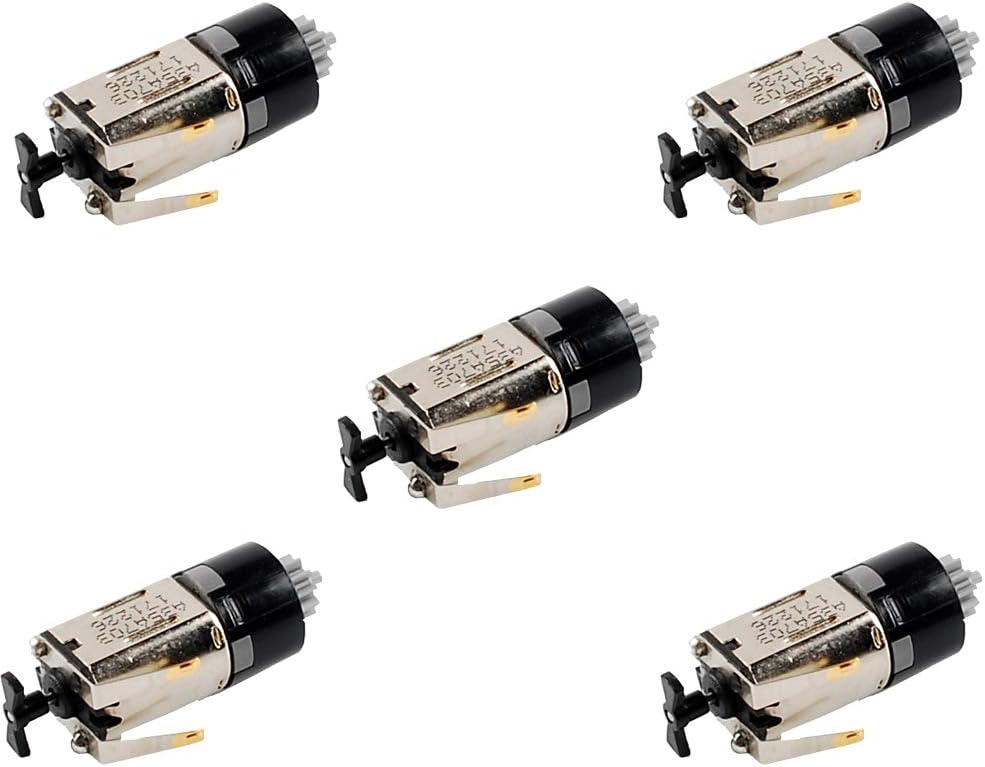
Budget builders will appreciate this pack of three reliable small motors. It holds a 4.6 rating from verified buyers who value cost efficiency. The metal gearbox ensures these units last longer than plastic equivalents under similar conditions.
We may earn a commission when you buy through this link, at no additional cost to you.
Operating between 3V and 6V these motors suit battery powered educational robots. The slow speed design helps prevent wheel slip on smooth surfaces. Users can easily swap out any defective unit due to the multi-pack format offered by the manufacturer.
Torque is limited so heavy chassis may struggle without gearing adjustments. The D-type shaft is standard but verify fit for your wheels before ordering. Still for simple line followers or classroom kits this is an excellent entry level choice.
Perfect for students or hobbyists testing multiple robot designs quickly. The low cost allows experimentation without financial risk. We suggest adding external bearings if using large wheels to reduce shaft strain during operation.
Getting three metal-geared motors at this price makes it the most cost effective option for large class projects or prototyping batches.
The N20 size allows fitting into tight spaces where larger motors would not physically fit within the robot frame structure.
We may earn a commission when you buy through this link, at no additional cost to you.
This powerhouse motor serves industrial and large scale robotic applications well. Its 4.6 rating reflects consistent reliability under demanding conditions. The planetary design delivers smooth power transmission with minimal noise during high load operations.
We may earn a commission when you buy through this link, at no additional cost to you.
The 90kg.cm torque rating allows lifting heavy weights or turning large tables. Voltage range from 6V to 22V provides flexibility for various power supplies. Users can reverse rotation simply by changing wiring connections without mechanical modifications to the unit.
Cost and size may be overkill for small DIY cars. Ensure your robot frame can accommodate the larger dimensions and mounting points. The quality guarantee offers peace of mind for professional deployments where downtime is unacceptable.
Recommended for automated doors, rotating displays, or heavy lifting bots. If your project needs sustained high torque this unit delivers robust performance. Verify voltage compatibility with your controller before final integration into your system.
Planetary gears distribute load across multiple teeth allowing this motor to handle continuous high torque stress without overheating easily.
Supporting up to 22V means it can integrate with higher voltage battery packs often used in mobile industrial robotics platforms.
We may earn a commission when you buy through this link, at no additional cost to you.
This kit offers excellent value for those needing multiple units simultaneously. The 4.5 rating indicates solid performance for educational and recreational projects. Having wheels included saves time and cost when starting a new vehicle chassis design.
We may earn a commission when you buy through this link, at no additional cost to you.
The 1:48 ratio balances speed and torque effectively for average smart cars. Connectors fit standard breadboards making wiring quick and reliable for beginners. High-quality materials ensure durability during transport and use in school science fairs.
Plastic gears limit heavy load applications compared to metal options. If you expect to push heavy walls or climb steep ramps consider upgrading gears. Still for standard flat surface movement this pack provides everything needed to start.
Ideal for robotics clubs ordering in bulk or building multiple test cars. The ease of setup encourages learning about motor control and Arduino coding. We recommend this for students beginning their journey into hardware engineering and programming.
Including wheels and connectors removes the hassle of sourcing separate components for your first functional robot car prototype.
Designed with DIY and competition use cases in mind this motor set supports distance measurement and velocity tracking projects well.
We may earn a commission when you buy through this link, at no additional cost to you.
This motor provides a ready-to-use solution with wheels and brackets. Its 4.4 rating shows satisfaction among hobbyists building smart cars quickly. The pure copper coil improves efficiency and reduces heat generation during extended run times.
We may earn a commission when you buy through this link, at no additional cost to you.
The metal gears ensure consistent performance under moderate loads. A mounting bracket simplifies attaching the motor securely to your chassis frame. Rubber tires provide necessary traction on various surfaces without adding significant slip during turns.
Fixed 12V operation means you need compatible power supplies or regulators. While the encoder helps with speed feedback it lacks the precision of Hall sensors. For standard navigation tasks these trade-offs are acceptable and manageable.
Best for users wanting an all-in-one upgrade for RC cars. The included tires allow immediate testing without extra purchases. We suggest checking voltage regulators to ensure stable 12V supply for optimal longevity of the motor.
The included mounting bracket removes the need for custom fabrication when securing the motor to a standard robot chassis structure.
Pure copper coils and low resistance design keep the motor cooler during continuous operation compared to cheaper aluminum windings.
We may earn a commission when you buy through this link, at no additional cost to you.
This motor balances compact size with impressive torque capabilities. The 4.6 rating reflects its ability to handle demanding tasks. The 70:1 reduction ratio ensures sufficient power for climbing or carrying payloads effectively.
We may earn a commission when you buy through this link, at no additional cost to you.
Operating at 6V or 12V allows flexible battery configurations. The metal mounting bracket ensures the motor stays fixed even under vibration. Users appreciate the long D-shaped shaft which simplifies attaching custom gears or pulleys.
Speed is modest compared to higher RPM units but torque is king here. If your robot needs to push heavy objects this motor is well suited. The cost is higher than basic TT motors but performance justifies the investment.
Perfect for smart balance cars or mobile robots needing strong drive wheels. The robust build quality minimizes failure risk during testing phases. Verify shaft alignment with your wheels to prevent binding during movement.
The 70:1 ratio converts high input speed into usable low speed high torque force ideal for load carrying tasks.
Accepting both 6V and 12V inputs means you can switch battery packs without replacing the motor hardware in your build.
We may earn a commission when you buy through this link, at no additional cost to you.
With a perfect 5.0 rating this motor impresses users with reliability and power. Its double shaft design offers unique flexibility for connecting components on both ends. The all-metal gears ensure it withstands demanding DIY applications effectively.
We may earn a commission when you buy through this link, at no additional cost to you.
The 350 RPM output is low but delivers high torque for slow precise movement. Pure copper windings improve conductivity for efficient power usage. The D-shaped shaft prevents slipping during high torque bursts common in RC vehicle use.
Limited speed may not suit high-speed racing cars. However for precision tasks or heavy RC toys this unit excels. The quiet performance makes it suitable for indoor projects where noise reduction matters.
Ideal for specialized RC builds or custom industrial mechanisms. The double shaft allows driving two mechanisms from a single motor source. We recommend verifying wheel fitment on the shaft to ensure secure locking during operation.
The double shaft allows you to mount a wheel on each end or add a gear on one side for driving belts.
Optimized gears and winding reduce noise significantly making it suitable for indoor robotics or consumer facing devices.
We may earn a commission when you buy through this link, at no additional cost to you.
These motors offer extreme speed for lightweight applications. The 4.2 rating reflects their success in specialized roles like fans or propellers. The small size allows integration into compact hobby builds without heavy weight penalties.
We may earn a commission when you buy through this link, at no additional cost to you.
Running up to 16000 RPM makes them perfect for cooling systems. The included black and red wire leads simplify connections for beginners. A case pack of six ensures you have spares for multiple projects or failed experiments.
Torque is minimal so driving wheels may need reduction gears. The low voltage range suits battery powered toys or portable devices. Users should avoid high load mechanical tasks that could stall the motor quickly under power.
Best for ventilation, rotating props, or speed-based experiments. If your project needs fast spinning rather than force this is the choice. We advise adding external speed control to prevent overheating during extended high RPM usage.
The 16000 RPM rating makes these ideal for brush-bots or small cooling fans where rapid rotation is the primary goal.
Pre-attached wire leads save time on soldering and allow immediate testing when connected to a power source or controller.
We may earn a commission when you buy through this link, at no additional cost to you.
This micro motor excels in low voltage environments. The 4.4 rating shows satisfaction from users needing compact torque sources. Planetary gears allow efficient power transfer even in such a small physical footprint.
We may earn a commission when you buy through this link, at no additional cost to you.
Operating at 3V to 5V makes it compatible with common logic supplies. The speed remains stable even under light load conditions. Users appreciate the five motor pack for building small robots without sourcing extra units.
Speed is limited so rapid movement is not its strength. It shines in precision tasks requiring slow steady movement. Verify current draw with your controller to ensure the motor does not exceed limits.
Perfect for wearable tech or small mobile robots with low battery capacity. The efficiency helps extend battery life significantly. We recommend testing load capacity to ensure your design matches the torque capabilities.
Planetary gears allow high torque output even at just 3V enabling use with simple single cell battery setups easily.
The micro size allows fitting into wearable or tight space projects where larger motors would not physically fit.
We may earn a commission when you buy through this link, at no additional cost to you.
This motor serves as a practical replacement for broken toys. Its 4.4 rating indicates success among repair users and hobbyists. The high 12000 RPM speed allows for fast moving RC cars and small electric tools.
We may earn a commission when you buy through this link, at no additional cost to you.
The 2.3mm shaft is specific so check compatibility with existing gears. Low noise operation makes it suitable for home projects. The voltage range from 6V to 12V provides flexibility for battery choices.
Not suitable for heavy loads or high torque applications. Focus on speed and replacement needs rather than raw power. The price is low enough to justify keeping spare units for future repairs.
Best for upgrading toy cars or fixing broken equipment quickly. Verify original motor size before ordering to ensure physical fitment. We suggest checking wiring diagrams to match your existing setup correctly.
Designed as a direct replacement for broken parts in RC cars and toy vehicles ensuring your projects get back to life.
With a maximum speed of 12000 RPM this motor delivers rapid movement ideal for racing or fast action hobby builds.
We may earn a commission when you buy through this link, at no additional cost to you.
Choosing the right DC motor requires balancing several technical factors. Below we break down the critical specs to consider ensuring you select the unit that matches your project goals.
Voltage determines compatibility with your power source. Most hobby motors operate between 3V and 12V. Ensure your battery pack or power supply can deliver the required voltage consistently to avoid stalling.
Always check the rated voltage range to match your system.
Torque is the rotational force while speed is RPM. High torque is needed for lifting or climbing while speed is for fast movement. Gear ratios adjust this balance significantly.
Select based on whether your robot needs power or velocity.
Metal gears last longer and handle heat better than plastic. For heavy loads choose all-metal gearboxes. Plastic is fine for light educational models but may wear out faster.
Metal construction ensures longevity under stress.
Encoders provide feedback on speed and position. Essential for autonomous navigation they add complexity to wiring. Non-encoder motors are cheaper and simpler for basic movement.
Use encoders when you need precise control loops.
D-shafts prevent slipping under load better than round shafts. Verify the diameter matches your wheel or pulley hubs. A mismatch can lead to mechanical failure or inefficiency.
Ensure shaft dimensions match your mechanical parts.
Compact motors fit tighter frames but may lack power. Larger units offer more torque but require space. Consider the chassis dimensions before purchasing.
Measure your robot frame before selecting size.
Higher current means more power consumption. Check stall current to ensure your battery can handle the load. Overdrawing current can drain batteries quickly.
Match current draw with your battery capacity.
Brackets simplify installation significantly. If the motor lacks a bracket you may need custom mounts. Check for bolt holes or integrated clips for easy securing.
Look for included mounting hardware to save effort.
Start by matching the motor voltage to your battery. Connect the wires securely to the controller terminals to ensure consistent power. Always check for physical obstructions that could jam the shaft during testing.
Monitor the motor temperature during operation. If it gets hot to the touch reduce the load or improve airflow around the chassis. Metal motors dissipate heat better but still need ventilation.
Store the motors in a dry place when not in use. Protect the shafts from dust or moisture to prevent corrosion. Regularly check connections to ensure they remain tight over time.
A gear motor includes a gearbox that reduces speed while increasing torque. Regular motors run faster with less force. Gear motors are essential for robots needing to push or climb.
No simple cars do not require encoders. Encoders are for precise navigation like self-balancing robots. If you just need movement, a basic motor suffices for most hobby builds.
Match your battery to the motor rating. 6V or 12V batteries work for most options. Using too high voltage can burn out the motor quickly or overheat the electronics.
Use a Pulse Width Modulation (PWM) controller or motor driver. These devices vary voltage to adjust speed safely. Always ensure your controller can handle the motor current.
Higher prices reflect metal gears, encoders, or precision builds. Basic plastic motors cost less. Invest more for durable units needed in heavy duty projects.
Yes Arduino is compatible via motor shields. You will need a driver module since Arduino pins cannot supply enough current directly. This is standard for DIY robotic builds.
We reviewed ten top motors covering everything from budget packs to industrial torque solutions. The 2Pack TT Motor with Encoder stands out for performance while the Acxico 3Pcs offers the best entry value.
Prioritize torque for lifting tasks and speed for racing. Ensure voltage and shaft sizes match your build needs before buying. A well chosen motor prevents mechanical failures during critical operation times.
Check current prices and availability before ordering. Components fluctuate in stock especially during peak DIY seasons. Your robot's success depends on reliable parts so choose wisely.