
Fully Assembled Mini 3D Printer for Kids & Beginners
4.4Editor score
Fully assembled ready to use
Includes filament and SD card
Auto leveling simplifies setup
This guide compares the best 3D printer for beginners by evaluating speed, ease of use, print quality, and support to help you choose the right model.
Starting your journey into 3D printing can feel overwhelming with so many options available today. A good beginner printer should offer reliable performance, easy setup, and consistent results without requiring constant tinkering or advanced technical skills to operate effectively at home.
We compared ten top models based on ease of use, print speed, reliability, and community support. Each product was selected for its ability to deliver successful prints straight out of the box while offering room to grow as your skills improve over time.
Each pick highlights key strengths and potential limitations to help you decide which machine fits your specific needs. Prices and availability change frequently so please check current listings before purchasing to ensure you get the best value for your investment today.
4.4Editor score

4.7Editor score

4.5Editor score
This side by side comparison highlights the key specifications and features of each model to help you quickly identify which printer aligns with your budget and project goals.



The Bambu Lab A1 stands out as a top choice for beginners due to its seamless out-of-box experience and exceptional print quality. With a high rating, it delivers reliable performance that minimizes frustration for new users while maintaining speed and precision.
We may earn a commission when you buy through this link, at no additional cost to you.
Its full-auto calibration system eliminates manual bed leveling, ensuring every print starts correctly without user intervention. The active flow rate compensation further enhances consistency, while the 1-Clip quick swap nozzle simplifies maintenance and upgrades.
While the AMS lite for multi-color printing is not included, this trade-off keeps the base price manageable. The quiet motor design and active noise canceling also make it suitable for shared living spaces or offices.
This printer is ideal for anyone seeking a plug-and-play solution that grows with their skills. Its combination of speed, accuracy, and ease of use makes it a strong recommendation for first-time buyers.
The A1 handles Z-offset and bed leveling automatically, removing the guesswork and reducing failed prints common in manual setups.
Active motor noise canceling allows printing during evening hours without disrupting household activities or work schedules.
We may earn a commission when you buy through this link, at no additional cost to you.
The Bambu Lab P1S offers a premium experience with its enclosed design and high-speed capabilities. It is perfect for beginners who want room to experiment with advanced filaments like ABS and ASA without upgrading later.
We may earn a commission when you buy through this link, at no additional cost to you.
Its fully enclosed body improves print performance for temperature-sensitive materials, while automatic bed leveling ensures consistent adhesion. The ability to set up in just 15 minutes means you spend more time creating and less time assembling.
While the multi-color AMS accessory is an added expense, the base machine is robust and reliable. The high acceleration and speed mean large projects finish quickly, making it efficient for both hobbies and small business use.
This model is best suited for users ready to invest in a machine that supports growth. Its blend of speed, versatility, and ease of use justifies the higher price point for serious beginners.
The enclosure maintains consistent internal temperatures, reducing warping when printing with engineering-grade filaments like ABS or ASA.
Printing at up to 500mm/s with high acceleration reduces production cycles significantly compared to standard printers.
We may earn a commission when you buy through this link, at no additional cost to you.
This fully assembled mini printer is designed for immediate use with no tools or technical knowledge required. It comes complete with filament and an SD card, making it the perfect starting point for kids or first-time users.
We may earn a commission when you buy through this link, at no additional cost to you.
With a top speed of 250mm/s and precision down to 0.01mm, it delivers quality results for small projects. The one-button auto leveling feature simplifies setup, ensuring beginners can start printing within minutes of unboxing.
The compact size fits easily on a desk or shelf, but limits larger prints. However, for learning fundamentals and creating small toys or models, its capabilities are impressive relative to its low cost.
Ideal for students or casual hobbyists, this printer removes barriers to entry. Its comprehensive kit and user-friendly design make it a top recommendation for those on a tight budget.
Includes test filament, SD card, and tools so you do not need to buy extras before your first print.
One-button auto leveling removes the manual adjustments typically required for first-layer adhesion on budget printers.
We may earn a commission when you buy through this link, at no additional cost to you.
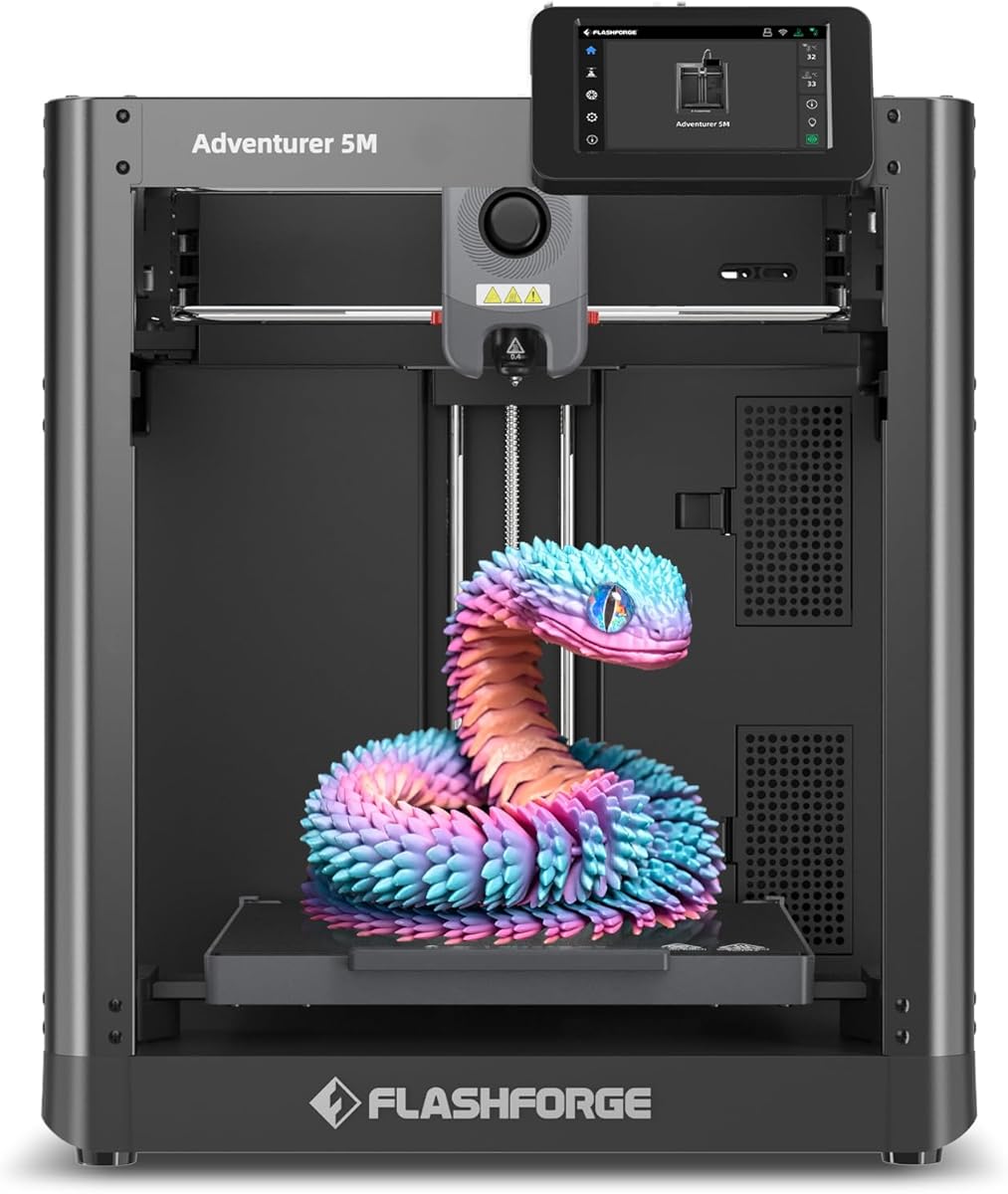
The Adventurer 5M delivers impressive speed with its CoreXY structure and 600mm/s travel rate. It is ideal for users who prioritize rapid prototyping and want to minimize wait times on their prints.
We may earn a commission when you buy through this link, at no additional cost to you.
Auto leveling ensures consistent first layers without manual tuning, while the 3-second nozzle change system simplifies maintenance. The dual-sided PEI platform supports easy removal of prints across different materials.
While user ratings suggest occasional software quirks, the hardware performance is strong. The ability to swap nozzles quickly allows experimentation with different print resolutions without specialized tools.
This printer suits beginners focused on speed and efficiency. Its robust build and automation features make it a solid choice for those ready to handle occasional software tweaks for high-speed output.
The 600mm/s speed and 20000mm/s2 acceleration drastically reduce time-to-part for design iterations and testing.
Flash Studio app allows real-time status checks and adjustments from anywhere, reducing the need for physical monitoring.
We may earn a commission when you buy through this link, at no additional cost to you.
The P1S Combo bundles the popular P1S with the AMS for seamless multi-color printing. It is perfect for creators who want vibrant designs without managing multiple filament swaps manually.
We may earn a commission when you buy through this link, at no additional cost to you.
With support for up to 16 colors, it opens creative possibilities for figures and models. The enclosed body maintains stability, and the same high-speed performance as the base P1S ensures efficiency.
While the AMS adds complexity, it integrates smoothly into the Bambu ecosystem. The calibration process remains automated, reducing the maintenance burden typically associated with multi-extruder systems.
This combo is best for users committed to color printing from day one. Its comprehensive package saves future upgrade costs and delivers professional results for advanced beginner projects.
The AMS allows automatic switching between up to 16 colors, enabling complex designs without manual intervention.
Bambu Lab software and hardware work together seamlessly, minimizing configuration hurdles for multi-material setups.
We may earn a commission when you buy through this link, at no additional cost to you.
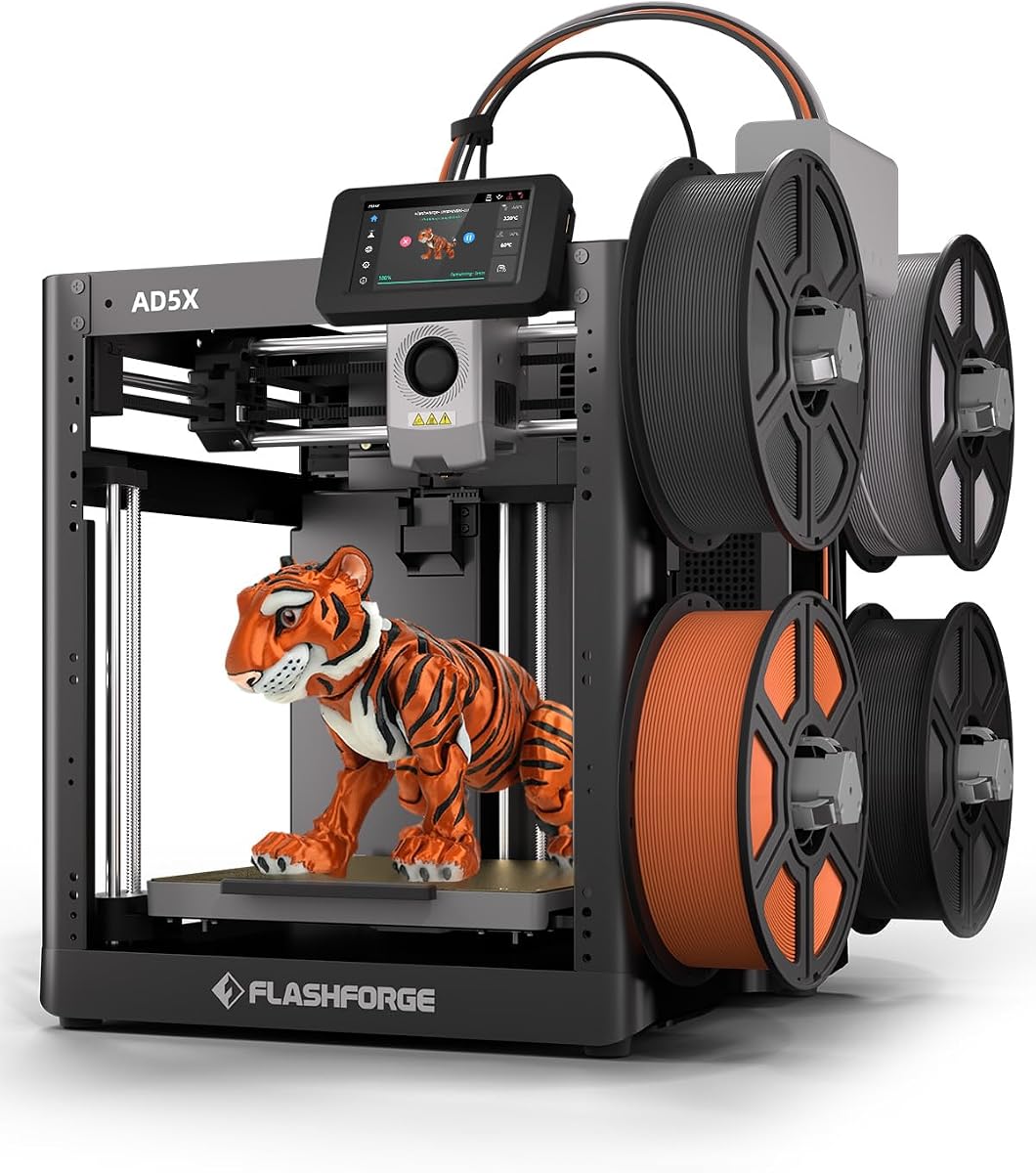
The AD5X brings multi-color printing to budget-conscious users with its 4-color simultaneous output. Its CoreXY structure ensures stability at high speeds, making it a compelling option for rapid production runs.
We may earn a commission when you buy through this link, at no additional cost to you.
With a 300°C extruder, it handles a wide range of materials. The 1-click auto leveling reduces setup time, while the resume function protects against power outages during long jobs.
User reviews highlight its speed but note occasional calibration nuances. Despite this, the flexibility in nozzle sizes and ability to handle multiple colors make it versatile for varied projects.
This printer is suitable for beginners interested in color without premium prices. Its balance of speed and multi-material capability offers a strong entry point for experimental printing.
Support for up to 4 colors allows vibrant designs without manual filament changes between layers.
The CoreXY motion system provides reliable movement at 600mm/s, reducing vibration and improving detail.
We may earn a commission when you buy through this link, at no additional cost to you.
This printer targets creative learning with AI tools that turn text or images into 3D models. It simplifies design for beginners who lack modeling skills, making it ideal for education and family projects.
We may earn a commission when you buy through this link, at no additional cost to you.
With access to over 8,000 reviewed models, users have endless inspiration. The enclosed design and pinch-resistant features ensure safety, while real-time monitoring lets parents track progress remotely.
While it supports only single-color printing, the ease of use and educational value are significant. The included filament and tools mean immediate creative freedom without additional purchases.
It is a great choice for parents wanting to foster STEM skills. Its focus on creativity and safety makes it a standout for younger users or classrooms.
AI Doodle and MiniMe features allow kids to design and print without learning complex CAD software.
The enclosed build and pinched-resistant design protect children during operation, meeting high safety standards.
We may earn a commission when you buy through this link, at no additional cost to you.
The A1 mini packs full Bambu automation into a smaller footprint, ideal for limited spaces. It comes with an LED lamp kit to immediately demonstrate functional printing potential for beginners.
We may earn a commission when you buy through this link, at no additional cost to you.
Its automatic calibration and quiet operation match the larger A1, ensuring smooth learning. The connected ecosystem provides access to thousands of ready-to-print models through MakerWorld.
While the build volume is smaller, it is sufficient for most hobby projects. The reliability and simplicity make it a solid choice for those who want high quality in a compact form.
This printer is perfect for small apartments or shared offices. Its ease of use and included creative kit make it an attractive option for new users.
The mini retains full calibration and speed features of larger models despite its smaller physical size.
The included LED kit allows immediate printing of usable items, encouraging further experimentation and learning.
We may earn a commission when you buy through this link, at no additional cost to you.
The Ender 3 V3 SE is known for its high reliability and comprehensive bundle. With 4 rolls of filament included, it offers immediate variety for testing different colors without extra purchases.
We may earn a commission when you buy through this link, at no additional cost to you.
Its Sprite direct extruder supports a wide range of filaments, while CR Touch leveling ensures consistent adhesion. The dual Z-axis design reduces wobbling, improving print quality over time.
While it requires assembly and lacks an enclosure, the community support is unmatched. Users can find tutorials and upgrades easily, making it a great platform for learning technical aspects.
This model suits beginners who enjoy hands-on setup. Its strong performance and included accessories make it a top value in the traditional printer market.
The Sprite direct extruder improves bowden tube accuracy and supports flexible materials like TPU better than indirect systems.
A large user base ensures plenty of troubleshooting guides, mods, and shared projects for ongoing learning.
We may earn a commission when you buy through this link, at no additional cost to you.
The AD5M emphasizes ease of maintenance with its tool-free quick-swap nozzle. This simplifies changes between print tasks, saving time for users who frequently switch between models.
We may earn a commission when you buy through this link, at no additional cost to you.
Its fully auto calibration ensures precise first layers, while the CoreXY structure supports stable high-speed printing. The resume function adds reliability for longer prints in home environments.
While performance is strong, occasional software updates may be needed. However, the hardware reliability and design features provide a solid platform for regular use.
This printer is ideal for users valuing convenience. Its combination of automation and quick maintenance makes it a practical choice for busy creators.
Swap nozzles in seconds without tools, reducing downtime when switching between print resolutions or maintenance needs.
The resume feature saves layer data during outages, preventing complete print failure from brief power disruptions.
We may earn a commission when you buy through this link, at no additional cost to you.
Selecting the right printer depends on your specific goals, workspace, and willingness to troubleshoot. This guide covers key factors to help you make an informed decision.
Look for features like auto bed leveling, tool-free assembly, and pre-configured profiles. These reduce setup time and the learning curve for new users.
Prioritize machines with plug-and-play capabilities and intuitive software to minimize early frustration and failed prints.
Faster printers reduce wait times but require stable frames. CoreXY or Cartesian designs with high acceleration help maintain quality at higher speeds.
Choose a speed that matches your patience level; moderate speed with reliability is better than fast but inconsistent output.
Ensure the print area fits your largest planned objects. Standard 220mm cubes work for most beginners, but larger items require expanded beds.
A slightly larger build volume provides flexibility for future projects without needing immediate upgrades.
Start with PLA for ease of use. If you plan to use ABS or engineering filaments, look for heated beds or enclosed chambers to prevent warping.
Check nozzle and hotend temperature limits to ensure the printer can handle the materials you intend to use.
Large communities provide quick solutions for common issues. Brands with active forums and tutorials simplify troubleshooting for beginners.
Strong support ensures you can find firmware updates and third-party parts easily as you expand your capabilities.
User-friendly slicing software and remote monitoring tools enhance the experience. Cloud access and mobile apps allow control from anywhere.
Seamless software integration reduces the steps needed from design to print, keeping focus on creativity.
For families or shared spaces, enclosed designs and pinch-resistant parts protect users during operation. Thermal runaway protection adds essential safety.
Choose models with tested safety features to ensure peace of mind while printing around children or pets.
Consider the total cost including accessories and filament. Bundled kits save money but may limit future flexibility if you upgrade.
Invest in reliability over extra features; consistent printing saves more money long-term than buying cheap parts.
Start by reading the manual and leveling the bed if not automated. Proper setup ensures first-layer adhesion and prevents wasted material.
Regularly clean the nozzle and check belts for tightness. This maintenance keeps prints consistent and extends the life of your machine.
Store filament in a dry place to avoid moisture issues. Use a silica gel pack or airtight container to maintain print quality.
The Bambu Lab A1 is widely considered the easiest due to its fully automated calibration and plug-and-play setup. It requires minimal tuning and delivers reliable results right out of the box.
Many modern printers come fully assembled, but some require basic steps. Look for 'pre-assembled' or 'ready-to-use' in the product description if you want to avoid assembly.
PLA is the best starting filament because it is easy to print, does not require high temperatures, and is biodegradable. It works well for most hobby projects.
Noise varies by model. Enclosed printers with noise-canceling fans tend to be quieter. Check decibel ratings in specs if you plan to print in shared spaces.
Auto bed leveling uses sensors to map the print bed and adjust Z-height automatically. This ensures the nozzle is at the correct height for consistent adhesion.
A standard 3D printer needs about a square foot of surface plus room for filament spools. Consider ventilation and power access when choosing a location.
The best beginner 3D printer depends on whether you prioritize speed, simplicity, or versatility. The top picks offer strong performance with features that minimize initial learning curves.
Focus on automation and support to ensure early success. A machine that handles calibration automatically will save more time than one with extra manual options.
Always check current pricing and stock availability before purchasing. Market conditions change, and deals may appear that improve the value of your chosen model.