
10Gtek Gigabit Ethernet PCIe RJ45 Network Adapter
4.4Editor score
Intel 82576 Controller
Gigabit Speed Support
Low Profile Bracket Included
This guide compares the top Dual RJ45 Port Network Card options for servers and workstations, highlighting performance compatibility and value for enterprise
Finding a reliable dual RJ45 port network card is essential for modern servers and high-performance workstations. These adapters enable increased bandwidth through link aggregation or separate network paths. Choosing the right one ensures stable connectivity and efficient data transfer rates.
We compared ten top-rated network cards based on controller quality OS compatibility, and thermal performance. Each option supports distinct speeds from gigabit to ten gigabits. Our analysis focuses on real-world stability and driver support across major operating systems.
Each pick highlights key strengths and potential limitations to help you decide quickly. Prices and availability change frequently so verify current details before purchasing. We included detailed reviews and a buying guide to simplify your selection process today.
4.4Editor score

4.1Editor score
4.5Editor score
The following table provides a side-by-side comparison of all ten network cards selected for this guide. It highlights key specifications such as controller type, supported speeds, and operating system compatibility to assist in rapid decision-making.


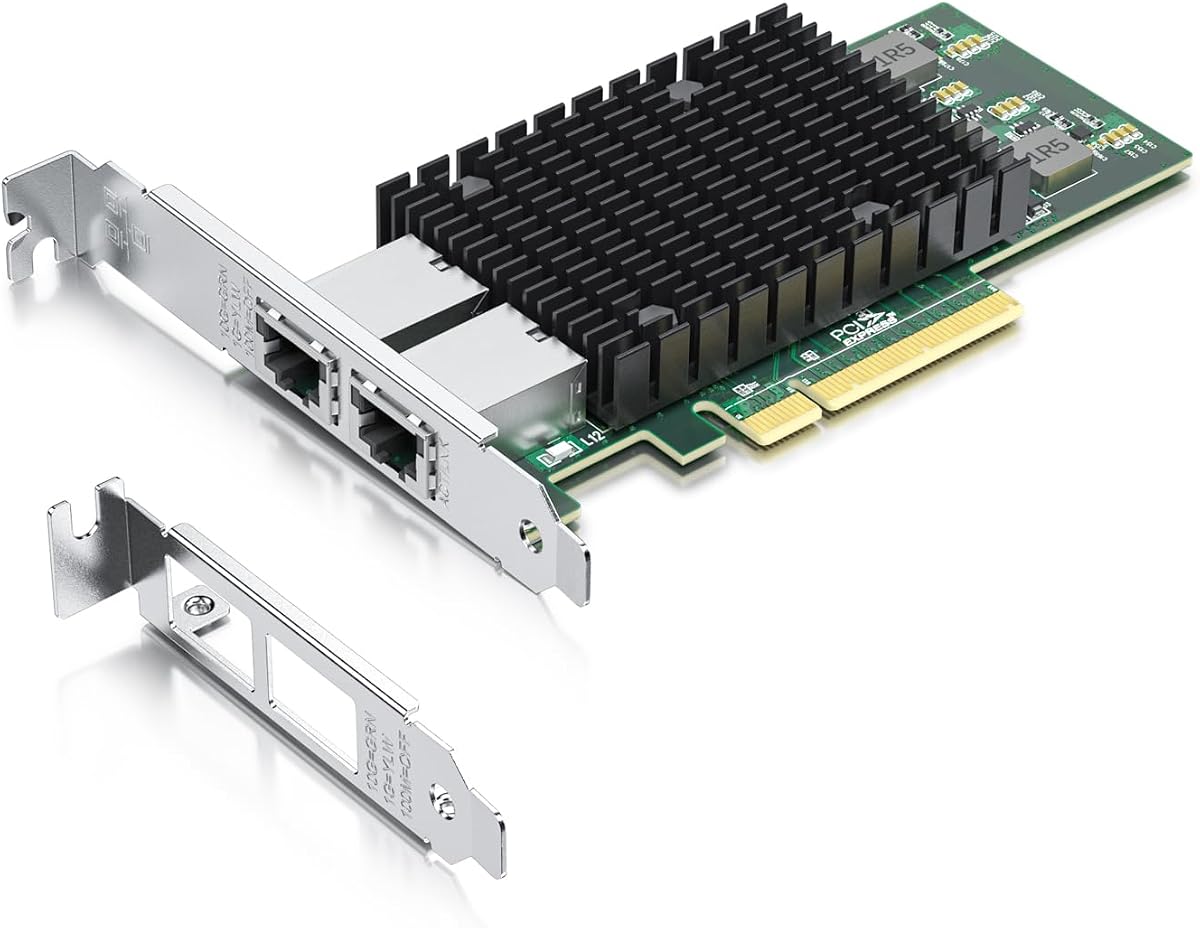
This card delivers reliable 10Gbps speeds using the Intel X540 controller. It earns our Editor's Choice for balancing performance and cost effectively. Users report stable connections in data center and home lab environments alike.
We may earn a commission when you buy through this link, at no additional cost to you.
The dual RJ45 ports support up to 100 meters on Cat6A cable. Intelligent offloads improve server stability by reducing CPU load. Compatibility spans Windows Server, Linux, and ESX systems without major issues.
While it does not support hot swapping, installation is straightforward with included brackets. Windows 11 requires manual driver setup but functions well afterward. Heat dissipation is adequate under normal workloads.
Ideal for administrators needing affordable 10GbE upgrades. The warranty and support offer peace of mind. Purchase this card to boost network throughput without breaking your budget constraints.
Intelligent offloads reduce CPU usage for smoother server performance.
Standard and low-profile brackets allow flexible installation in various cases.
We may earn a commission when you buy through this link, at no additional cost to you.
This network card offers 2.5Gbps speeds for better balance between gigabit and 10GbE. It features the newer I226-V chip which improves stability over older models. Rated highly for efficiency and compatibility.
We may earn a commission when you buy through this link, at no additional cost to you.
The I226-V chip reduces active power consumption significantly. It handles longer cable lengths with fewer packet errors. Support includes Windows 10, 11, Linux kernels, and VMware ESXi environments.
Users must verify motherboard compatibility before purchasing. BIOS settings may need adjustment to enable the NIC interface. Once configured, performance remains consistent across various workloads.
Best for home labs needing more than gigabit speeds. The low profile bracket fits compact cases easily. Invest in this for future-proofed connectivity without 10GbE costs.
Reduced active power consumption saves energy during long operations.
Supports modern OS versions including Ubuntu and FreeBSD.
We may earn a commission when you buy through this link, at no additional cost to you.
VIMIN provides a solid 10GbE solution using the X540-T2 chipset. It achieves 10Gbps speeds for fast data transmission needs. Ratings reflect satisfaction with stability in high-end devices.
We may earn a commission when you buy through this link, at no additional cost to you.
A dedicated heat sink maintains optimal temperatures under heavy usage. The gold finger interface ensures reliable electrical connections. Both standard and slim brackets support diverse installation requirements.
Note that this card does not support 2.5G or 5Gbps speeds. It operates at 1Gbps if connected to lower speed devices. Ensure your network infrastructure matches its capabilities.
Recommended for workstations needing consistent 10GbE links. The wide OS support simplifies deployment. Buy this to upgrade network throughput efficiently without compromising stability.
Heat sink prevents overheating during continuous data transfers.
Compatible with both standard and slim bracket server cases.
We may earn a commission when you buy through this link, at no additional cost to you.
This card works well with older systems like Windows Server 2003 and DOS. It uses Intel 82575/82576 controllers known for reliability. Ideal for environments that haven't upgraded to modern OS versions.
We may earn a commission when you buy through this link, at no additional cost to you.
IPMI pass-through allows remote management via SMBus. PXE boot capabilities are essential for network deployments. The alloy heat sink maintains normal operating temperatures effectively.
Users should note the limitation on VMware ESXi 7.0 or above. This restricts use in newer virtualization setups. Otherwise, it remains a robust choice for traditional servers.
Perfect for legacy hardware needing network redundancy. Remote monitoring features add value to server management. Purchase this for cost-effective gigabit redundancy today.
IPMI pass-through streamlines remote server administration tasks.
Compatible with decades-old operating systems and DOS.
We may earn a commission when you buy through this link, at no additional cost to you.
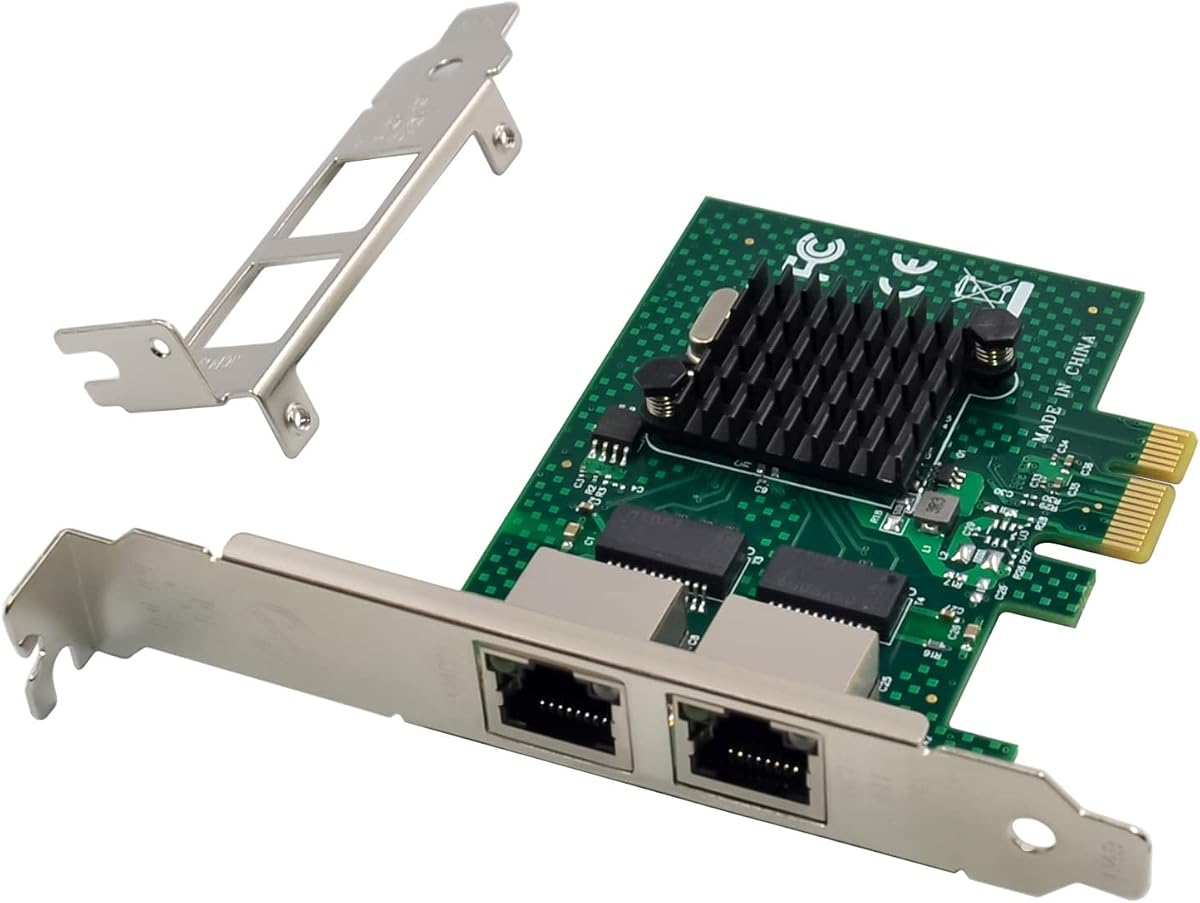
Ranked as our Best Budget pick, this adapter offers essential gigabit performance cheaply. The Intel 82576 controller ensures stable operation. It is perfect for basic server redundancy needs.
We may earn a commission when you buy through this link, at no additional cost to you.
Drivers can be downloaded directly from Intel's website. Included brackets fit small form factor cases easily. The warranty covers three years of free support and returns.
Like many budget cards, it lacks hot swapping capabilities. Users should plan to shut down before installation. Despite this, reliability remains high for standard workloads.
Ideal for small offices needing extra network ports. Save money while maintaining solid network integrity. Buy this adapter for straightforward connectivity upgrades.
Provides reliable gigabit speeds without high expense.
Official Intel drivers ensure long-term compatibility.
We may earn a commission when you buy through this link, at no additional cost to you.
This NIC supports Quality-of-Service to prioritize traffic. It features the reliable 82576 controller. Users appreciate the flexible bracket options and wide OS range.
We may earn a commission when you buy through this link, at no additional cost to you.
Standard and slim brackets simplify physical setup. Operating system support covers most server and desktop versions. Customer service is responsive to installation issues.
Mac OS support is missing entirely. Bypass mode is not available for specialized setups. These limitations matter only in niche environments.
Best for general server redundancy. The QoS feature helps manage bandwidth efficiently. Purchase this for a reliable dual port solution.
QoS technology helps prioritize critical network packets.
Includes both full-height and low-profile brackets.
We may earn a commission when you buy through this link, at no additional cost to you.
Gigaplus delivers 10Gbps connectivity to handle heavy loads. The X540 controller prevents packet loss during transfers. Ratings highlight its stability in servers and home labs.
We may earn a commission when you buy through this link, at no additional cost to you.
Installation is eased by a QR code for drivers. Both standard and low-profile brackets are included. PCIe compatibility ensures it fits most modern servers.
The PCIe 2.0 interface may bottleneck full 10Gbps in some cases. Ensure your motherboard has the right slot type. Physical slots must be PCIe not legacy PCI.
Recommended for high-throughput enterprise needs. The lifetime technical support adds significant value. Invest in this for reliable gigabit performance today.
QR code drivers simplify the setup process.
Hardware design minimizes packet loss issues.
We may earn a commission when you buy through this link, at no additional cost to you.
This premium option uses the newer X540-BT2 controller. It supports 10Gbps speeds with added QoS features. Compatibility includes VMware ESXi 7.0 which others may miss.
We may earn a commission when you buy through this link, at no additional cost to you.
Windows 11 needs careful driver setup to function. Drivers available via Intel website or QR code. The full and low profile brackets ensure fit.
Not compatible with 2.5G or 5Gbps devices. If your network uses those speeds this card defaults to 1Gbps. Verify your switch port speeds before purchasing.
Best for virtualized environments needing ESXi 7.0 support. The BT2 chip improves packet handling. Buy this for top-tier 10GbE reliability.
Supports modern VMware ESXi versions fully.
BT2 chip offers improved power and signal handling.
We may earn a commission when you buy through this link, at no additional cost to you.
Unique among budget options, this card supports SR-IOV. This is crucial for virtual environments needing direct network access. The PCIe x4 lane offers better bandwidth than x1 models.
We may earn a commission when you buy through this link, at no additional cost to you.
Alloy heat sinks keep the card cool. IPMI pass-through allows remote server management. PXE boot enables easy network-based OS installs.
Similar to other Intel 82576 models, ESXi 7.0 support is missing. Users upgrading virtualization platforms may need to consider newer hardware. Otherwise it is solid for Linux.
Ideal for virtual labs requiring SR-IOV. The x4 lane ensures lower latency. Purchase this for optimized virtualized networking.
SR-IOV allows VMs to bypass host OS networking.
PCIe x4 slot provides faster data transfer than x1.
We may earn a commission when you buy through this link, at no additional cost to you.
This adapter uses the NetXtreme BCM5720-2P chipset. It is designed for cloud and enterprise server clusters. Ratings reflect strong performance in VMware and Linux setups.
We may earn a commission when you buy through this link, at no additional cost to you.
It supports PCIe 1.X and 2.X interfaces broadly. A low profile bracket helps fit smaller server cases. Support includes many Linux distributions including Ubuntu and Debian.
While it lacks 10GbE speeds, it is reliable for gigabit redundancy. Ensure driver compatibility with your specific OS version. Some manual configuration may be required.
Best for clusters needing proven Broadcom reliability. The warranty offers 180 days of protection. Invest in this for consistent server connectivity.
Optimized for high-performance computing clusters.
Supports most major Linux distributions out of box.
We may earn a commission when you buy through this link, at no additional cost to you.
Selecting the right network card requires evaluating several technical factors. This guide walks you through the most important considerations to ensure compatibility and performance.
The controller chip determines driver quality and OS support. Intel controllers are widely supported and stable in virtualized environments. Broadcom options are excellent for specific server clusters.
Always verify the chipset against your operating system's compatibility list before buying.
Decide if you need 1Gbps or 10Gbps performance. 10G cards are great for high data transfer but require Cat6A cables. Gigabit cards are cheaper and sufficient for basic backups.
Ensure your switches and cabling match the card's speed to avoid bottlenecks.
Check your motherboard for available PCIe slots. Most cards use x1, x4, or x8 lanes. Newer cards often need PCIe 3.0 while older ones work on PCIe 2.0.
Match the slot width to the card's requirement for maximum bandwidth.
Verify driver availability for your OS. Windows Server, Ubuntu, and ESX usually have mature drivers. Some cards lack support for Windows 11 or specific virtualization versions.
Download drivers beforehand to avoid installation downtime.
Small form factor servers need low-profile brackets. Most cards include both standard and low-profile brackets. Check your case height to ensure the card fits physically.
Having the right bracket saves time during hardware installation.
10G cards often generate more heat. Look for models with built-in heat sinks or fans. Passive cooling is common but requires good case airflow.
Consider energy-efficient models if the card runs 24/7.
Features like SR-IOV help virtual machines access the network directly. Not all cards support this. If you run heavy virtualization, check for SR-IOV support.
This feature reduces latency and CPU overhead significantly.
A reliable warranty ensures you can replace defective units easily. Most sellers offer 3-year warranties and lifetime tech support. Read return policies carefully.
Good support prevents frustration if drivers or hardware fail.
Install the card by powering off the system and locating an available PCIe slot. Secure the bracket firmly to the chassis to avoid connection issues. Connect Cat6 or Cat6A cables to the RJ45 ports for optimal speed.
Update drivers immediately after installation for best performance. Check the manufacturer website for the latest versions. Configure IP settings and link aggregation in your network preferences.
Keep the interior clean to maintain airflow around the card. Dust buildup can cause overheating. Periodically check connections and driver health to ensure continued reliability.
Yes, Cat6A cables are recommended for 10Gbps speeds to ensure stability. Cat6 can work for shorter distances like 55 meters but Cat6A ensures performance up to 100 meters. Avoid using older Cat5e cables for 10G networks.
Most of these network cards do not support macOS officially. Drivers are primarily available for Windows and Linux systems. Check specific product pages if you plan to use it on a Mac.
PCIe x1 has fewer lanes and offers less bandwidth than x8. Most gigabit cards work fine with x1 slots. 10G cards often need x8 slots to handle full data throughput without bottlenecks.
The cards in this guide generally do not support hot swapping. You should shut down the system before installing or removing the card. This protects both the hardware and your data.
Link aggregation requires configuring your router or switch settings first. On your system, enable teaming or bonding in the network settings. This combines the two ports for higher speed or redundancy.
Some cards require manual driver setup on Windows 11. Visit the manufacturer's site to find compatible drivers. Follow installation guides carefully to ensure the card is recognized.
Yes, many models support VMware and Hyper-V environments. Look for features like SR-IOV if you need direct VM access. Always check the VMware compatibility guide before purchasing.
We reviewed ten top network cards ranging from budget gigabit to premium 10GbE options. The 10Gtek 10Gb adapter leads as our Editor's Choice for reliability. Our budget pick remains the standard 10Gtek Gigabit adapter.
Prioritize controller chipset and OS compatibility when making your decision. Features like SR-IOV and low-profile brackets matter for specific server setups. Ensure your cables and motherboard slots match the card specs.
Prices fluctuate regularly so check current offers before finalizing your order. Investing in the right network card now saves time and money later. Choose the model that fits your speed and budget needs.