
PNY NVIDIA GeForce RTX 5060 OC Dual-Fan
4.4Editor score
Dual-fan compact cooling
Overclocked boost clock
Blackwell architecture support
Discover the top GPUs for Comfyui workflows in October 2026. We compare performance, memory, and features to help you choose the right card for generative AI.
Finding the right GPU for Comfyui is crucial for smooth generative AI workflows. You need strong tensor cores, ample VRAM, and efficient cooling to handle complex node setups without bottlenecks.
We evaluated ten top models based on architecture, memory bandwidth, and real-world inference speed. Each entry includes detailed specs, pros, and cons to guide your purchasing decision effectively.
Every pick highlights key strengths and ideal use cases for creators. Keep in mind that pricing fluctuates frequently so check current listings before finalizing your hardware investment today.
4.4Editor score

4.7Editor score

4.3Editor score
This side-by-side comparison highlights key specifications across all ten selected graphics cards to help you identify the best fit for your specific Comfyui node workflows and budget constraints.




The NVIDIA RTX PRO 6000 stands out as the ultimate workstation solution for demanding Comfyui workflows. With an impressive 96GB of DDR7 memory and fifth-generation Tensor Cores, it delivers unmatched performance for large-scale generative models.
We may earn a commission when you buy through this link, at no additional cost to you.
Its architecture supports advanced neural shaders and double-flow-through cooling to sustain peak performance under heavy loads. The PCIe Gen 5 interface ensures maximum bandwidth for data-intensive tasks and the Universal MIG feature allows isolated workloads.
While the price point is significant, the inclusion of ECC memory and professional ISV certifications justifies the investment for enterprise environments. The only trade-off is the strict export compliance required for international orders.
This card is ideal for studios needing parallel processing of complex Comfyui pipelines. If budget is less of a concern than raw throughput, this GPU offers the most reliable performance available.
The 96GB of DDR7 memory allows you to load large models and batch processes without worrying about VRAM bottlenecks common in consumer cards.
ISV certified drivers and ECC memory ensure that your generative AI operations run without errors during critical production workflows.
We may earn a commission when you buy through this link, at no additional cost to you.
The ASRock Intel Arc Pro B60 offers incredible value with 24GB of GDDR6 memory at a competitive price point. Its Xe2-HPG architecture provides decent AI acceleration with 197 INT8 TOPS suitable for inference tasks.
We may earn a commission when you buy through this link, at no additional cost to you.
Designed as a workstation GPU, it features ISV certified drivers and multi-GPU scaling capabilities on Linux. The 200W TDP makes it easy to integrate into existing systems without needing massive power supply upgrades.
Though Intel's driver ecosystem is still maturing compared to NVIDIA, the sheer memory capacity makes it a viable option for running larger models. The blower cooler keeps thermal noise contained but can be louder under load.
This card is perfect for budget-conscious creators needing high capacity VRAM. If you prioritize memory size over raw performance, this is a strong contender for your Comfyui setup.
At just under $650 the 24GB memory allows complex pipelines that would normally require much more expensive high end consumer cards.
With only 200W TDP this card runs cooler and uses less electricity than typical gaming cards which helps save on overall energy costs.
We may earn a commission when you buy through this link, at no additional cost to you.
The ASUS Dual GeForce RTX 5060 Ti combines excellent AI performance with GDDR7 memory for fast processing speeds. Rated 4.7 stars it delivers 767 AI TOPS which accelerates Comfyui inference significantly compared to older generations.
We may earn a commission when you buy through this link, at no additional cost to you.
Its Axial-tech fan design ensures efficient cooling even with the compact 2.5-slot footprint. The dual BIOS lets you switch between performance and quiet modes depending on your workflow requirements during the day.
This card represents the sweet spot between raw power and practical usability for most creators. The only drawback is that its price is slightly higher than some competitors offering similar specifications.
For those seeking a balanced mix of speed and reliability this card is ideal. It handles complex workflows efficiently and offers the flexibility to adjust performance on the fly.
The new GDDR7 memory provides much higher bandwidth allowing faster texture uploads and model loading times within Comfyui pipelines.
Having two BIOS profiles allows you to optimize for quiet operation during work or maximum performance when rendering heavy outputs quickly.
We may earn a commission when you buy through this link, at no additional cost to you.
The GIGABYTE RTX 5080 Gaming OC brings top-tier performance with its Blackwell architecture and WINDFORCE cooling system. With 16GB of GDDR7 and a 256-bit interface it ensures data flows smoothly to the cores during intensive generation tasks.
We may earn a commission when you buy through this link, at no additional cost to you.
Its cooling solution is designed to handle the heat generated by high clock speeds without throttling. This card is perfect for users who prioritize sustained performance over long rendering sessions without worrying about heat.
The physical size and power requirements mean you need a robust case and PSU. However the performance gains make it worth the extra system planning for professional workflows requiring high throughput.
This GPU is suited for power users who need maximum speed. If your Comfyui workflows involve large batches and high resolution outputs this card will not hold you back.
Multiple fans working together dissipate heat efficiently ensuring the GPU stays cool even during hours of continuous Comfyui generation tasks.
The 256-bit memory interface paired with GDDR7 ensures that data moves quickly between memory and cores for faster rendering times.
We may earn a commission when you buy through this link, at no additional cost to you.
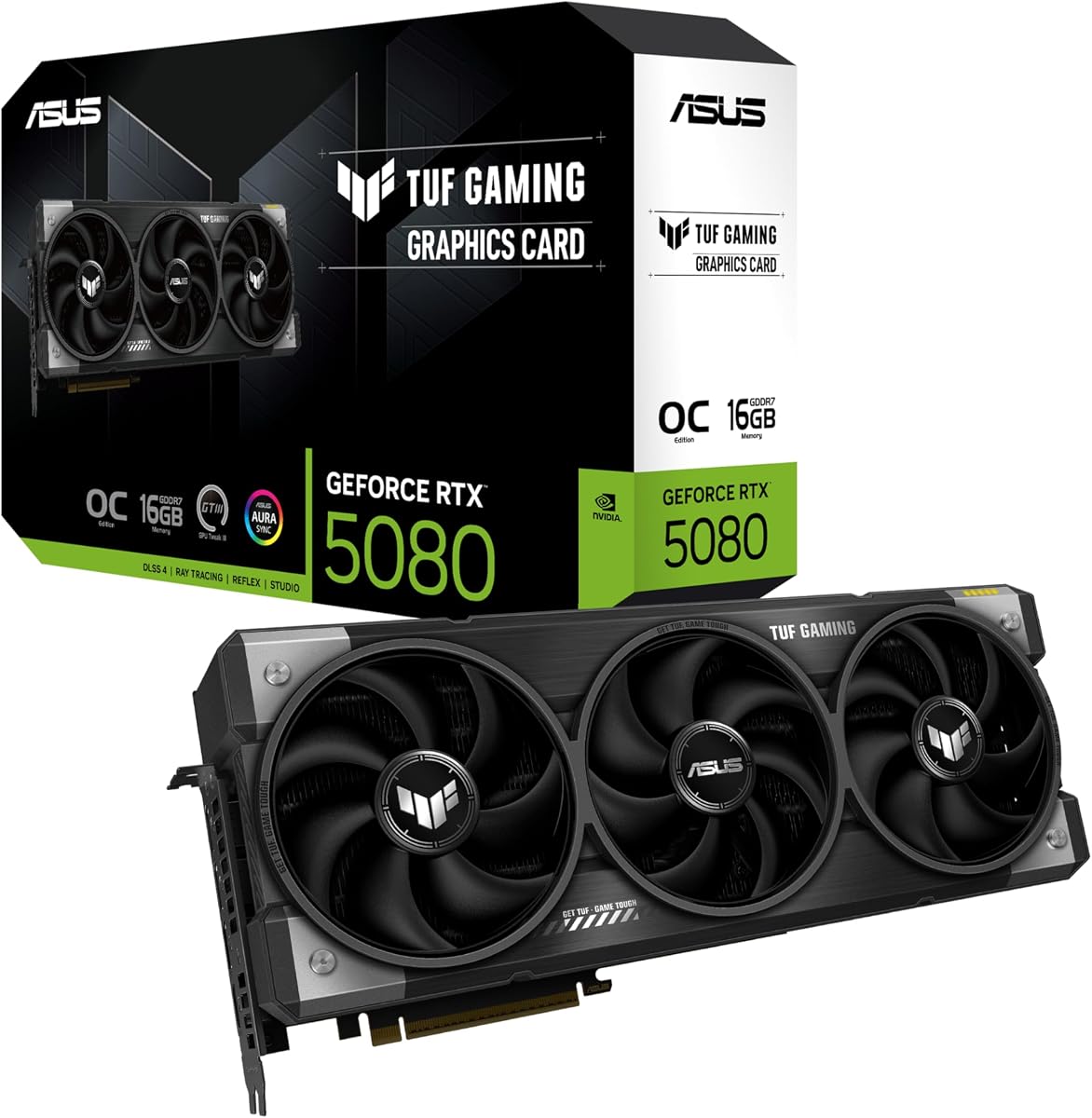
The ASUS TUF Gaming RTX 5080 is built for longevity with military grade components and phase change thermal pads. It offers robust performance with 16GB of GDDR7 memory making it a reliable choice for long term production use.
We may earn a commission when you buy through this link, at no additional cost to you.
Its 3.6 slot design provides ample airflow for the three Axial-tech fans ensuring consistent cooling. The protective PCB coating helps prevent damage from dust or moisture which adds to the overall durability of the card.
Users should note the physical dimensions and weight require a spacious case. While it is bulkier than some options the durability ensures it will withstand years of heavy daily usage in a studio environment.
This card is ideal for those prioritizing stability and long term value. If you want a card that will last through years of updates and heavy workloads this is a solid investment.
Using phase change pads instead of standard paste ensures better heat transfer over time so performance stays consistent even after long use.
Components designed to military standards resist stress and heat better than standard parts ensuring the card lasts longer under heavy loads.
We may earn a commission when you buy through this link, at no additional cost to you.
The GIGABYTE RX 9070 XT offers strong performance for creators looking for a solid alternative to NVIDIA. With 16GB of GDDR6 memory it handles large Comfyui node graphs effectively without running out of memory during processing.
We may earn a commission when you buy through this link, at no additional cost to you.
Its Hawk fan design and server grade thermal gel ensure temperatures stay low even under stress. The PCIe 5.0 support prepares your system for future upgrades without needing to change the motherboard or slots.
While NVIDIA has more specialized AI optimizations Radeon cards have become much more capable for general inference tasks. This card balances cost and performance well for those not tied to CUDA specific workflows.
This GPU is a great choice for versatile workstations. If you need a reliable card for gaming and occasional generative AI tasks this model provides excellent value and reliability.
High quality thermal gel transfers heat away from the core faster than standard materials keeping the card cool during long runs.
Specially shaped fans reduce noise while maximizing airflow so you get effective cooling without disturbing your workspace environment.
We may earn a commission when you buy through this link, at no additional cost to you.
The ASUS Dual RX 9060 XT fits well in smaller cases while still offering 16GB of GDDR6 memory. Its 2.5 slot design makes it a great choice for users with limited physical space for their GPU.
We may earn a commission when you buy through this link, at no additional cost to you.
With 0dB technology the fans stop at low loads making the card virtually silent during light Comfyui tasks. The dual BIOS switch allows toggling between quiet and performance profiles based on your current needs.
This model is best suited for entry to mid level AI tasks where noise and size matter. While it may not outperform high end models it offers a balanced experience for casual generative workflows.
Ideal for home studios or compact builds this card delivers reliability and capacity. If you need a quiet and compact GPU that still handles 16GB VRAM this is a smart choice.
The smaller physical footprint means it fits in many cases where larger cards cannot go making it versatile for various system builds.
Fans stop spinning under low load so you get silent operation when running light workloads without any distracting fan noise.
We may earn a commission when you buy through this link, at no additional cost to you.
The ASUS TUF RTX 5070 delivers solid midrange performance with 12GB of GDDR7 memory and phase change thermal pads. It strikes a good balance between raw speed and build quality for Comfyui workflows.
We may earn a commission when you buy through this link, at no additional cost to you.
Its Auto-Extreme manufacturing ensures high reliability and the protective PCB coating guards against environmental factors. The dual BIOS option gives you flexibility to adjust performance profiles as needed without complex software changes.
While the 12GB VRAM is sufficient for most tasks it might limit large scale models. However for standard generation pipelines this card offers excellent efficiency and stability over long sessions.
This GPU is great for users needing reliable performance without the premium price. If you want a card that will handle daily tasks with ease this model delivers consistent results.
Automated precision manufacturing reduces defects and ensures the card performs reliably over time without needing manual tuning or adjustments.
These pads last longer than standard paste and keep the card running cool during heavy loads to prevent thermal throttling issues.
We may earn a commission when you buy through this link, at no additional cost to you.
The ASUS Dual RTX 5050 provides an accessible entry point for Comfyui users with 8GB of GDDR6 memory. It features Blackwell architecture and DLSS 4 support which helps with efficiency in compatible workflows.
We may earn a commission when you buy through this link, at no additional cost to you.
With a compact 2 slot design it fits easily in small form factor builds without sacrificing cooling efficiency. Dual ball fan bearings ensure the fans last longer than standard sleeve designs during continuous use.
The main limitation is the 8GB memory capacity which may restrict complex pipelines. However for basic generative tasks or learning it is a cost effective solution that handles light workloads well.
This GPU is best for hobbyists or beginners. If you are just starting with Comfyui and need a reliable card without breaking the bank this is a practical choice.
Small form factor ready means it fits in compact cases perfect for tight setups without needing expensive larger chassis upgrades.
Better bearings extend fan life reducing the chance of noise or failure when the card runs for long periods daily.
We may earn a commission when you buy through this link, at no additional cost to you.
The PNY GeForce RTX 5060 OC features a compact dual fan design ideal for smaller systems. Its Blackwell architecture and factory overclocked boost clocks deliver solid performance for daily Comfyui usage without extra tuning.
We may earn a commission when you buy through this link, at no additional cost to you.
VelocityX software allows precise control over fan curves and clocks for customization. The dual fan setup efficiently dissipates heat in a compact footprint keeping temperatures stable during extended rendering sessions.
This card is perfect for users needing a balanced mix of size and speed. While it may not suit the largest models it handles standard generative workflows with ease and reliability.
Ideal for compact builds or secondary GPUs this card offers great versatility. If you need a reliable card for small systems this model provides excellent value for money.
VelocityX lets you fine tune settings easily saving profiles for different tasks so you can switch between silent and performance modes instantly.
The compact dual fan layout ensures effective cooling without taking up excessive space making it suitable for many standard PC cases.
We may earn a commission when you buy through this link, at no additional cost to you.
Selecting the right GPU involves balancing memory capacity, architecture, and budget to match your workflow needs.
VRAM is critical for loading large models and batch processing in Comfyui. Aim for at least 12GB to ensure smooth performance on modern generative AI models without constant swapping or errors.
Higher VRAM allows more complex pipelines and larger resolutions without bottlenecks.
Modern architectures like Blackwell or Xe2 offer better AI acceleration. Tensor cores significantly speed up inference tasks and reduce wait times for node execution.
Prioritize GPUs with dedicated AI hardware for faster results.
Bandwidth determines how fast data moves between memory and cores. High bandwidth ensures the GPU does not stall while processing large textures or model parameters during generation.
Look for memory types like GDDR7 or wide interfaces to maximize throughput.
Ensure your PSU can handle the card's TDP plus system overhead. High end cards may require 850W or more plus specific connectors like 12VHPWR to function safely.
Always check your existing power supply before purchasing a new GPU.
Measure your case clearance since some cards are thick and long. A GPU that does not fit will require new cases or chassis modifications which adds to the overall cost.
Check slot width and length to ensure compatibility with your build.
Efficient cooling prevents throttling under load. Cards with multiple fans or specialized designs like blower or hybrid cooling help maintain boost clocks for longer periods.
Prioritize cooling for sustained performance during long rendering tasks.
Driver maturity impacts stability in Comfyui. NVIDIA CUDA drivers are well established but alternatives like Intel or AMD require checking compatibility with your node library.
Choose a card with reliable driver support to minimize troubleshooting.
Consider PCIe generation and memory upgrades. Newer interfaces like PCIe 5.0 ensure the card can interface with future motherboards and CPUs without bandwidth bottlenecks.
Investing in future standards extends the GPU's useful lifespan.
Install the GPU securely in the PCIe slot and connect power cables firmly. Ensure all connectors are fully seated to prevent power loss during heavy load spikes.
Update drivers to the latest version for optimal compatibility with Comfyui nodes. Using stable drivers reduces crashes and improves inference speed significantly.
Monitor temperatures regularly using software like GPU Tweak or VelocityX. Adjust fan curves if the card gets too hot during long rendering sessions.
Comfyui loads models and intermediate data into memory simultaneously. High VRAM prevents bottlenecks when processing complex pipelines or high resolution outputs without needing constant swapping or errors.
Yes many AMD and Intel GPUs support Comfyui via ROCm or OpenVINO. However NVIDIA often offers the best compatibility and speed for certain node configurations.
Aim for at least 12GB VRAM for smooth operation. Less memory may work for basic tasks but limits model complexity and batch sizes significantly.
PCIe 5.0 provides higher bandwidth but PCIe 4.0 is often sufficient. It future proofs your build for future CPUs and motherboards with higher data throughput.
Use the manufacturer website to download the latest drivers. Clean install to remove old settings and ensure smooth integration with Comfyui workflows.
Yes multiple GPUs can be used via multi GPU support in Comfyui. This allows splitting tasks across cards for faster generation times.
Cards with multiple fans or advanced cooling systems prevent throttling. Ensure your case has good airflow to keep GPU temperatures stable.
Memory capacity is usually more critical for Comfyui workflows. However balanced specs ensure the card handles both speed and data demands efficiently.
We highlighted top picks including the RTX 5060 Ti for balance and the RTX PRO 6000 for professional needs. Each card offers distinct advantages depending on your budget and performance requirements.
Prioritize VRAM and architecture when selecting a card for Comfyui. A well matched GPU ensures smooth workflows and prevents bottlenecks during complex node operations.
Check current pricing and availability before purchasing as costs fluctuate frequently. Choosing a card that meets your current needs and future goals will maximize value over time.