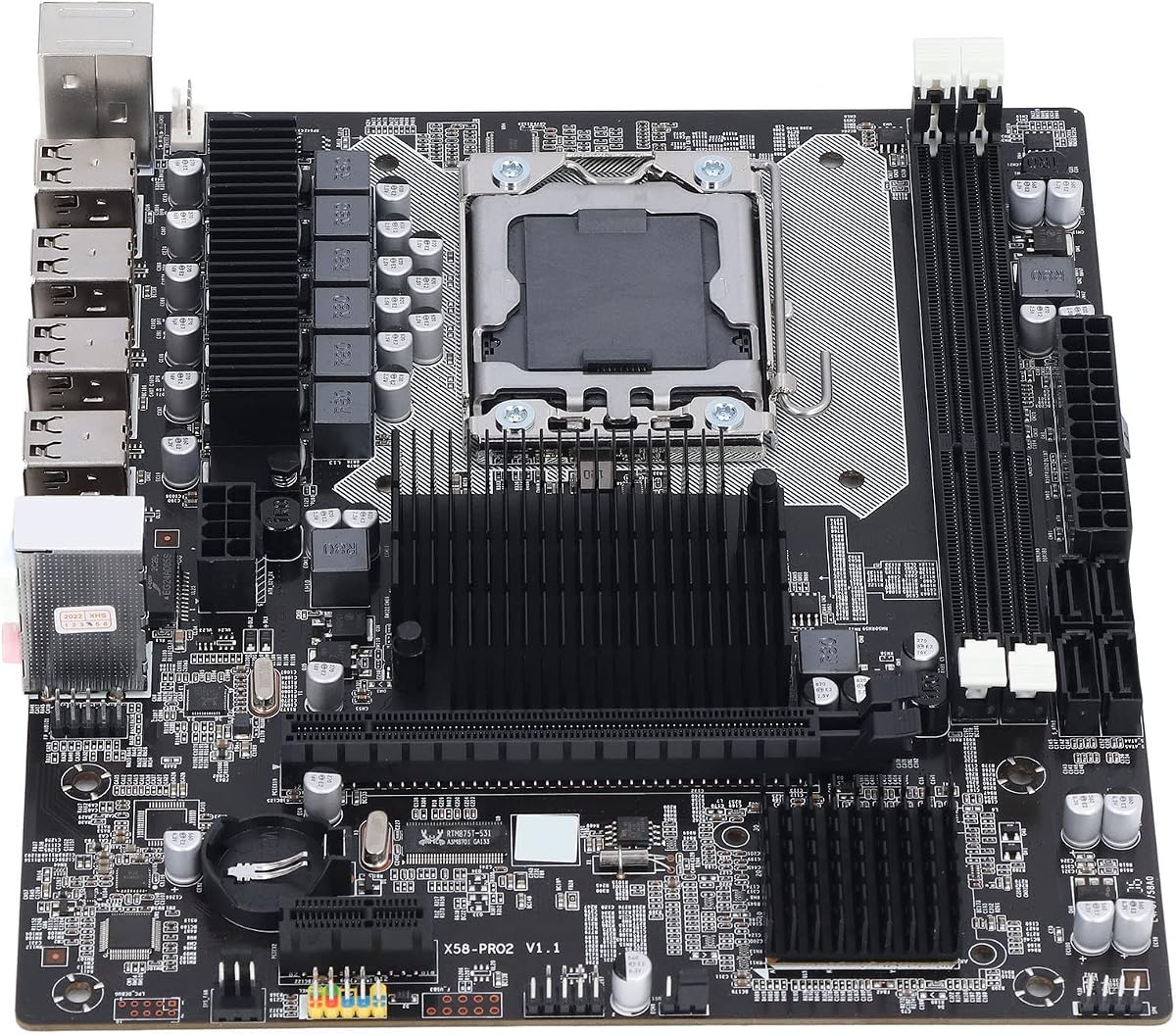
X58 Gaming Motherboard
Supports ECC memory
Solid capacitors
USB 2.0 ports
This guide compares ten Lga 1366 Motherboard options for enthusiasts seeking legacy support and triple channel memory performance today.
Finding the right Lga 1366 Motherboard can be challenging given the age of the platform. These boards support powerful legacy CPUs and offer unique features for specific builds.
We compared ten real models based on specs, connectivity, and user feedback. This list covers everything from budget options to workstation-grade boards for your needs.
Each pick shows key features and ratings to help you decide. Remember that availability and pricing can change quickly for older hardware like this.

4.0Editor score

4.7Editor score
Below is a side-by-side comparison of all ten models to help you identify the best fit for your specific legacy system requirements.



The ASUS P6X58D Premium stands out for its 16+2 phase power design and USB 3.0 support. It offers a solid foundation for legacy builds requiring reliable performance.
We may earn a commission when you buy through this link, at no additional cost to you.
Its TurboV OC tools and Stack Cool 3+ cooling ensure stability during heavy loads. This board delivers exceptional efficiency without excessive noise.
However, older standards like SATA 2 are present alongside the newer SATA 6Gb/s. This may limit pure speed compared to modern equivalents.
Buyers seeking a premium LGA 1366 board should consider this model for its balance of power and cooling innovation.
The 16+2 phase power ensures stable voltage for high-end Core i7 processors.
Stack Cool 3+ uses a heat-pipe solution to keep temperatures low without fans.
We may earn a commission when you buy through this link, at no additional cost to you.
This workstation-grade board offers six DDR3 slots and twelve USB 2.0 ports. It supports triple-way SLI and CrossFireX for maximum graphical performance.
We may earn a commission when you buy through this link, at no additional cost to you.
Its dual Gigabit LAN and Intel X58 chipset provide robust connectivity and speed for demanding tasks. This is a top choice for server-like setups.
The lack of USB 3.0 is a drawback for modern peripherals. Additionally, its large size may not fit smaller cases.
Enthusiasts needing maximum expansion and memory capacity will find this board unparalleled in the LGA 1366 space.
With six memory slots and multiple PCIe slots, this board scales well for complex builds.
Dual Intel Gigabit LAN ports enable advanced networking and bandwidth aggregation.
We may earn a commission when you buy through this link, at no additional cost to you.
This affordable board offers a straightforward entry into the LGA 1366 platform with two DDR3 slots. It supports ECC memory which is rare at this price point.
We may earn a commission when you buy through this link, at no additional cost to you.
Built with all solid capacitors, it promises durability and stable power delivery. The setup is easy with standard 24-pin and 8-pin connectors.
It lacks USB 3.0 and only has two memory slots. These trade-offs are acceptable for basic builds but not high-end systems.
Budget-conscious users looking for stability and ECC support will find this board an excellent value option.
Support for ECC memory adds stability for workstation or server-like home uses.
All solid capacitors ensure longevity and consistent voltage under load.
We may earn a commission when you buy through this link, at no additional cost to you.
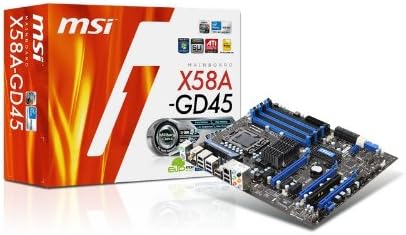
The MSI X58A-GD45 brings fast data transfer with USB 3.0 and SATA 6GB/s support. It allows multi-GPU setups with three PCIEx16 slots.
We may earn a commission when you buy through this link, at no additional cost to you.
Its APS technology dynamically controls power demand for efficiency and cooler operation. Users report good stability for the price.
While modern speeds are present, it still relies on older chipset technology. This might limit BIOS features compared to newer boards.
Builds needing legacy CPU support with modern data speeds will appreciate this board's balanced feature set.
USB 3.0 offers 10x faster transfer rates than USB 2.0 for quick data moves.
APS optimizes power usage by switching phases based on real-time demand.
We may earn a commission when you buy through this link, at no additional cost to you.
The Dx58So Extreme Series is designed for serious overclockers and enthusiasts. It supports high-end Core i7 processors and features a robust layout.
We may earn a commission when you buy through this link, at no additional cost to you.
Its design focuses on raw performance and thermal efficiency. This board often appeals to users wanting a classic high-end build.
Connectivity may lag behind newer boards, lacking many modern ports. This limits its use for contemporary peripheral setups.
Buyers prioritizing raw performance and brand heritage over modern features will find this board compelling.
Designed for hardcore users seeking maximum CPU performance and overclocking headroom.
We may earn a commission when you buy through this link, at no additional cost to you.
The P6X58D-E offers a rich mix of legacy and modern features. It supports USB 3.0 alongside IEEE 1394a ports for various peripherals.
We may earn a commission when you buy through this link, at no additional cost to you.
Its six DDR3 slots enable up to 24GB of memory for heavy multitasking. Audio and network components are high quality.
Some ports like IEEE 1394a are rare today but useful for specific legacy devices. This adds niche utility.
Users needing a balance of legacy interface support and modern speed will find this board a versatile choice.
Includes IEEE 1394a ports for legacy cameras and devices alongside modern USB.
We may earn a commission when you buy through this link, at no additional cost to you.
Supermicro brings server-grade reliability to the desktop with the X8STI. It supports ECC memory and offers dual Intel Gigabit LAN for stable networking.
We may earn a commission when you buy through this link, at no additional cost to you.
Its high rating reflects consistent quality and performance under load. This board is ideal for workstation or small server builds.
Graphics expansion is limited compared to gaming boards with fewer PCIe slots. This prioritizes stability and data integrity.
Professionals needing reliable computing with ECC support will find this board a top tier option.
Built with server components to ensure high uptime and data integrity.
We may earn a commission when you buy through this link, at no additional cost to you.
This board supports up to 288GB of ECC Registered DIMM for heavy data tasks. It uses the Intel 5520 chipset for high throughput.
We may earn a commission when you buy through this link, at no additional cost to you.
Dual Gigabit LAN allows for network aggregation and failover capabilities. It is designed for robust server environments.
The E-ATX size and high cost limit it to dedicated setups. It is not for casual desktop use.
Data centers or home lab enthusiasts needing maximum RAM capacity will find this board exceptional.
Supports up to 288GB ECC Registered memory for intensive workloads.
We may earn a commission when you buy through this link, at no additional cost to you.
The P6T Deluxe V2 offers six DIMM slots and support for up to 24GB of triple channel memory. It is well built for classic gaming.
We may earn a commission when you buy through this link, at no additional cost to you.
Its ATX layout is user friendly and supports high speeds like 2000MHz OC. This helps maximize older CPU performance.
User ratings are average, possibly due to age or compatibility issues. It may need BIOS updates for newer CPUs.
Gaming enthusiasts building retro rigs will find this board a decent option for legacy performance.
Six slots allow for extensive memory expansion and dual-channel architecture.
We may earn a commission when you buy through this link, at no additional cost to you.
This board comes directly from Intel and supports their Core i7 processors natively. It offers 12 USB ports and triple channel DDR3 support.
We may earn a commission when you buy through this link, at no additional cost to you.
Audio capabilities include 7.1 Dolby Digital for immersive sound. It supports SLI and CrossFireX for multi-GPU setups.
Max memory is limited to 16GB which may not suit heavy workloads. Some users report BIOS limitations.
Users wanting official Intel integration and ample USB connectivity will find this board a solid choice.
Designed by Intel to work seamlessly with Core i7 processors and features.
We may earn a commission when you buy through this link, at no additional cost to you.
Choosing the right LGA 1366 board requires attention to memory, ports, and build quality. Here are key factors to consider.
Ensure the board supports triple channel DDR3 memory. Check for ECC support if you need workstation reliability.
Look for at least four slots if you plan to upgrade RAM later.
USB 3.0 and SATA 6Gb/s are valuable for faster data transfer. If these are missing, older ports may bottleneck performance.
Check for LAN and audio ports to match your peripherals.
ATX is standard but verify your case dimensions. Some workstation boards are E-ATX which requires larger cases.
Proper fit ensures better airflow and cable management.
Strong phase power designs like 16+2 ensure stable voltage. This is critical for overclocking and heavy workloads.
Good capacitors and heatsinks improve longevity.
Intel X58 is common but Intel 5520 offers more bandwidth. Check PCIe lane counts for multi GPU support.
More lanes mean better performance for expandable setups.
Look for all solid capacitors and quality PCB materials. These ensure durability over years of use.
Brands with reputation for server grade often offer better reliability.
Check if BIOS updates support newer Xeon or i7 CPUs. Older boards may not support the latest microcode without updates.
Review community forums for compatibility before purchasing.
Budget models save money but lack modern connectivity. Premium models offer better power and expansion.
Decide which features matter most for your specific use case.
Install the board on standoffs to avoid shorts. Use the correct 24-pin and 8-pin power connectors for stability.
Update BIOS to latest version for CPU support. Ensure DDR3 memory is seated firmly in triple channel slots.
Clean dust regularly to maintain cooling. Keep fans and vents clear for stable temperatures.
Most manufacturers no longer provide updates but some community support exists. Check specific BIOS versions for newer Xeon or i7 processors before purchasing.
No LGA 1366 boards only support DDR3 memory. DDR4 has a different physical and electrical standard so it is incompatible.
They support Intel Core i7 Extreme and regular i7 CPUs as well as Xeon 3500 series. Verify BIOS compatibility for specific models before buying.
Some models like ASUS P6X58D include USB 3.0 headers or ports. Others may require an add on card if this is critical.
Workstation models like Supermicro X8STI and X8DTN+ support ECC. Consumer boards typically do not so check specs carefully if you need this feature.
Most support up to 24GB of unbuffered memory while some workstation boards support up to 288GB of registered DIMM.
The ASUS P6X58D Premium and Supermicro X8STI stand out for performance and reliability. The X58 Gaming option is ideal for budget focused builds.
Prioritize memory slots and power design to ensure longevity. Features like USB 3.0 are valuable for data transfer needs.
Always check current availability and prices as older hardware fluctuates. Verify BIOS support for your chosen CPU before finalizing your purchase.