
M350 AUPHY Metronome
4.4Editor score
PC material durable body
Transparent dust cover included
Low center of gravity
Discover the top mechanical metronome for piano models compared by experts for accuracy, durability, and sound quality to enhance your musical practice
Finding the right rhythm tool is essential for any pianist looking to refine their timing and performance skills. A mechanical metronome offers a tactile and reliable way to keep time without relying on batteries or digital screens. This guide explores the best options available to help you choose the perfect device for your practice needs.
We have carefully evaluated ten top-rated mechanical metronomes based on their precision, build quality, and ease of use. Our comparison considers factors like tempo range, bell settings, and overall durability to ensure you get a tool that lasts. Each product was analyzed against strict criteria to provide you with an honest and comprehensive overview.
Every selection in this list highlights unique features that cater to different skill levels and practice environments. Whether you are a beginner or a professional, these devices offer distinct advantages for mastering tempo and rhythm. Please note that product availability and pricing can change frequently so check current details before purchasing.
4.4Editor score

4.4Editor score

4.6Editor score
This section provides a side-by-side look at all ten selected mechanical metronomes to help you quickly identify the model that fits your specific requirements for piano practice and musical development.


The Ueteto Mechanical Metronome stands out as a reliable tool for pianists seeking precise timing without electronic dependencies. With a rating of 4.4 stars it offers a robust wind-up mechanism that ensures consistent beats during long practice sessions. Its loud sound design ensures you never miss a beat even when playing loudly on the keys.
We may earn a commission when you buy through this link, at no additional cost to you.
This device features a tempo range from 40 to 208 BPM which covers almost every musical piece you might encounter. The ability to select beats from 0 to 6 allows for complex rhythm training essential for advanced piano study. The wind-up mechanism provides up to 18 minutes of runtime on a single full wind which is ample for most practice routines.
While the build is durable the plastic casing can show signs of wear if not handled with care. Additionally the bell sound is quite audible which might be distracting in very quiet environments though it helps maintain focus. These trade-offs are acceptable given the reliability and cost-effectiveness of the device for daily use.
If you are looking for a straightforward effective mechanical metronome that works well for piano and other instruments this model is an excellent choice. It is particularly suited for students and hobbyists who value simplicity and reliability over digital features. We recommend this unit for anyone wanting to improve their rhythm without spending much money.
The spring-driven system ensures consistent tempo without battery degradation over time.
Adjustable bell settings allow for practicing complex time signatures with ease.
We may earn a commission when you buy through this link, at no additional cost to you.
This mechanical metronome combines functionality with a classic aesthetic that fits well in any music room. The metal movement ensures that the beats remain accurate over years of use which is crucial for serious practice. It holds a 4.4 rating indicating high satisfaction among users who value precision and durability.
We may earn a commission when you buy through this link, at no additional cost to you.
The device covers a tempo range of 40 to 208 BPM providing flexibility for various musical genres. It includes bell settings from 0 to 6 which helps musicians internalize different time signatures. The loud sound output ensures the beat is heard clearly even in noisy environments or during energetic playing.
One downside is the weight which makes it less portable than lighter plastic versions. The wind-up key can sometimes feel stiff requiring a bit of effort to fully charge the spring. However these are minor issues compared to the benefits of having a precise and durable timing tool.
Ideal for pianists who want a metronome that looks good on the piano stand and performs reliably this model is a strong contender. It serves beginners well by offering visual and auditory cues that help build a strong sense of rhythm. Consider this if you prioritize build quality and accuracy in your practice tools.
The wood grain finish adds a touch of elegance to your musical space.
Constructed to withstand regular use without losing precision over time.
We may earn a commission when you buy through this link, at no additional cost to you.
The Tempi Mechanical Metronome offers a blend of style and function that appeals to musicians who care about appearance. With a rating of 4.5 stars it stands out for its steel gears that promise long-term durability. The brown grain veneer finish gives it a classy look that complements traditional piano settings beautifully.
We may earn a commission when you buy through this link, at no additional cost to you.
It features a tempo range of 40 to 208 BPM which is standard for most practice needs. The wind-up mechanism provides an average of 20 minutes of operation allowing for extended practice sessions without interruption. The inclusion of a free microfiber cloth shows attention to detail and helps keep the device looking new.
The price is higher than basic models which might be a concern for budget-conscious buyers. The pendulum adjustment requires careful handling to ensure accurate tempo setting which might take a bit of practice. However the quality of materials justifies the cost for those seeking a premium feel.
This metronome is perfect for pianists who want a device that looks as good as it performs. The steel gears provide peace of mind regarding longevity making it a wise investment for daily use. We recommend it for students and teachers who value aesthetics and reliability in their practice routine.
Steel gears and steel finish ensure the device lasts for many years.
Twenty-minute wind duration supports long uninterrupted practice sessions.
We may earn a commission when you buy through this link, at no additional cost to you.
The M350 AUPHY Mechanical Metronome is an excellent budget-friendly choice for students and beginners. With a 4.4 rating it delivers precise beats with error controlled within 1 percent ensuring reliable practice. The classic shape and PC material make it lightweight and easy to handle while maintaining durability.
We may earn a commission when you buy through this link, at no additional cost to you.
Its tempo range of 40 to 208 BPM fits standard practice requirements. The accent bell feature helps emphasize specific beats in a measure which is vital for rhythm training. A transparent dust cover is included to protect the device when not in use adding to its value.
The material feels less premium than metal models and the wind duration decreases at higher tempos. However for the price this is a minor compromise given the functionality provided. The low center of gravity ensures it stays stable on the piano keys during vigorous practice.
We highly recommend this model for those starting their musical journey who need accuracy without breaking the bank. It is simple to use and the accent bell adds a useful layer of functionality. For budget-conscious buyers this is one of the best mechanical metronomes available today.
Precision controlled within 1 percent for reliable tempo consistency.
Transparent cover keeps the mechanism clean when not in use.
We may earn a commission when you buy through this link, at no additional cost to you.
This metronome is designed to keep you on beat with a loud clear sound that cuts through music. It holds a 4.2 rating and features a high-precision movement that ensures accuracy within 1 percent. The design is straightforward making it suitable for beginners who need an intuitive tool.
We may earn a commission when you buy through this link, at no additional cost to you.
One standout feature is the wind duration which can last up to 45 minutes at slower tempos. This allows for extensive practice sessions without needing to wind it frequently. The metal movement adds robustness to the device ensuring it lasts through regular use.
The plastic body may be prone to cracking if dropped and the setup process requires a bit of patience. The instructions could be clearer for those new to mechanical metronomes. Despite this the performance and reliability make it a solid choice for serious practice.
If you need a device that offers long runtime and clear beats for piano practice this model is worth considering. The loud sound ensures you stay synchronized even when playing loudly. It is a great option for those who prioritize function over fancy design.
Up to 45 minutes of wind ensures long practice sessions.
Clear beat sound keeps you locked in rhythm easily.
We may earn a commission when you buy through this link, at no additional cost to you.
This universal metronome boasts a high 4.6 rating reflecting strong user satisfaction with its performance. It combines plastic and metal in the movement to balance cost and durability. The black standard model is compact and fits easily on most piano stands without taking up much space.
We may earn a commission when you buy through this link, at no additional cost to you.
The tempo range of 40 to 208 BPM covers standard practice needs effectively. It comes with a one-year manufacturer warranty which adds confidence for buyers concerned about longevity. The simplicity of use makes it a great option for children or absolute beginners.
Bell sound options are somewhat limited compared to other models and the design is not very stylish. However functionality is the priority here and it delivers consistent beats without issue. The warranty provides a safety net for peace of mind for the first year.
For those seeking a no-frills reliable metronome backed by a warranty this is a safe bet. The multiple color options allow for personalization even if the base design is simple. We recommend it for families needing a durable tool for young students.
Manufacturer warranty provides assurance for the first year of use.
Choose from multiple colors to match your personal style.
We may earn a commission when you buy through this link, at no additional cost to you.
This Ueteto model brings a classic wood appearance to your practice space with a rating of 4.3 stars. The design is sturdy and the wind-up mechanism ensures you never need to buy batteries. It offers a full tempo range which is essential for versatile musical training.
We may earn a commission when you buy through this link, at no additional cost to you.
The bell ring is selectable allowing you to customize the rhythm cues based on the piece you are playing. This flexibility helps in practicing complex time signatures with precision. The wood grain finish is aesthetically pleasing and blends well with traditional piano furniture.
The weight of the device makes it less portable than lighter models and the wind key placement can feel awkward. These are minor drawbacks that do not outweigh the benefits of a reliable classic-looking tool. It is a great addition to a home studio setup.
If you value aesthetics alongside functionality this model is an excellent choice for your piano practice. It provides consistent timing and the wind-up system is dependable for daily use. We suggest it for musicians who appreciate traditional design in their practice tools.
Classic wood grain finish enhances the look of your piano area.
Customizable bell settings help match rhythm needs for any piece.
We may earn a commission when you buy through this link, at no additional cost to you.
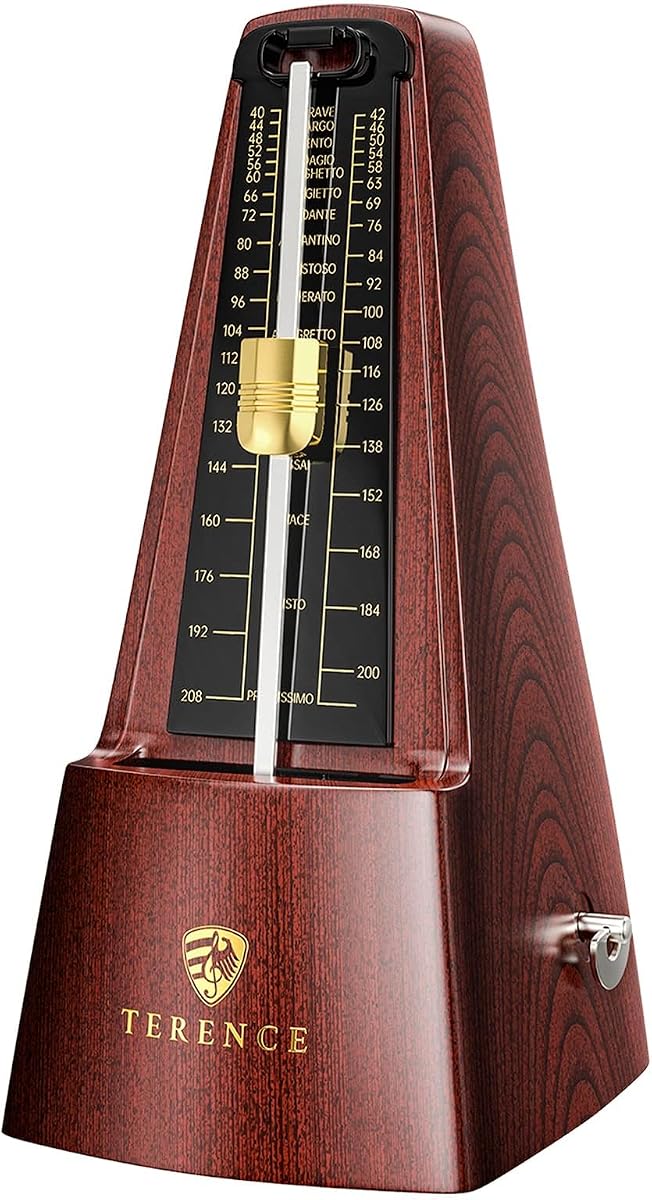
The TERENCE Mechanical Metronome features a unique transparent design that allows you to see the internal mechanism in action. With a rating of 4.0 stars it offers all-metal movement for durability. The copper pendulum weight adds a touch of quality and helps maintain stability.
We may earn a commission when you buy through this link, at no additional cost to you.
The clear scale markings make it easy to read the tempo setting at a glance. This is particularly useful for beginners who are learning how to adjust tempo accurately. The transparent body is visually interesting and can make practice sessions more engaging for kids.
Fingerprints show easily on the transparent surface which might annoy some users. The rating is slightly lower than other models suggesting occasional quality control issues. However the visual appeal and durable movement remain strong selling points for this device.
For visual learners or those who want a distinctive tool on their piano stand this metronome is a great pick. It combines modern design with classic mechanics. We recommend it for students who benefit from seeing the mechanism work to understand timing better.
Transparent body allows you to watch the mechanism work clearly.
Visible markings make setting the correct tempo easy and fast.
We may earn a commission when you buy through this link, at no additional cost to you.
The Wittner 836 Taktell is a compact metronome known for its classic design and reliability. With a rating of 4.6 stars it is favored by professionals for its steady and accurate performance. The black plastic casing gives it a sleek unobtrusive look on any piano.
We may earn a commission when you buy through this link, at no additional cost to you.
It does not include a bell feature which means the sound is a pure mechanical click. This can be beneficial for those who want a quieter practice environment without extra noise. The compact size makes it easy to carry and store in a case or bag.
The lack of a bell may be a drawback for those who need distinct beat emphasis. The price is higher than many alternatives which might deter budget shoppers. However the reputation for quality and precision justifies the investment for serious musicians.
This metronome is ideal for pianists who value simplicity and a compact design. It avoids visual distractions and focuses purely on timing. We recommend it for professionals and students who want a trusted tool that lasts for years.
Small form factor makes it easy to take anywhere.
Proven mechanical design ensures steady and accurate timing.
We may earn a commission when you buy through this link, at no additional cost to you.
This mechanical metronome is designed for ease of use making it accessible for beginners. With a rating of 3.8 stars it offers a loud sound that keeps you synchronized. The engraved markings help you set the tempo accurately without confusion.
We may earn a commission when you buy through this link, at no additional cost to you.
It supports multiple instruments which is great for students learning different styles. The high-efficiency design means it delivers reliable beats without needing frequent winding. The user-friendly operation ensures you can start using it immediately after unboxing.
The build quality can be inconsistent according to some user reviews. This might lead to issues with longevity compared to more expensive models. Despite this the basic functionality is there and the loud sound helps keep you on track.
For those who want a basic loud and simple tool this is a reasonable option. It is particularly useful for beginners who need clear audible cues. We suggest it for casual players or as a secondary device for home use.
User-friendly design makes it simple to start using right away.
Versatile tool that works well with various instruments.
We may earn a commission when you buy through this link, at no additional cost to you.
Selecting the right mechanical metronome requires considering several factors to ensure it meets your practice needs and personal preferences.
A wide tempo range is essential for covering all types of musical pieces. Look for a model that offers at least 40 to 208 beats per minute to ensure you can practice slow adagios and fast allegros alike. This flexibility allows you to grow with the instrument without outgrowing the tool quickly.
Ensure the metronome supports the full spectrum of speeds you need for your current and future repertoire.
The durability of the movement is critical for long-term accuracy. Metal movements generally last longer and stay more precise than plastic ones over years of regular use. Check the materials used in the construction to ensure the device can withstand daily handling.
Prioritize models with metal gears and robust casings for a longer lifespan.
Bell settings help you visualize the beat structure within a measure. Models that offer 0 to 6 beat selections allow you to practice complex time signatures effectively. This feature is particularly useful for pianists who need to internalize different rhythmic patterns.
Choose a device with adjustable bell rings to match your rhythm training requirements.
The time the metronome runs on a single wind affects how often you need to reset it. Look for models that promise at least 15 to 20 minutes of runtime to avoid interruptions during practice. Longer durations ensure you can focus on playing without constant winding.
Check the manufacturer specifications for wind time to match your typical practice sessions.
A loud and clear sound is necessary to hear the click even when playing loudly on the piano. If you practice in a noisy environment or play forceful passages, ensure the device has a strong audible output. This prevents you from losing the beat during dynamic performances.
Select a model with high volume output to guarantee you hear every click clearly.
Since the metronome sits on your piano or stand, its appearance matters to many users. Wood grain or classic finishes can complement the look of traditional instruments. Choose a design that matches your room or personal taste to make it an enjoyable addition to your practice space.
Pick a visual style that you find appealing to enhance your practice environment.
A user-friendly setup process is vital for beginners and those new to mechanical tools. Look for clear instructions and simple adjustments to the tempo and beat settings. If the device is intuitive to operate, you will spend more time practicing and less time fiddling with controls.
Ensure the device allows for straightforward tempo and beat adjustments.
A manufacturer warranty provides peace of mind against defects or issues with the movement. Check if the product comes with at least a one-year guarantee to protect your investment. This support ensures you can replace or fix the device if it stops working correctly.
Look for models backed by a warranty to ensure reliable service.
Begin by placing the metronome on a flat stable surface to prevent it from tipping over during use. Pull out the brake lever located at the bottom to allow the pendulum to swing freely. This step ensures the mechanism can move without obstruction for consistent timing.
Mechanical metronomes do not use batteries as they operate on a wind-up spring mechanism. You simply wind the key to charge the spring and it will run for a set time. This design eliminates the need for battery replacements entirely.
A standard range of 40 to 208 beats per minute covers most musical pieces effectively. This span allows you to practice slow and fast tempos without changing devices. Ensure the metronome you choose meets this standard for versatile use.
The bell accents specific beats in a measure to help you understand the time signature. This feature is useful for learning complex rhythms where certain beats are emphasized. It provides an auditory cue beyond the standard click to guide your playing.
Metal movements generally offer better durability and precision over time compared to plastic ones. They are less likely to wear out or lose accuracy with heavy use. Choosing a metal movement model can save you from replacements down the line.
You can stop the metronome by engaging the brake lever at the base. This locks the pendulum in place so it does not move or make sound. Some models also have a cover that can be placed over the pendulum to muffle the noise.
Yes mechanical metronomes are designed to work with any instrument that requires rhythm practice. They are versatile tools for piano violin guitar and many others. You can use the same device for different instruments without issues.
We have reviewed ten top mechanical metronomes to help you find the perfect rhythm tool for your practice sessions. Each model offers unique benefits ranging from classic aesthetics to high precision and durable construction. Choosing the right one depends on your specific needs and budget constraints.