
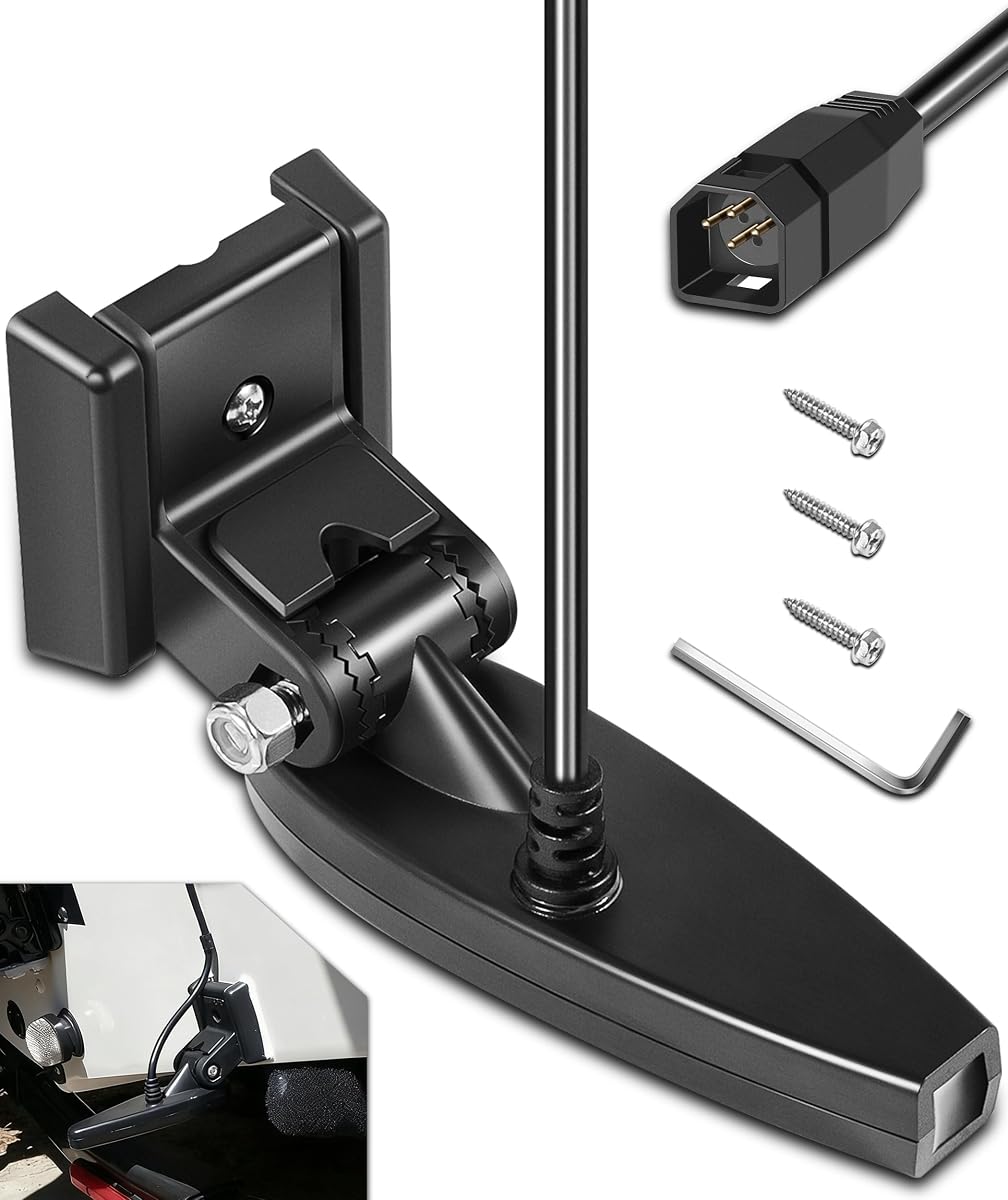
Humminbird 710200-1 XNT 9 SI 180 T
4.6Editor score
Side Imaging Down Imaging
Transom Mount Design
Compatible with HELIX Series
This guide compares the top ten down and side imaging transducers for fish finders to help you choose the best sonar technology for your boat and budget.
Finding the right down and side imaging transducer is crucial for anglers who want to see fish and structure with incredible clarity. Modern sonar technology has evolved to provide detailed views of the underwater world, helping you locate fish more efficiently than ever before.
We evaluated ten leading transducers based on imaging quality, compatibility, build durability, and overall performance in various water conditions. Each product was analyzed for its frequency range, beam width, and ability to deliver clear returns in shallow and deep waters alike.
Each pick highlights key strengths and ideal use cases to guide your decision-making process. Note that prices and availability change frequently, so check current listings before purchasing to ensure you get the best value for your specific fishing needs.
4.6Editor score

5.0Editor score

4.6Editor score
The following table provides a side-by-side comparison of all ten transducers to help you quickly identify the best match for your fish finder setup and specific fishing requirements.



This transducer stands out as the top choice for serious anglers seeking high-definition underwater views. With a perfect rating, it delivers unparalleled detail in both side and down imaging modes to ensure you never miss a structure.
We may earn a commission when you buy through this link, at no additional cost to you.
Its Compact MEGA Side Imaging+ technology uses dual frequencies to provide superior definition of fish-holding structures. The built-in temperature sensor adds valuable data for understanding fish behavior in changing water conditions throughout the day.
While it comes at a higher cost, the performance justifies the investment for those who rely on accurate sonar daily. The extensive coverage range ensures you can scan large areas quickly without sacrificing clarity or detail.
If you own compatible models like APEX or SOLIX G3, this is the definitive upgrade for your boat. It represents the pinnacle of current imaging technology for finding fish efficiently and accurately in various environments.
The dual frequency setup ensures detailed returns even in deep water where other units struggle to maintain resolution.
Built-in temperature monitoring helps track thermal layers and fish activity zones without needing separate equipment.
We may earn a commission when you buy through this link, at no additional cost to you.
This transducer offers unmatched detail for anglers using Lowrance displays who demand the highest quality sonar returns. Its Active Imaging technology sets a new standard for how clearly you can see underwater features.
We may earn a commission when you buy through this link, at no additional cost to you.
FishReveal Smart Target view helps you easily distinguish between fish and hard structure on high-detailed scans. This feature reduces guesswork and speeds up the process of locating promising fishing spots near drop-offs and timber.
While the price is steep, the refined detail allows you to identify specific structures like weedbeds or rockpiles from a greater distance. This range advantage gives you more time to position your boat before casting.
Ideal for professionals or enthusiasts who need every advantage possible when targeting pressured fish. It is the best choice if you value precision and clarity above all else in your sonar system.
Smart Target view simplifies the screen by highlighting fish targets against complex backgrounds clearly.
Unmatched scanning range lets you cover more water efficiently while maintaining high resolution on targets.
We may earn a commission when you buy through this link, at no additional cost to you.
This transducer provides excellent value for anglers looking to upgrade to side imaging without breaking the bank. It balances performance and cost effectively, making it accessible for those new to advanced sonar.
We may earn a commission when you buy through this link, at no additional cost to you.
Despite its lower price, it delivers clear side and down imaging suitable for most recreational fishing needs. It works seamlessly with a wide range of HELIX models to ensure broad compatibility for many boat setups.
The installation process is straightforward with standard mounting hardware included. While it lacks some advanced features of premium models, it covers the essentials required to find fish and structures reliably on the water.
Choose this if you want to test side imaging capabilities before committing to a high-end unit. It is a solid entry point that proves you do not need to spend a fortune to get good sonar.
Brings side imaging to budget-conscious anglers with reliable performance that meets basic needs well.
Fits many older and current HELIX units so you can upgrade existing setups easily without replacing units.
We may earn a commission when you buy through this link, at no additional cost to you.
This unit is designed for anglers using older XPLORE and APEX models who need reliable side and down imaging. It provides a clear picture of what lies below and to the sides of your vessel.
We may earn a commission when you buy through this link, at no additional cost to you.
The DualBeam PLUS sonar offers great detail combined with generous coverage to help you scan water effectively. The MEGA imaging extends 125 feet out to each side to ensure you do not miss nearby fish.
While it has a slightly lower rating than newer models, it remains a solid choice for specific compatibility requirements. The included temperature sensor adds value for monitoring water conditions during your fishing trips.
Perfect for upgrading an older boat setup where modern units are not an option. It ensures you get high-quality imaging without needing to purchase an entirely new fish finder system.
Keeps older SOLIX and XPLORE units relevant by adding modern imaging capabilities at a reasonable cost.
Integrated sensor helps you track water temps instantly for better fish behavior predictions.
We may earn a commission when you buy through this link, at no additional cost to you.
This bundle includes both the fish finder and transducer, making it an easy choice for new boaters or those replacing old gear. It delivers MEGA Side and Down Imaging with exceptional detail to see fish clearly.
We may earn a commission when you buy through this link, at no additional cost to you.
The built-in GPS and mapping features allow for real-time chart plotting with AutoChart Live to create depth maps while boating. This integration means you save money by buying a single complete system rather than separate components.
While it costs more than a standalone transducer, the inclusion of a full display justifies the price for many anglers. The interface is user-friendly with reliable keypad control that works well even in rough conditions.
Ideal for anyone needing a fresh start with reliable sonar and navigation. It removes the guesswork of compatibility and provides a ready-to-use package that enhances your entire fishing experience.
AutoChart Live allows you to map depths and structures automatically without external chart purchases.
Pre-tested compatibility between unit and transducer ensures smooth operation right out of the box.
We may earn a commission when you buy through this link, at no additional cost to you.
Designed specifically for HELIX 7 CHIRP SI GPS G4 models, this transducer ensures optimal performance for that display. It provides CHIRP Side and Down Imaging with clean returns that make identifying fish easier.
We may earn a commission when you buy through this link, at no additional cost to you.
The Dual Spectrum CHIRP technology helps you see fish and structure with clarity across a wide frequency range. This flexibility allows you to adjust settings based on water depth and clarity to get the best returns possible.
It includes a built-in temperature sensor and a 20-foot cable to make installation flexible for most boat transoms. The setup is simple and secure, providing a reliable sonar source for daily fishing activities.
Perfect if you already own a compatible HELIX 7 unit and need to replace a damaged or outdated transducer. It maintains the system balance and ensures your display operates at peak performance levels.
Built specifically to work with certain CHIRP models for maximum efficiency and signal quality.
Delivers clean returns that reduce noise and help distinguish real targets from background interference.
We may earn a commission when you buy through this link, at no additional cost to you.
This transducer supports Active Imaging technology and includes a 6-foot cable for installations where space is limited. It is designed for use with units like HDS LIVE and HDS Carbon for reliable sonar returns.
We may earn a commission when you buy through this link, at no additional cost to you.
The 9-Pin connector supports SideScan and DownScan capabilities alongside standard CHIRP frequencies to ensure versatile imaging. It is ideal for smaller boats where a shorter cable reduces clutter near the transom area.
Note that you may require an adapter cable depending on your specific display model. This adds a step to the installation but ensures the transducer connects properly to newer units that need different pin configurations.
A good choice for boaters with compact boats or limited wiring space near the console. Just ensure you check your display requirements before buying to avoid needing extra adapters later.
Short cable suits small boats where long runs are unnecessary or difficult to manage along the transom.
Provides SideScan and DownScan to help you see detailed underwater structures in a smaller package.
We may earn a commission when you buy through this link, at no additional cost to you.
This accessory ensures your transducer mounts securely to maintain optimal sonar performance and image clarity. It is designed to work with Lowrance systems including Elite Ti and HDS displays for reliable operation.
We may earn a commission when you buy through this link, at no additional cost to you.
Proper mounting reduces vibration and noise which can degrade sonar returns and make fish harder to identify. A stable transducer stays aligned correctly with the hull to deliver consistent depth and imaging data.
While it does not produce sonar signals itself, it is critical for protecting your equipment and ensuring accuracy. The bracket simplifies installation so you can set up your transducer quickly and safely.
Buy this if your transducer needs better stability or a fresh mount. It is a small investment that prevents larger issues like data gaps or equipment loss caused by poor mounting.
A rigid mount reduces motion-induced noise for cleaner images and more accurate depth readings.
Prevents damage from movement or vibration that might loosen connections or harm the transducer face.
We may earn a commission when you buy through this link, at no additional cost to you.
This transducer is optimized for Down Imaging and DualBeam Sonar to provide clear views directly beneath your boat. It includes an impact-release bracket to protect the unit when trailering or docking.
We may earn a commission when you buy through this link, at no additional cost to you.
With 455/800 kHz frequencies, it produces crisp details of the bottom structure and helps you spot fish in deep water. The 20-foot cable offers enough length for most standard boat setups to reach the transom easily.
While it lacks side imaging, it excels at showing vertical structure which is useful for specific fishing techniques. The durable design ensures it can withstand rough waters without losing alignment or signal quality.
Choose this if you primarily care about what is directly below you and need a reliable setup for deep water. It is a solid choice for anglers who prefer direct bottom scanning over wide area sweeps.
Release bracket saves your transducer from damage if it hits a dock or shallow spot while moving.
High frequency imaging reveals bottom hardness and vegetation to help you target structure effectively.
We may earn a commission when you buy through this link, at no additional cost to you.
This transducer provides a reliable view of what is happening directly under your boat using DualBeam Sonar. It is a great tool for anglers targeting structure without needing side imaging at an affordable price.
We may earn a commission when you buy through this link, at no additional cost to you.
The 455/800 kHz frequencies give you a fish-eye view of the bottom to see vegetation and debris clearly. Combined with a built-in temperature sensor, it offers essential data for making smart fishing decisions.
While it lacks side imaging, it delivers consistent results for those who focus on vertical scanning. The 20-foot cable is standard and helps ensure proper placement for optimal performance on most transoms.
An excellent option for budget-conscious anglers who still want clear Down Imaging. It pairs well with older models and provides essential sonar capabilities without excessive cost or complexity.
Focuses on depth and bottom hardness to show exactly what lies directly beneath the vessel.
Includes temp sensor and wide coverage to give you key stats needed for effective fishing trips.
We may earn a commission when you buy through this link, at no additional cost to you.
Selecting the right transducer requires understanding your specific needs and existing equipment to ensure compatibility and performance.
Check that the transducer supports your current fish finder model and connector type. Mismatched units often fail to produce signals or require complex adapters that can reduce performance significantly.
Ensure you have the correct pin configuration and cable length to match your display's input requirements perfectly.
Frequencies determine depth and clarity, with higher rates offering better detail but less depth reach. Choose a range that matches your typical fishing environments to balance resolution and penetration.
Dual-frequency transducers provide flexibility to switch between wide views and high-detail scans as conditions change.
Consider the beam width and side scanning range to decide how much water you want to see at once. Wider coverage helps you find fish quickly, while narrow beams offer more detail on specific structures.
Select a model that offers the right balance between scanning speed and resolution for your fishing style and targets.
Transom mounts are common and easy to install, but some boats require thru-hull or trolling motor mounts. The mounting method affects signal quality and protection from physical damage during use.
Choose a mount that allows stable placement below the waterline to ensure consistent sonar returns and accurate imaging.
Look for units with robust casings and impact-release brackets to protect against accidental collisions during boat handling. Durability ensures your investment lasts longer and survives rough water conditions.
A sturdy build prevents signal loss and keeps the transducer aligned correctly even when traveling at high speeds.
Extra tools like temperature sensors or built-in GPS help you track environmental conditions and map depth contours efficiently. These features add value by reducing the need for separate instruments on your boat.
Consider what data matters most to your fishing style and ensure the transducer provides it directly.
Adequate cable length is essential for reaching your transom or trolling motor mount from your display unit comfortably. If the cable is too short, you may be forced to route it improperly which risks damage or signal interference.
Measure your boat layout accurately to select a transducer with the necessary cable length for a clean install.
Prices vary widely based on technology features, so decide how much you are willing to invest for improved sonar. Higher costs usually bring better detail but the right choice depends on how often you fish and what you target.
Balance your financial limits with the features you actually need to avoid overpaying for capabilities you will not use.
Install the transducer below the waterline and align it flat to ensure clean sonar signals. Avoid placing it near propellers or strakes that might create bubbles or turbulence interfering with your data.
Keep the face clean from algae and debris to maintain signal strength and image clarity over time. Rinse the unit with fresh water after saltwater trips to prevent corrosion and ensure long life.
Check mounting hardware regularly to ensure it stays secure during operation and does not shift due to vibration. Tighten bolts as needed and inspect cables for any wear that might disrupt connectivity.
Side imaging scans the water to the left and right of your boat to find fish away from the hull. Down imaging scans directly underneath your vessel to show depth and bottom structure clearly.
Not always, but your unit must support the transducer's technology. Always check compatibility lists to ensure your existing model can process the new sonar data effectively.
Most high-frequency transducers reach up to 1000 feet in ideal conditions, but performance varies. Lower frequencies penetrate deeper while higher frequencies provide better detail in shallower water.
Yes, placing the transducer too high or near bubbles can cause weak signals. It must be fully submerged and free of turbulence to deliver clear and accurate sonar returns.
Yes, many models are designed for saltwater but require regular rinsing to prevent corrosion. Always rinse with fresh water after use to maintain the durability and performance of the unit.
CHIRP transmits a range of frequencies to improve target separation and clarity. This makes it easier to distinguish between fish and rocks or other hard structures underwater.
The Humminbird XM 14 HW CMSI T, Lowrance 000-14489-001, and Humminbird XNT 9 SI 180 T lead our list with strong performance and reliable imaging quality. Each offers a unique balance of features suited to different budgets and display setups.
When deciding, prioritize compatibility with your current unit and the specific imaging range you need. Whether you want side views or deep down scanning, matching the technology to your goals saves money and improves results.
Always check current listings and verify details before purchasing to ensure the product fits your needs perfectly. Technology evolves quickly so staying updated helps you get the best value available today.