
Handheld Fish Finder Portable Fishing Kayak Fishfinder
4.2Editor score
Sonar Frequency 200 kHZ
Detectable depth range 3ft to 328ft
Powered by 4 AAA batteries
Finding the right tool to locate fish and measure water depth is essential for any angler. Cheap depth finder units offer affordable access to sonar technology without requiring expensive marine setups.
We evaluated ten leading models based on sonar clarity, ease of use, battery life, and durability. Our list covers handheld, castable, and dash-mounted options for various fishing styles.
Each pick highlights key features and real-world performance. Prices fluctuate often, so check current listings before buying to ensure you get the best value for your budget needs.
4.2Editor score
4.6Editor score

4.5Editor score
As an Amazon Associate we earn from qualifying purchases.
This side-by-side comparison highlights the core specifications and capabilities of each model to help you decide which unit fits your specific fishing environment best.


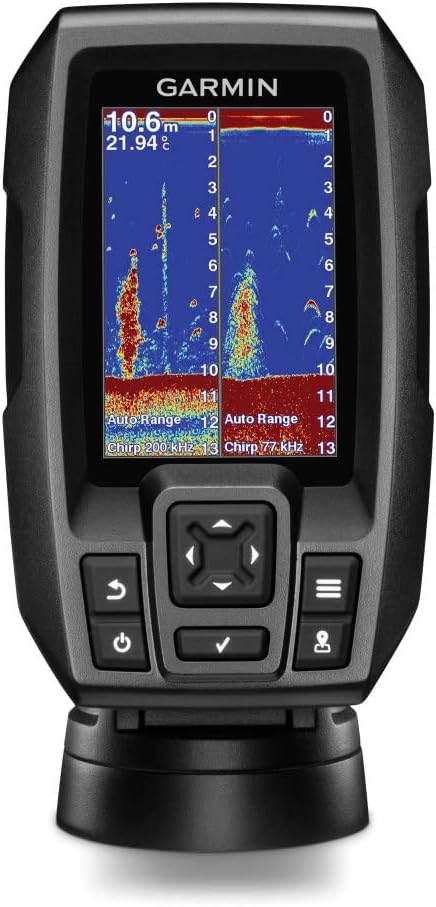
The Garmin Striker 4 stands out as a top-tier choice for anglers seeking a reliable and feature-rich unit. It offers impressive clarity with its Chirp Sonar technology, which provides wider information and crisper fish arches for better target separation.
We may earn a commission when you buy through this link, at no additional cost to you.
This model features Clear Vu scanning Sonar, delivering near photographic images of objects and fish in the water. The included waypoint map helps you mark and navigate to specific fishing locations like brush piles or docks with ease. Its IPX7 water rating ensures durability in splash-prone environments.
While the 3.5 inch screen is compact, the interface remains intuitive with dedicated buttons that make operation straightforward. The only minor trade-off is the requirement for a 12-volt power source, which limits its use to boats or kayaks with battery packs rather than handheld shore casting.
If you need a robust unit for serious fishing that balances price and performance, this device is an excellent investment. It simplifies the search for structure and fish without overwhelming you with complex menus or excessive technical demands.
The Chirp Sonar and Clear Vu technology combine to create high-resolution images that help identify fish and structures accurately.
Built-in waypoint mapping allows you to save and return to productive spots without needing an external GPS system.
We may earn a commission when you buy through this link, at no additional cost to you.
This portable unit is ideal for anglers who want functionality without a complex installation. It uses a sonar transducer to detect water depth and fish location, providing essential data for kayak or shore fishing with a simple toss-and-turn-on process.
We may earn a commission when you buy through this link, at no additional cost to you.
The device runs on four AAA batteries, lasting about four to five hours in continuous use. It includes features like a fish alarm, backlight, and five sensitivity settings to adapt to different water conditions. The neck strap allows you to keep your hands free while fishing.
Although the depth range is limited to 328 feet, it covers most recreational fishing scenarios effectively. The main drawback is the battery dependency, which means you need to carry replacements for longer trips, and the sensor works best at slow speeds below five miles per hour.
For those on a tight budget or new to electronics, this model offers a low-risk entry point. It proves that you do not need to spend a fortune to get accurate depth readings and fish location data while on the water.
Simply toss the transducer in the water and power on the display for immediate depth readings without any wiring.
The unit is rated for both freshwater and saltwater use, making it suitable for lakes, rivers, and coastal areas.
We may earn a commission when you buy through this link, at no additional cost to you.
This rechargeable handheld finder offers impressive wireless capabilities, allowing you to cast the sensor up to 853 feet away from your boat or shore. The wide 90-degree beam provides broad coverage to scan schools of fish effectively in depths ranging from three to 147 feet.
We may earn a commission when you buy through this link, at no additional cost to you.
The display features a scrolling history that shows continuous data from right to left, helping you track fish movement and structure you have passed. Its compact design is lighter than a water bottle, making it easy to carry in a pocket or small bag during travel.
While the price point is higher than basic handheld units, the rechargeable battery and wireless range justify the cost for frequent users. The only minor inconvenience involves managing the safety tether on the sensor to ensure it stays attached to your line or boat.
For anglers seeking modern features without a hardwired installation, this device delivers exceptional versatility. It transforms guesswork into structured success by providing real-time data on fish depth and location relative to underwater obstacles.
With a massive 853-foot operation distance, you can explore deep channels or weed beds without leaving shore.
The screen scrolls to show a history of what passed under the sensor, helping you analyze structure over time.
We may earn a commission when you buy through this link, at no additional cost to you.
This unit features a 4-inch IPS portrait screen that remains clear even in bright sunlight and through polarized sunglasses. The Auto-Tuning Sonar automatically adjusts settings, allowing you to focus on fishing rather than manual configuration or troubleshooting.
We may earn a commission when you buy through this link, at no additional cost to you.
The included 200 kHz Bullet Skimmer provides a broad 44-degree beam suitable for kayaks and small boats. It offers simple fish identification icons with depth markers and includes a zoom feature for closer inspection without needing to hear audible alarms constantly.
Installation is streamlined with twist-lock connectors that make connecting the display easy in limited spaces. The main trade-off is the reliance on boat power, which means it is best suited for larger vessels rather than portable shore or ice fishing scenarios.
For boaters wanting a reliable dash-mounted system that minimizes setup time, this is a solid choice. It delivers consistent performance and clear views of the water column without demanding technical expertise from the user.
The IPS screen ensures you can see sonar data clearly from wide angles even when wearing sunglasses.
Auto-Tuning eliminates the guesswork of calibration, providing optimized settings for immediate use.
We may earn a commission when you buy through this link, at no additional cost to you.
This portable unit allows you to attach the transducer to a kayak hull or cast it into the water for real-time depth readings. It displays fish location, depth, and bottom features like weeds and rocks with a simple to operate LCD screen.
We may earn a commission when you buy through this link, at no additional cost to you.
The device can run for four to five hours continuously on new batteries, with an extended mode available via battery save settings. You can adjust five levels of sensitivity to optimize performance in clear or turbid water, ensuring you find fish effectively.
While the interface is straightforward, it lacks advanced mapping features found in pricier models. You must ensure the transducer is fully immersed for accurate readings, which can be tricky in shallow or wavy conditions, but it remains reliable for most anglers.
For those seeking an affordable way to map depth and locate fish on a kayak, this model is highly practical. It serves as a great gift for anglers who need basic but essential electronic assistance while fishing.
The measurement units can be freely switched between feet and meters to suit your preference.
Built-in alarms notify you when fish schools pass by, so you never miss a strike opportunity.
We may earn a commission when you buy through this link, at no additional cost to you.
This unit offers Dual Beam Sonar technology, letting you choose between a narrow beam for detail or a wide beam for coverage. This flexibility helps you identify fish, structure, and contours accurately as you move through different water environments.
We may earn a commission when you buy through this link, at no additional cost to you.
It includes a Tilt and Swivel Mount, allowing you to quickly adjust the viewing angle for better visibility from different positions on the boat. The included transom-mount transducer ensures a secure installation that withstands typical marine conditions and vibration.
The 1-Year Limited Warranty provides peace of mind for buyers concerned about electronic reliability. The main limitation is that the unit does not offer advanced features like GPS mapping or color displays, keeping it strictly focused on sonar performance.
For boaters prioritizing core sonar function and durability over extra features, this is a strong candidate. It delivers consistent depth data and fish finding capabilities without unnecessary complexity or high cost.
Switch between narrow and wide beams to find the right balance of detail and coverage for your hunt.
The tilt and swivel mount allows you to position the screen optimally for your seating arrangement.
We may earn a commission when you buy through this link, at no additional cost to you.
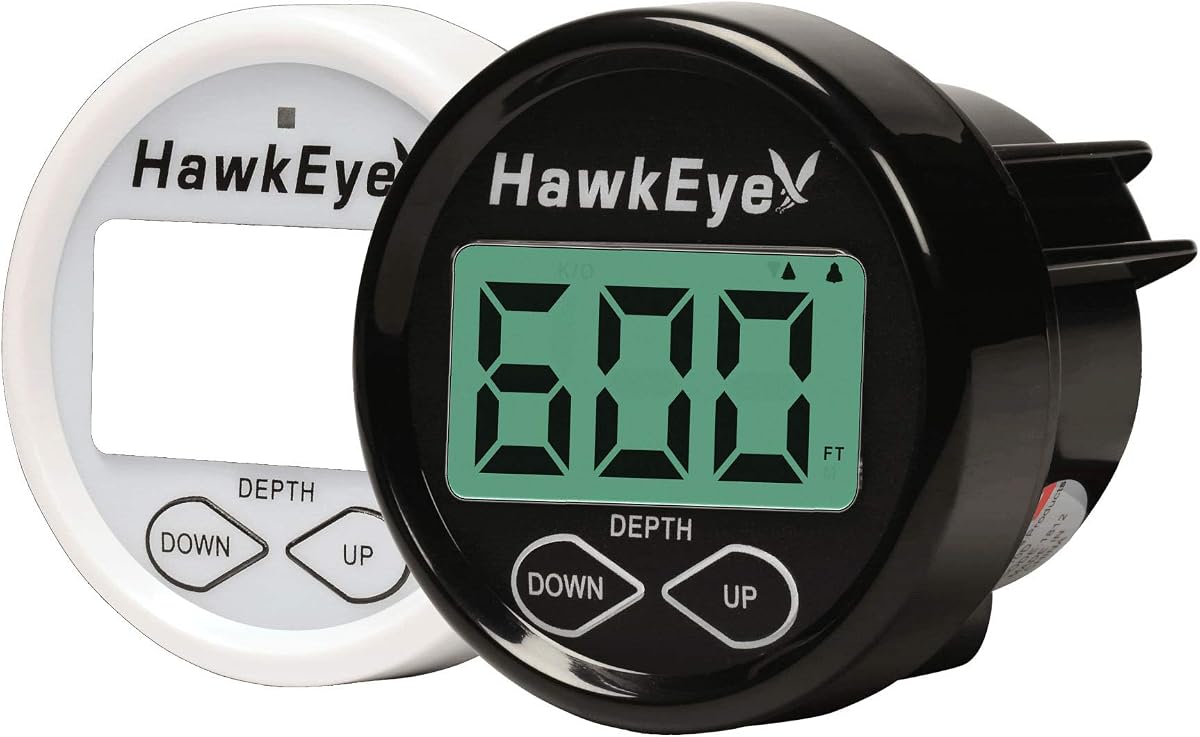
This in-dash depth sounder delivers uninterrupted depth readings up to 600 feet even when the boat travels at speeds up to 60 mph. Its polarized LCD display offers glare-free viewing, ensuring clear visibility with or without sunglasses in bright conditions.
We may earn a commission when you buy through this link, at no additional cost to you.
A 3-stage Advanced Warning System alerts you to alarms with an audible tone, a red LED light, and LCD indicators. The algorithmic programming significantly reduces false readings to ensure precision and reliability during critical moments on the water.
Installation options include a transom or glue-in mount, though note that glue-in is only for non-cored fiberglass or thin aluminum hulls. The unit is not designed for vessels with complex structures that might interfere with the sensor or adhesive bond.
For fixed installations on boats where speed and clarity matter, this unit is highly effective. It combines robust warning features with a clean display to keep you informed of depth changes continuously while navigating.
The device maintains accurate depth readings even at speeds up to 60 mph without signal loss.
Three distinct alarm indicators ensure you never miss a critical depth or condition warning.
We may earn a commission when you buy through this link, at no additional cost to you.
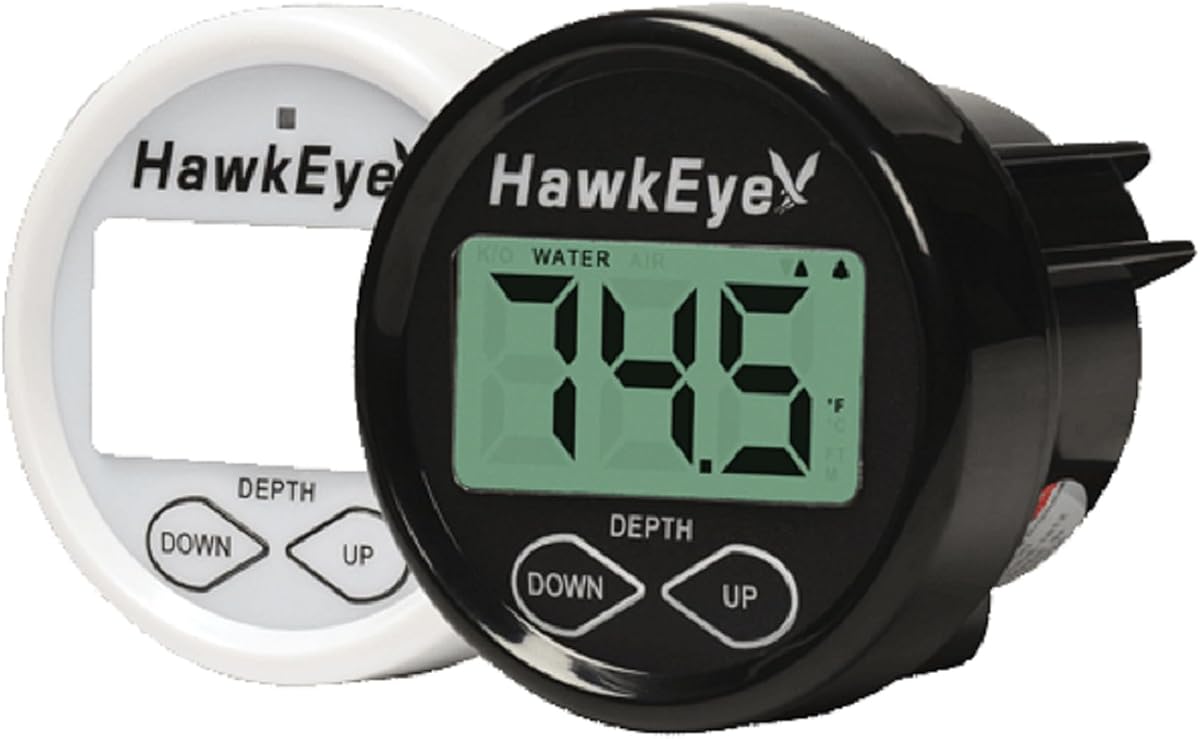
This in-dash sounder provides continuous depth readings up to 600 feet and displays both air and water temperatures in Fahrenheit or Celsius. It uses a soft glow backlit LCD that is easy to read in various lighting conditions without causing eye strain.
We may earn a commission when you buy through this link, at no additional cost to you.
The 3-stage Advanced Warning System includes an audible alarm and LED light, with a convenient one-touch mute button to silence alerts when needed. The transducer comes with 30 feet of cable for flexible placement on the transom of your vessel.
Installation requires drilling a 2-inch hole for flush mounting, and the face measures 2.5 inches across. While robust, this permanent installation may not be suitable for temporary or small setups where drilling is undesirable or impractical.
For boat owners needing detailed environmental data alongside depth, this unit offers great value. The ability to monitor both water and air temperatures helps in predicting fish behavior and planning trips effectively.
Display both air and water temperatures to better understand weather and fishing conditions.
The one-touch alarm muting feature allows for quick silencing without navigating complex menus.
We may earn a commission when you buy through this link, at no additional cost to you.
This portable unit is designed for versatile fishing including ice, shore, and offshore scenarios. It updates depth data four times per second and provides a contour readout to show fish group, size, and temperature for a comprehensive underwater view.
We may earn a commission when you buy through this link, at no additional cost to you.
The device is rugged and water-resistant, rated for 100 feet of water depth, making it suitable for diving or snorkeling applications too. It includes a two-color lure fish lamp, which defaults to on but can be toggled to attract light-sensitive fish.
While the lamp is a unique addition, it is only effective for certain species that respond to light. The contour readout is functional but not as detailed as high-end sonar imaging, yet it suffices for basic structure identification.
For anglers needing a multi-purpose tool for cold and warm water fishing, this device is highly adaptable. Its lightweight and stylish build make it a great accessory to carry as a backup or gift for enthusiasts.
The readout helps you visualize the bottom shape to identify promising fishing spots quickly.
The two-color lamp can help attract fish that are sensitive to light in dark water environments.
We may earn a commission when you buy through this link, at no additional cost to you.
This handheld model offers a straightforward way to check depth and water temperature while fishing. It is designed for simplicity, providing essential data without the need for complicated settings or external power sources.
We may earn a commission when you buy through this link, at no additional cost to you.
It measures depths up to 300 feet and includes a temperature sensor to help you understand water conditions. The compact size fits easily in a tackle box or pocket, making it ideal for casual anglers or quick check scenarios.
While it lacks advanced features like alarms or large screens, its reliability and ease of use are significant advantages. The main limitation is the depth range, which might be insufficient for deep ocean or large lake fishing but is perfect for most inland waters.
For beginners or those who prefer analog simplicity, this unit is a sensible choice. It ensures you have essential data without overwhelming you with technical features that might go unused during your trips.
Get quick depth and temperature readings to make informed decisions about where to cast.
Its small form factor makes it easy to store and transport without taking up space.
We may earn a commission when you buy through this link, at no additional cost to you.
Selecting the right depth finder involves considering your specific fishing style and budget constraints. This guide outlines the critical factors to help you make an informed decision.
Sonar frequency determines the detail and resolution of your readings. Higher frequencies offer better detail but less depth, while lower frequencies cover more depth but less detail. A beam angle defines how wide the area covered is under the transducer, affecting how much water you scan at once.
Choose a model with a 200 kHz frequency for standard depth clarity and a beam angle between 20 to 45 degrees for balanced coverage on most small boats.
The display should be readable in direct sunlight. Look for IPS or backlit LCD screens that are polarized to reduce glare. A size between 3.5 to 5 inches is ideal for portable units without being cumbersome to carry.
Prioritize screens with backlight modes so you can read data during dawn or dusk hours without straining your eyes or using external lights.
Handheld units often run on AA or AAA batteries, while boat-mounted units need a 12-volt power source. Check how many hours of continuous use you get on a single charge or battery set to avoid interruptions during long fishing sessions.
Ensure you can easily access spare batteries or have a reliable way to charge the unit if you plan on fishing for extended periods away from shore.
Most cheap depth finders offer a range from a few feet to around 300 to 600 feet. If you fish in deep lakes or coastal areas, verify that the unit can handle the maximum depth you expect to encounter.
Adequate depth range ensures you can fish in both shallow weed beds and deep drop-offs without changing equipment frequently.
Consider how you will install the device. Handheld or castable units require minimal setup, while dash-mounted options need wiring and transom or thru-hull installation. Evaluate whether you need a permanent or temporary solution.
If you use multiple boats or fish from shore, a portable handheld unit is more versatile than a fixed installation.
Modern units come with features like fish alarms, temperature sensors, and bottom contour readings. These tools help you identify structures and fish activity without constantly watching the screen.
Select a device with alarms that you can adjust to avoid false positives in shallow water or rough conditions.
Fishing gear is exposed to splashes and rough conditions. Look for water resistance ratings like IPX7 or similar that indicate the device can withstand submersion or heavy splashing without failing.
Rugged construction ensures your investment lasts longer even if you drop it or it gets wet unexpectedly.
Reputable brands often offer better customer support and warranties. Check if the unit comes with a one-year or longer warranty and whether the company has a history of resolving issues promptly.
A solid warranty provides peace of mind and protects your purchase against manufacturing defects that may arise.
To start, insert the batteries or charge the unit, then turn it on and ensure the transducer is submerged. Most units will calibrate automatically to show the water surface and bottom depth clearly.
Clean the screen with a soft cloth after each use to prevent scratches and salt residue buildup. Store the device in a dry place away from direct sunlight to extend the life of the display and internal components.
Periodically check the transducer and cables for damage. If you notice air bubbles on the transducer face, scrub it gently with a soft brush to ensure clear signal transmission to the water.
For ice fishing, look for handheld units with a clear display and simple operation. Models with temperature sensors and portable designs work best in cold conditions where setup time is limited.
Yes, most modern units are designed for both freshwater and saltwater. Just ensure the transducer is rinsed with fresh water after use to prevent corrosion and damage.
Most budget-friendly models can read depths between 200 to 600 feet. This range is sufficient for most freshwater lakes and coastal fishing spots.
Yes, many portable handheld models are specifically designed for kayak fishing. They are easy to mount on the hull or cast into the water for instant depth readings.
Many units can display fish icons and arches in addition to depth readings. Look for models with flasher formats or fish alarm features for better identification.
Typically, handheld units last between 4 to 5 hours on a set of batteries. Rechargeable models may offer longer life but require a charging source nearby.
Most products in this guide include a transducer. However, always verify the product specifications to ensure the necessary accessories are part of the package.
Most models have water-resistant ratings like IPX7. This means they can handle splashes and rain, but submersion may vary by model so check the manual before submerging.
We reviewed ten excellent options ranging from basic handhelds to more advanced dash-mounted units. Each device offers unique benefits depending on whether you need portability or detailed structure mapping.
Prioritize a model that matches your primary fishing environment. If you fish from shore or a kayak, a portable handheld is ideal. For boat owners, a transom mount provides more stability and consistent data.
Prices for these units can vary based on sales and stock levels. Always check current listings and compare features carefully to ensure you get the most value for your investment today.