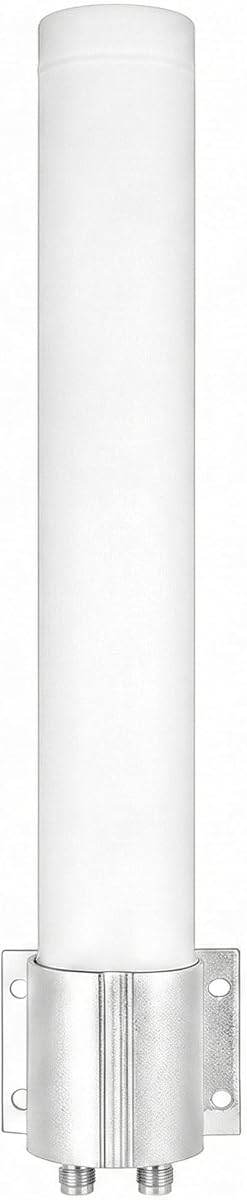
Pro-Gain 2.4G/5.8G MIMO WIFI Antenna
4.5Editor score
MIMO technology for stability
UV-resistant fiberglass construction
Optimized for remote areas
This guide compares the top 10 marine WiFi antennas for reliable connectivity on boats, covering durability, gain, and frequency compatibility for 2026.
Reliable internet connectivity is essential for modern boaters who need navigation data, communication, and entertainment while at sea. A dedicated marine WiFi antenna extends your range significantly beyond standard routers, ensuring you stay connected even far from shore or in remote anchorages.
We evaluated ten top-rated antennas based on build quality, signal gain, weather resistance, and compatibility with marine networking gear. Our selection process prioritized products that can withstand salt spray, UV exposure, and harsh conditions while delivering consistent performance for streaming and critical data transfers.
Each pick in this list highlights specific strengths such as dual-band support, MIMO technology, or ruggedized housings suitable for offshore use. Please note that pricing fluctuates frequently due to market demand and availability, so verify current costs before making your final purchase decision for your vessel.
4.5Editor score

5.0Editor score

4.2Editor score
This side-by-side comparison details the specifications and key features of every antenna reviewed in this guide to help you make an informed choice based on your specific marine connectivity needs and budget constraints.


The Poynting Omni-496 Dual Band WI-FI Marine Antenna stands out as a top choice for serious boaters needing reliable connectivity. With a perfect five-star rating among users, this antenna delivers consistent performance across both 2.4 GHz and 5 GHz bands while withstanding harsh marine environments.
We may earn a commission when you buy through this link, at no additional cost to you.
Its standout quality lies in the robust build designed specifically for coastal applications. The antenna supports modern WiFi standards including Wi-Fi6e and Wi-Fi7, ensuring your vessel remains compatible with future network upgrades. The N-Type connector allows for secure connections that resist vibration and movement.
While the price is higher than budget options, the durability and performance justify the investment. You need to purchase a coaxial cable separately which adds to the initial cost but ensures you get the right cable length for your specific installation needs.
Buyers seeking long-term reliability in saltwater conditions will find this antenna an excellent fit. It is particularly suitable for vessels that spend significant time offshore where connection stability is critical for navigation and safety communications.
This antenna meets MIL-STD 810F and ASTM B117 standards for salt spray resistance ensuring it performs reliably in corrosive marine conditions.
Support for Wi-Fi6e and Wi-Fi7 standards means your network setup will remain relevant as technology evolves over the coming years.
We may earn a commission when you buy through this link, at no additional cost to you.
The Pro-Gain 2.4G/5.8G MIMO WIFI Antenna offers premium features tailored for challenging environments where standard antennas struggle. It is engineered to penetrate dense obstacles and maintain stable connections even in remote locations far from cellular towers.
We may earn a commission when you buy through this link, at no additional cost to you.
Its key strength is the MIMO technology which optimizes signal quality for consistent speeds suitable for video conferencing and large data transfers. The fiberglass construction resists UV degradation and temperature extremes making it ideal for long-term outdoor marine installations without frequent replacements.
Pros include professional-grade connectors and an omni-directional pattern that eliminates realignment needs. A trade-off is the recommendation to use specific high-quality cables to realize full performance potential which may add to installation complexity for beginners.
This antenna is best for remote vessels or marine offices requiring stable high-speed internet for critical operations. Users who need reliable connectivity for security telemetry or live streaming will appreciate its consistent performance in adverse conditions.
Engineered with a VSWR of 1.8 to minimize reflection loss and maximize power efficiency for stronger signal transmission.
Constructed to operate from -40F to 150F ensuring functionality in extreme cold or hot marine climates year round.
We may earn a commission when you buy through this link, at no additional cost to you.
The ALFA AOA-2458-59-TF provides a cost-effective solution for marine WiFi needs without sacrificing essential performance features. Its 9 dBi gain ensures extended range while the lightweight fiberglass construction makes mounting on masts or poles straightforward.
We may earn a commission when you buy through this link, at no additional cost to you.
Key strengths include the integrated N-Female connector which simplifies cable management and the weatherproof design suitable for outdoor exposure. It is compatible with standard routers and gateways making it a versatile upgrade for existing setups.
Pros are its simplicity and affordability compared to high-end marine specific models. The trade-off is that it requires a separate coaxial cable purchase which is common for this type of antenna but adds to total cost.
Budget-conscious boaters looking to upgrade signal strength without overspending will find this antenna ideal. It works well for recreational vessels where extreme marine certifications are not mandatory but outdoor durability is still required.
Delivers 9 dBi gain to significantly boost wireless range while remaining affordable for recreational marine users.
Integrated N-Female connector and lightweight design reduce installation time and complexity for DIY setups.
We may earn a commission when you buy through this link, at no additional cost to you.
This variant of the Poynting OMNI-496 offers robust coastal and marine performance with a focus on durability and standard compatibility. It supports multiple frequency bands including 3.8GHz which is useful for specific LTE or WiMAX applications alongside standard Wi-Fi.
We may earn a commission when you buy through this link, at no additional cost to you.
Strengths include IP68 protection against water ingress and UV resistance ensuring longevity in saltwater environments. The omni-directional design provides consistent coverage without requiring precise orientation to target signals.
Pros include the use of marine standard mounts which simplifies integration with existing boat infrastructure. However the mounting bracket may not be included with the antenna itself requiring additional purchase for complete setup.
Ideal for vessel owners seeking reliable performance on coastal trips without needing extreme offshore specifications. This antenna balances cost and protection making it a practical choice for weekend cruisers and small charter boats.
Supports 2.4GHz 5GHz and 3.8GHz bands ensuring compatibility with a wide variety of wireless standards and devices.
IP68 rating ensures the antenna remains functional and sealed against water and dust ingress in heavy rain conditions.
We may earn a commission when you buy through this link, at no additional cost to you.
This 3-in-1 combination antenna integrates 4G LTE WiFi and GPS functionality into a single weatherproof unit. It is designed for boats requiring multiple connectivity solutions without cluttering deck space with separate antennas.
We may earn a commission when you buy through this link, at no additional cost to you.
Key strengths include the included 24inch leads which reduce the need for additional cabling and the waterproof construction suitable for marine environments. The puck style is unobtrusive and aesthetically pleasing on modern vessels.
Pros are the all-in-one convenience and pre-installed leads which simplify setup for compatible routers. A trade-off is the requirement for drilling a through hole in the deck which may be a barrier for some boat owners.
Best suited for vessels needing both navigation GPS and internet connectivity without adding bulk to masts. It works well for pleasure craft where deck space is limited and aesthetic integration is a priority.
Combines cellular WiFi and GPS signals into one unit reducing clutter and installation complexity on smaller boats.
Includes 24inch leads to minimize additional wiring and simplify connection to compatible routers or modems.
We may earn a commission when you buy through this link, at no additional cost to you.
The M19B antenna is engineered for demanding enterprise and public safety applications including marine environments requiring reliable broadband. It supports multiple cellular technologies including 5G NR and CBRS ensuring broad compatibility with modern networks.
We may earn a commission when you buy through this link, at no additional cost to you.
Strengths include the heavy-duty ABS housing designed to withstand extreme conditions and the TAA compliance for government procurement needs. The L-Bracket mount ensures secure positioning on various vessel structures.
Pros include approval by federal and local agencies which indicates rigorous testing and reliability standards. Trade-offs include its focus on cellular rather than standard Wi-Fi which may require specific modems for operation.
This antenna is best for commercial vessels or marine operations where public safety and high-speed data are critical. Users needing robust connectivity for IoT devices or telemetry will appreciate its industrial-grade construction.
Approved and purchased by federal state and local agencies nationwide ensuring trusted performance in critical situations.
Compliant with multi-carrier standards including 5G NR and CBRS for future-proof connectivity options.
We may earn a commission when you buy through this link, at no additional cost to you.
The Bingfu Dual Band antennas offer a versatile and affordable solution for indoor or protected marine networking setups. While designed primarily for routers and PCs the compact form factor allows flexible mounting on sheltered areas of a vessel.
We may earn a commission when you buy through this link, at no additional cost to you.
Strengths include the 2-pack value and dual band support enabling MIMO configurations on compatible devices. The RP-SMA male connector is common for consumer electronics simplifying replacement for existing gear.
Pros are the low cost and flexibility for short-range connections. A major trade-off is that it is not weatherproof so it must be kept inside the cabin or in dry storage to avoid damage.
These antennas work best for sheltered installations or as replacements for indoor router antennas on boats with protected network gear. Users needing low-cost upgrades for short-range internal networking will find them adequate.
Provides dual band 2.4GHz and 5GHz support at an affordable price point for budget-conscious network refreshes.
Includes two antennas to enable MIMO setups which improve data throughput and stability on compatible routers.
We may earn a commission when you buy through this link, at no additional cost to you.
This LINOVISION antenna combines 4G LTE and dual-band WiFi into a single unit for marine and vehicle applications. It is designed for routers requiring multiple external antennas to maximize network performance without cluttering the deck.
We may earn a commission when you buy through this link, at no additional cost to you.
Strengths include IP67 waterproof rating ensuring reliable performance in wet conditions and the included RG174 cables for quick connection. The compact roof mount style keeps the antenna out of the way.
Pros include the dual functionality which reduces the number of separate antennas needed. A trade-off is the short cable lengths which may require extensions for distant router locations and the mixed user ratings suggest variable performance.
Ideal for RVs and small boats needing both cellular and WiFi enhancements on a single router. It fits users who prioritize simplicity and integration over maximum gain specifications.
Integrates two 4G LTE and one WiFi antenna into a single housing to simplify deck installation and aesthetics.
IP67 rating ensures resistance to water and dust for reliable performance in outdoor marine conditions.
We may earn a commission when you buy through this link, at no additional cost to you.
The Eifagur antenna offers a strong value proposition for users seeking increased range without high costs. Its 9dBi gain is competitive with more expensive models making it attractive for small boats or dock setups.
We may earn a commission when you buy through this link, at no additional cost to you.
Strengths include outdoor readiness and compatibility with a wide range of access points and security cameras. The high gain helps extend the usable range of your network significantly.
Pros include its affordability and performance ratio compared to premium brands. A trade-off is the lack of specific marine certifications meaning it should be mounted in a protected outdoor spot rather than exposed to direct spray.
Best for recreational boaters looking to upgrade existing router antennas on a budget. It works well for enhancing signal coverage on docks or within a marina setting.
Delivers 9dBi gain to significantly boost wireless signal strength and extend coverage for routers.
Works with WiFi routers access points security IP cameras and RV cameras for flexible network deployment.
We may earn a commission when you buy through this link, at no additional cost to you.
The HYS VHF Marine Antenna is critical for safety communications rather than internet connectivity. It covers the complete VHF marine band and NOAA weather frequencies ensuring your boat remains in contact with shore and receives critical alerts.
We may earn a commission when you buy through this link, at no additional cost to you.
Strengths include the 22.9ft premium coaxial cable with PL259 connector which mates with standard marine radios. The built-in nylon ratchet mount allows folding for low clearance bridges making it practical for varied cruising zones.
Pros include stainless steel hardware resistance and anti-corrosion finish ensuring longevity. Trade-offs are that it does not support Wi-Fi data so it must be paired with a separate internet antenna for connectivity.
Every boat owner should consider this for distress and weather readiness alongside their internet setup. It is ideal for cruisers and sailboats needing reliable communication equipment without spending much.
Pre-tuned for marine channels including Channel 16 for distress and safety plus all NOAA weather channels.
Built-in ratchet mount allows quick folding for storage transport or low-clearance bridge crossings.
We may earn a commission when you buy through this link, at no additional cost to you.
Selecting the right marine WiFi antenna requires evaluating technical specifications against your specific sailing conditions and budget constraints.
Ensure the antenna supports the frequencies used by your router such as 2.4 GHz or 5 GHz to guarantee signal transmission. Some models also support additional bands like 3.8 GHz for cellular integration.
Always verify router compatibility before purchasing to avoid connection failures.
Gain measured in dBi determines how far the signal can travel and how well it penetrates obstacles. Higher gain models like 8dBi or 9dBi are ideal for distant shore connections or remote anchorage.
Choose a gain level that matches your typical cruising range and expected distance from WiFi sources.
Marine environments demand robust protection against salt water UV rays and rain. Look for IP68 ratings or military grade standards like ASTM B117 for salt spray resistance to ensure longevity.
Fiberglass housings generally outperform plastic in harsh marine conditions and require less maintenance.
Connectors such as N-Type or N-Female dictate which cables and adapters you will need for installation. Many high-performance antennas exclude cables meaning you must budget for coaxial cables separately.
Check your router's interface to ensure the antenna connector matches for a secure signal path.
Antennas may require standard 1-inch marine mounts or drilling through holes for low profile units. Some models include brackets while others require custom hardware to fit your mast or rail.
Evaluate your deck or mast clearance and choose an antenna that fits your installation constraints without obstructing visibility.
Cost varies widely from budget options under thirty dollars to premium models exceeding two hundred. Balance your financial constraints with the durability and performance you need for your specific use case.
Investing in a slightly higher priced unit often yields better long term reliability for active boaters.
Combination antennas integrating GPS or cellular signals can reduce deck clutter and simplify wiring setups. These units may require specific routers that support multiple external antenna interfaces.
Consider a combo model if you need multiple signal types from a single mounting point.
Some antennas offer plug-and-play features while others require professional cabling and waterproofing. DIY-friendly models come with manuals and standard hardware whereas enterprise models may demand custom solutions.
Be honest about your technical skills to ensure you can complete the installation safely and effectively.
Position your antenna as high as possible on the mast or rail to minimize obstacles and maximize line of sight to shore signals. Ensure it is oriented vertically to maintain polarization consistency with the transmitting source.
Apply silicone sealant to all coaxial connections after installation to prevent water ingress and corrosion over time. Regularly inspect cables for wear and ensure all connectors remain tight during heavy seas.
Clean the antenna housing with fresh water after exposure to salt spray to remove corrosive residues. Store folding antennas securely when not in use or during transport to protect them from impact damage.
Marine WiFi antennas are built with superior corrosion resistance including UV stable materials and saltwater proof ratings. They typically feature stronger mounting hardware to withstand vibration and movement on a boat compared to indoor models.
No you should use low loss coaxial cables such as KMR240 or similar designed for high frequency signals. Long runs of standard cables can degrade signal strength and reduce overall performance significantly.
Most marine antennas require routers with external antenna ports like Cradlepoint or Peplink. Standard routers may need adapters or specific connectors to accept the external antenna cable properly.
It is recommended to inspect your antenna and connections every few months or after heavy storms. Look for signs of corrosion water intrusion or cable wear to prevent unexpected outages.
Higher dBi gain extends range but may reduce vertical coverage depending on your mounting location. Consider your typical distance from shore rather than choosing the highest gain available blindly.
Matching the connector ensures a secure and low-loss connection between the antenna and your router. Mismatched connectors can lead to signal loss or physical damage during installation.
The Poynting Omni-496 Pro-Gain MIMO and ALFA AOA models stand out as top choices for different budget and performance needs. Each offers distinct advantages depending on your vessel's specific connectivity requirements and installation constraints.
Prioritize durability and weather protection over raw specifications if you plan to spend extended time offshore. A reliable connection that withstands harsh environments is more valuable than a high gain antenna that degrades quickly.
Verify current availability and pricing before purchase as these factors fluctuate regularly. Ensure you have all necessary mounting hardware and cables included or sourced separately to complete your installation without delays.